

Pomegranate
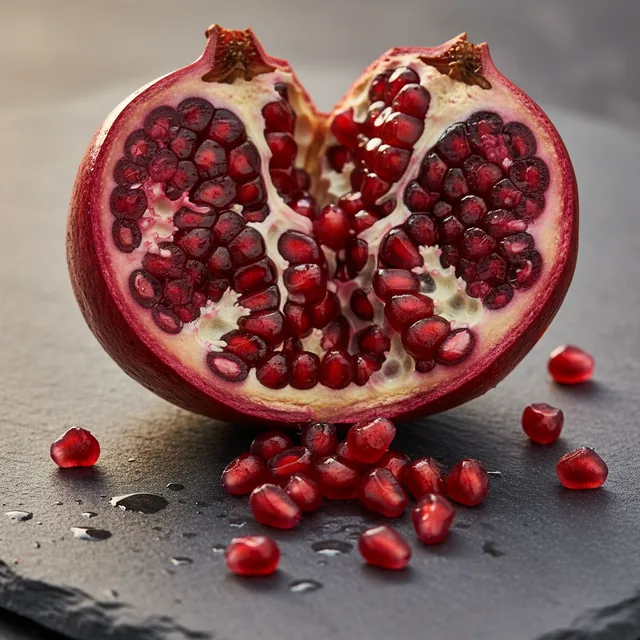
Pomegranate is a juicy fruit with a sweet, mildly sour, and refreshing taste. It is often enjoyed fresh as a simple fruit or added to light meals and snacks.
दाडिमं मधुरं स्निग्धं वातहरं पित्तकफहरम्।
dāḍimaṃ madhuraṃ snigdhaṃ vātaharaṃ pittakaphaharam.
Traditional context
Traditionally regarded in Ayurveda as a refreshing fruit with sweet, sour, and astringent qualities, often enjoyed in a balanced and simple way.
Traditional description
Commonly chosen when
- Often enjoyed as a refreshing fruit in small to moderate amounts
- Commonly chosen when someone wants a sweet and mildly tangy fruit
Comprehensive Monograph & Research
The Juicy Goodness of Pomegranate
Pomegranate, with its vibrant red seeds, is not only a feast for the eyes but also a treasure trove of health benefits. In Ayurveda, it is celebrated for its sweet and mildly astringent taste, which makes it a versatile addition to any diet. The fruit is known for its cooling properties, making it ideal for balancing Pitta dosha, especially during the hot summer months. Its light and unctuous qualities help soothe Vata dosha, while its astringency can help manage Kapha when consumed in moderation. Pomegranate is often enjoyed fresh, sprinkled over salads, or as a refreshing juice. Its rich antioxidant content supports overall wellness, making it a delightful way to nourish the body and mind.
Add fresh pomegranate seeds to your morning cereal or yogurt for a burst of flavor. Use it as a topping for salads or blend it into smoothies for a refreshing drink.
अनार का रसीला लाभ
अनार, अपनी चमकदार लाल बीजों के साथ, न केवल देखने में सुंदर होता है, बल्कि स्वास्थ्य के लिए भी लाभकारी होता है। आयुर्वेद में इसे इसके मधुर और हल्के कसैले स्वाद के लिए जाना जाता है, जो इसे किसी भी आहार में शामिल करने के लिए उपयुक्त बनाता है। यह फल अपनी शीतल प्रकृति के लिए प्रसिद्ध है, जो पित्त दोष को संतुलित करने में मदद करता है, खासकर गर्मियों के महीनों में। इसके हल्के और स्निग्ध गुण वात दोष को शांत करते हैं, जबकि इसकी कसैलापन कफ को नियंत्रित करने में मदद करता है जब इसे संतुलित मात्रा में खाया जाता है। अनार को अक्सर ताजा खाया जाता है, सलाद पर छिड़क कर या एक ताज़ा जूस के रूप में। इसके समृद्ध एंटीऑक्सीडेंट सामग्री के कारण यह समग्र स्वास्थ्य का समर्थन करता है, जिससे यह शरीर और मन को पोषित करने का एक आनंददायक तरीका बन जाता है।
अपने सुबह के सीरियल या दही में ताजे अनार के दाने डालें। इसे सलाद के ऊपर डालें या एक ताज़ा पेय के लिए स्मूदी में मिलाएं।
Safety context
General food awareness only. Individual tolerance varies.
This is not a medical or therapeutic diet. For dietary conditions, consult a professional.
Consult: Anyone with food allergies, fruit sensitivity, a need to limit certain fruits, or a medical dietary need
No dosage, preparation strength or symptom-to-herb recommendation is given here.