

Mung dal
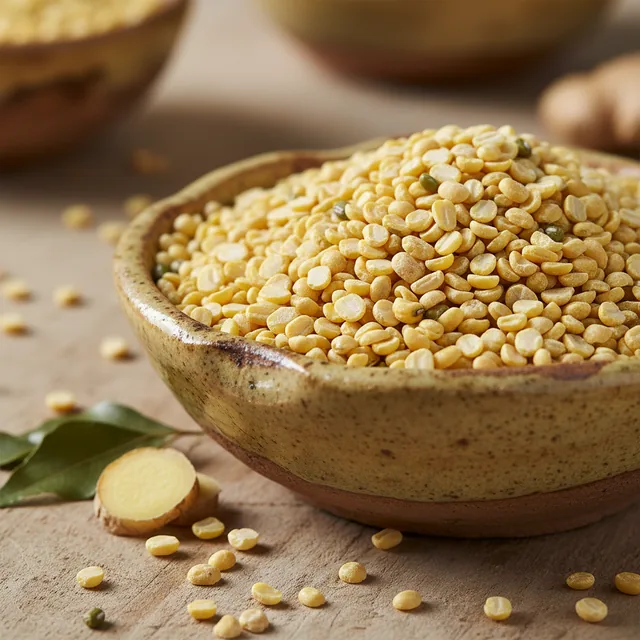
Mung dal is a simple split lentil commonly used in warm meals like dal, soup, and khichdi. It is often enjoyed as a light and comforting everyday food.
मुद्गा लघवः स्निग्धा बल्या वातपित्तनाशनाः।
mudgā laghavaḥ snigdhā balyā vātapittanāśanāḥ.
Traditional context
May appear in Ayurveda food/routine discussions, but this record does not assign a universal dosha effect, therapeutic indication, or disease claim.
Traditional description
Commonly chosen when
- Often enjoyed as a light and simple meal
- Commonly chosen when someone wants warm, soft, and easy everyday food
Evidence boundary
This is an ordinary food/culinary reference. The record does not establish a disease-treatment effect or automatically classify the item as regulated Ayurveda Aahara.
What varies. Recipes, portions, preparation, individual tolerance, allergies, medical diets and cultural context vary.
- Carakasaṁhitā e-Samhita — National Institute of Indian Medical Heritage / CCRAS
- Food Safety and Standards (Ayurveda Aahara) Regulations, 2022 — Food Safety and Standards Authority of India, Ministry of Health and Family Welfare, Government of India
- Order regarding Ayurveda Aahara covered under the 2022 Regulations — Food Safety and Standards Authority of India, Ministry of Health and Family Welfare, Government of India
Comprehensive Monograph & Research
The Gentle Power of Moong Dal: Ayurveda's Lightest Legume
Moong dal, known as 'Mudga' in Sanskrit, is celebrated in Ayurveda as the lightest and most easily digestible legume. Its gentle nature makes it perfect for those recovering from illness or seeking to maintain a balanced diet. With its sweet and astringent taste, moong dal is cooling and nourishing, helping to balance Vata and Pitta doshas while being gentle on the digestive fire, Agni. This makes it an ideal choice for convalescence and daily protein intake. Moong dal's light and unctuous qualities ensure it provides strength without burdening the digestive system, making it a staple in Ayurvedic cooking for its ability to support overall wellness.
Incorporate moong dal into soups, stews, or simple khichdi for a nourishing meal. It's excellent for light, digestible protein in vegetarian diets. Sprouted moong dal can be added to salads for a fresh, crunchy texture.
मूंग दाल का कोमल प्रभाव: आयुर्वेद का सबसे हल्का दलहन
मूंग दाल, जिसे संस्कृत में 'मुद्ग' कहा जाता है, आयुर्वेद में सबसे हल्का और आसानी से पचने वाला दलहन माना जाता है। इसकी कोमल प्रकृति इसे उन लोगों के लिए आदर्श बनाती है जो बीमारी से उबर रहे हैं या संतुलित आहार बनाए रखना चाहते हैं। मीठे और कषाय रस के साथ, मूंग दाल शीतल और पोषक होती है, जो वात और पित्त दोषों को संतुलित करने में मदद करती है और पाचन अग्नि पर कोमल होती है। यह इसे स्वास्थ्य लाभ के लिए एक आदर्श विकल्प बनाती है। मूंग दाल के हल्के और स्निग्ध गुण इसे पाचन तंत्र पर बिना बोझ डाले शक्ति प्रदान करते हैं, जिससे यह आयुर्वेदिक पाक कला में एक महत्वपूर्ण स्थान रखती है।
मूंग दाल को सूप, स्ट्यू या साधारण खिचड़ी में शामिल करें। यह शाकाहारी आहार में हल्का, पाचक प्रोटीन प्रदान करता है। अंकुरित मूंग दाल को सलाद में ताजगी और कुरकुरेपन के लिए मिलाया जा सकता है।
Safety context
General food awareness only. Individual tolerance varies.
This is not a medical or therapeutic diet. For dietary conditions, consult a professional.
Allergy, intolerance, food safety and individualized medical dietary advice take priority over generic Ayurveda education.
Consult: Anyone with food allergies, lentil intolerance, digestive sensitivity, or a medical dietary need
No dosage, preparation strength or symptom-to-herb recommendation is given here.