

Milk
Milk is a common dairy food with a mild, naturally sweet taste. It is often enjoyed warm or used in simple foods and drinks.
क्षीरं शीतं गुरु स्निग्धं मृदु मन्दं बहुप्रियम्।
kṣīraṃ śītaṃ guru snigdhaṃ mṛdu mandaṃ bahupriyam.
Traditional context
May appear in Ayurveda food/routine discussions, but this record does not assign a universal dosha effect, therapeutic indication, or disease claim.
Traditional description
Commonly chosen when
- Often chosen by people who tolerate dairy well
- Commonly used when someone wants a warm and simple drink
Evidence boundary
This is an ordinary food/culinary reference. The record does not establish a disease-treatment effect or automatically classify the item as regulated Ayurveda Aahara.
What varies. Recipes, portions, preparation, individual tolerance, allergies, medical diets and cultural context vary.
- Carakasaṁhitā e-Samhita — National Institute of Indian Medical Heritage / CCRAS
- Food Safety and Standards (Ayurveda Aahara) Regulations, 2022 — Food Safety and Standards Authority of India, Ministry of Health and Family Welfare, Government of India
- Order regarding Ayurveda Aahara covered under the 2022 Regulations — Food Safety and Standards Authority of India, Ministry of Health and Family Welfare, Government of India
Comprehensive Monograph & Research
The Nourishing Essence of Milk in Ayurveda
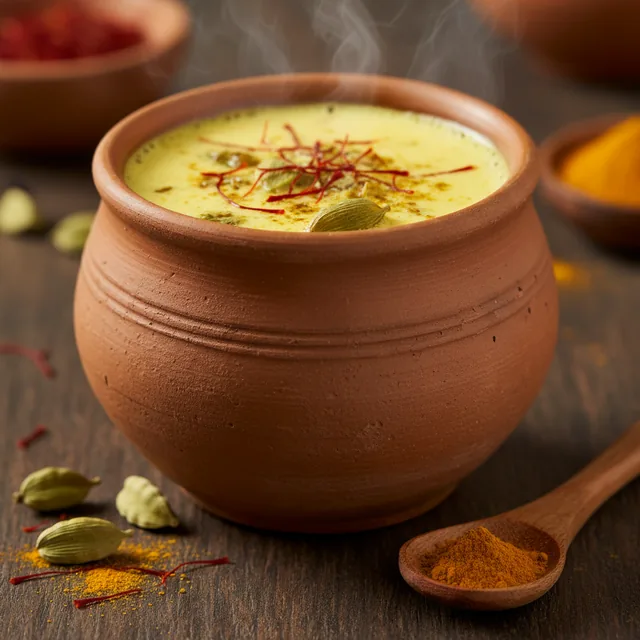
Milk, in Ayurveda, is considered a complete food due to its nourishing and rejuvenating qualities. It is naturally sweet and cooling, making it ideal for balancing Vata and Pitta doshas. Milk is rich in nutrients that support tissue building and vitality. In traditional practices, milk is often consumed warm with spices like turmeric or cardamom to enhance its digestibility and benefits. It is believed to promote Ojas, the essence of vitality and immunity, making it a staple in many Ayurvedic diets. However, moderation is key, especially for individuals with Kapha imbalances, as excessive milk can lead to congestion or sluggish digestion. Incorporating milk into daily routines can be as simple as enjoying a warm glass in the evening, aiding in restful sleep and overall wellness.
Enjoy a warm glass of milk with a pinch of turmeric or cardamom before bed. Use milk as a base for smoothies or as an addition to herbal teas for added nourishment.
आयुर्वेद में दूध का पोषक महत्व
आयुर्वेद में दूध को एक संपूर्ण आहार माना जाता है, क्योंकि इसमें पोषण और पुनर्योजी गुण होते हैं। इसका स्वाद मीठा और शीतल होता है, जो वात और पित्त दोष को संतुलित करता है। दूध में ऐसे पोषक तत्व होते हैं जो शरीर के ऊतकों को मजबूत बनाते हैं और जीवनशक्ति को बढ़ाते हैं। पारंपरिक रूप से, दूध को हल्दी या इलायची जैसे मसालों के साथ गर्म करके पिया जाता है, जिससे इसकी पाचनशक्ति और लाभ बढ़ जाते हैं। यह ओजस को बढ़ावा देता है, जो जीवनशक्ति और प्रतिरक्षा का सार है, और इसलिए यह कई आयुर्वेदिक आहारों में मुख्य होता है। हालांकि, कफ असंतुलन वाले लोगों के लिए दूध का अधिक सेवन जकड़न या धीमी पाचन क्रिया का कारण बन सकता है। दूध को दैनिक जीवन में शामिल करना उतना ही सरल है जितना कि शाम को एक गिलास गर्म दूध का आनंद लेना, जो अच्छी नींद और समग्र स्वास्थ्य में सहायक होता है।
सोने से पहले एक गिलास गर्म दूध में हल्दी या इलायची डालकर पिएं। स्मूदी के आधार के रूप में या हर्बल चाय में पोषण बढ़ाने के लिए दूध का उपयोग करें।
Safety context
General food awareness only. Individual tolerance varies.
This is not a medical or therapeutic diet. For dietary conditions, consult a qualified professional.
Allergy, intolerance, food safety and individualized medical dietary advice take priority over generic Ayurveda education. Relevant allergy/intolerance context: milk/dairy.
Consult: Anyone with milk allergy, lactose intolerance, dairy sensitivity, or a medical dietary need
No dosage, preparation strength or symptom-to-herb recommendation is given here.