

Khichdi
Khichdi is a simple warm dish usually made with rice, lentils, water, mild spices, and sometimes a little ghee. It is often enjoyed as a soft and comforting everyday meal.
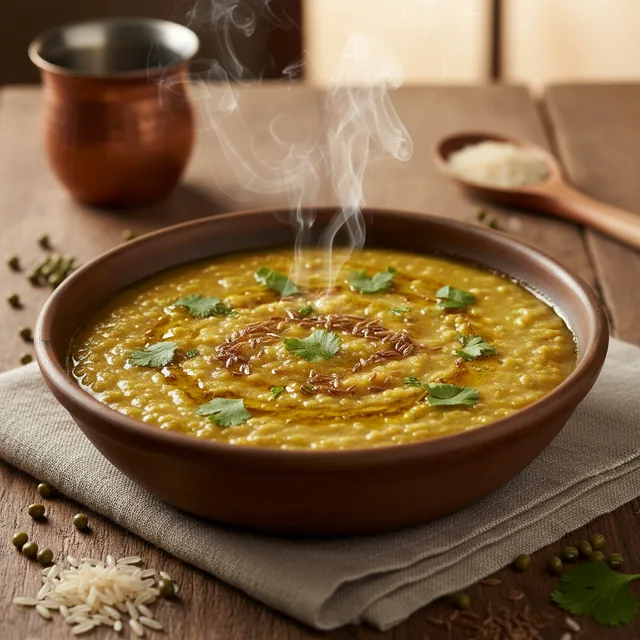
मुद्गयवागूः सात्म्यं लघु पथ्यं च
mudgayavāgūḥ sātmyam laghu pathyam ca
Traditional context
May appear in Ayurveda food/routine discussions, but this record does not assign a universal dosha effect, therapeutic indication, or disease claim.
Traditional description
Commonly chosen when
- Often enjoyed when someone wants a simple warm meal
- Commonly chosen as a soft and easy everyday food
Evidence boundary
This is an ordinary food/culinary reference. The record does not establish a disease-treatment effect or automatically classify the item as regulated Ayurveda Aahara.
What varies. Recipes, portions, preparation, individual tolerance, allergies, medical diets and cultural context vary.
- Carakasaṁhitā e-Samhita — National Institute of Indian Medical Heritage / CCRAS
- Food Safety and Standards (Ayurveda Aahara) Regulations, 2022 — Food Safety and Standards Authority of India, Ministry of Health and Family Welfare, Government of India
- Order regarding Ayurveda Aahara covered under the 2022 Regulations — Food Safety and Standards Authority of India, Ministry of Health and Family Welfare, Government of India
Comprehensive Monograph & Research
Khichdi: The Comforting Ayurvedic Meal
Khichdi is a beloved Ayurvedic dish that epitomizes simplicity and nourishment. Traditionally made with rice and lentils, it is gently spiced and often enriched with a touch of ghee. This dish is celebrated for its ease of digestion and balancing qualities, making it a staple in many Indian households. The combination of rice and lentils provides a complete protein, while the mild spices aid in digestion and enhance flavor. In Ayurveda, khichdi is considered a sattvic food, promoting clarity and peace of mind. It is particularly beneficial during times of illness or recovery, as it is gentle on the stomach and provides essential nutrients without taxing the digestive system. Khichdi's warming nature helps balance Vata and Pitta doshas, making it ideal for cooler seasons or when one feels ungrounded. However, those with Kapha imbalances should enjoy it in moderation. Overall, khichdi is a versatile and comforting meal that supports overall well-being.
To incorporate khichdi into your daily routine, cook it with a mix of rice and lentils, adding mild spices like cumin and turmeric. You can enhance its flavor and nutrition by adding seasonal vegetables. Enjoy it as a light meal for lunch or dinner, especially during cooler months.
खिचड़ी: आरामदायक आयुर्वेदिक भोजन
खिचड़ी एक प्रिय आयुर्वेदिक व्यंजन है जो सरलता और पोषण का प्रतीक है। पारंपरिक रूप से चावल और दाल से बनी यह खिचड़ी हल्के मसालों के साथ बनाई जाती है और अक्सर इसमें घी का हल्का सा तड़का लगाया जाता है। यह व्यंजन अपनी पाचन में सरलता और संतुलनकारी गुणों के लिए प्रसिद्ध है, और यह कई भारतीय घरों में एक मुख्य भोजन के रूप में खाया जाता है। चावल और दाल का संयोजन पूर्ण प्रोटीन प्रदान करता है, जबकि हल्के मसाले पाचन में सहायक होते हैं और स्वाद को बढ़ाते हैं। आयुर्वेद में, खिचड़ी को सात्विक भोजन माना जाता है, जो मन की शांति और स्पष्टता को बढ़ावा देता है। यह विशेष रूप से बीमारी या स्वास्थ्य लाभ के समय में लाभकारी होता है, क्योंकि यह पेट पर हल्का होता है और पाचन तंत्र पर बिना बोझ डाले आवश्यक पोषक तत्व प्रदान करता है। खिचड़ी की उष्ण प्रकृति वात और पित्त दोषों को संतुलित करने में मदद करती है, जिससे यह ठंडे मौसम या अस्थिरता के समय में आदर्श बनती है। हालांकि, कफ असंतुलन वाले लोगों को इसे संयम में खाना चाहिए। कुल मिलाकर, खिचड़ी एक बहुमुखी और आरामदायक भोजन है जो समग्र कल्याण का समर्थन करता है।
खिचड़ी को अपनी दिनचर्या में शामिल करने के लिए, इसे चावल और दाल के मिश्रण के साथ पकाएं, और इसमें हल्के मसाले जैसे जीरा और हल्दी डालें। आप इसमें मौसमी सब्जियाँ डालकर इसके स्वाद और पोषण को बढ़ा सकते हैं। इसे दोपहर या रात के हल्के भोजन के रूप में, विशेष रूप से ठंडे महीनों में खाएं।
Safety context
General food awareness only. Individual tolerance varies.
This is not a medical or therapeutic diet. For dietary conditions, consult a professional.
Allergy, intolerance, food safety and individualized medical dietary advice take priority over generic Ayurveda education.
Consult: Anyone with food allergies, grain intolerance, lentil intolerance, digestive sensitivity, or a medical dietary need
No dosage, preparation strength or symptom-to-herb recommendation is given here.