

Almonds
Almonds are a well-known nut often eaten as a small snack or added to simple meals. They have a mild, slightly sweet taste and are usually best enjoyed in a balanced amount.
वातपित्तहरं स्निग्धं बल्यं मेध्यमनुत्तमम्।
vātapittaharaṃ snigdhaṃ balyaṃ medhyamanuttamam.
Traditional context
May appear in Ayurveda food/routine discussions, but this record does not assign a universal dosha effect, therapeutic indication, or disease claim.
Traditional description
Commonly chosen when
- Often chosen by people who enjoy nuts in small amounts
- Commonly used when someone wants a simple, satisfying snack
Evidence boundary
This is an ordinary food/culinary reference. The record does not establish a disease-treatment effect or automatically classify the item as regulated Ayurveda Aahara.
What varies. Recipes, portions, preparation, individual tolerance, allergies, medical diets and cultural context vary.
- Carakasaṁhitā e-Samhita — National Institute of Indian Medical Heritage / CCRAS
- Food Safety and Standards (Ayurveda Aahara) Regulations, 2022 — Food Safety and Standards Authority of India, Ministry of Health and Family Welfare, Government of India
- Order regarding Ayurveda Aahara covered under the 2022 Regulations — Food Safety and Standards Authority of India, Ministry of Health and Family Welfare, Government of India
Comprehensive Monograph & Research
The Nourishing Power of Almonds
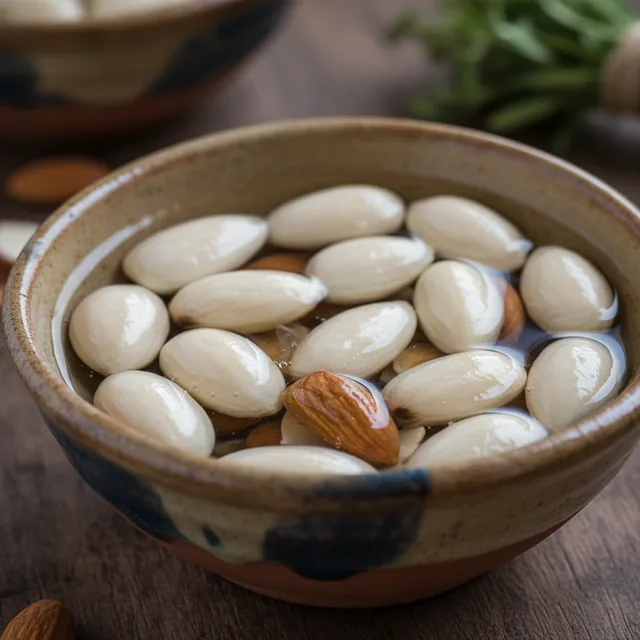
Almonds are a beloved nut in many cultures, cherished for their rich nutritional profile and delightful taste. In Ayurveda, almonds are considered to be nourishing and strengthening. They are known to balance Vata and Pitta doshas due to their sweet taste and warming nature. Almonds are heavy and unctuous, making them excellent for building strength and vitality. They are often recommended for enhancing memory and cognitive function. Including almonds in your diet can provide a steady source of energy and support overall well-being. However, as they are heavy and can increase Kapha, it's best to enjoy them in moderation, especially if you have a Kapha constitution. Soaking almonds overnight and peeling them before consumption can make them easier to digest and enhance their benefits.
Incorporate almonds into your daily routine by adding them to breakfast cereals, smoothies, or salads. Soak a few almonds overnight, peel them in the morning, and enjoy them as a wholesome snack.
बादाम का पोषण शक्ति
बादाम एक ऐसा मेवा है जो कई संस्कृतियों में पोषण और स्वाद के लिए बहुत प्रिय है। आयुर्वेद में, बादाम को पोषण और शक्ति बढ़ाने वाला माना जाता है। यह वात और पित्त दोष को संतुलित करता है क्योंकि इसका स्वाद मीठा और प्रकृति उष्ण होती है। बादाम भारी और स्निग्ध होते हैं, जिससे यह शरीर को ताकत और ऊर्जा देने में सहायक होते हैं। यह स्मरण शक्ति और मानसिक क्षमता को बढ़ाने के लिए भी अनुशंसित हैं। अपने आहार में बादाम को शामिल करने से आपको ऊर्जा मिलती है और समग्र स्वास्थ्य में सुधार होता है। हालांकि, यह भारी होते हैं और कफ को बढ़ा सकते हैं, इसलिए इन्हें संतुलित मात्रा में ही सेवन करना चाहिए, विशेषकर यदि आपकी प्रकृति कफ प्रधान है। बादाम को रातभर भिगोकर और छिलका उतारकर खाने से यह पचने में आसान होते हैं और इनके लाभ बढ़ जाते हैं।
अपने दैनिक आहार में बादाम को शामिल करने के लिए इन्हें नाश्ते के अनाज, स्मूदी या सलाद में डालें। कुछ बादाम रातभर भिगोकर रखें, सुबह छिलका उतारकर इन्हें एक पौष्टिक नाश्ते के रूप में खाएं।
Safety context
General food awareness only. Individual tolerance varies.
This is not a medical or therapeutic diet. For dietary conditions, consult a qualified professional.
Allergy, intolerance, food safety and individualized medical dietary advice take priority over generic Ayurveda education. Relevant allergy/intolerance context: tree nuts.
Consult: Anyone with allergies, intolerances, or a medical dietary need
No dosage, preparation strength or symptom-to-herb recommendation is given here.