

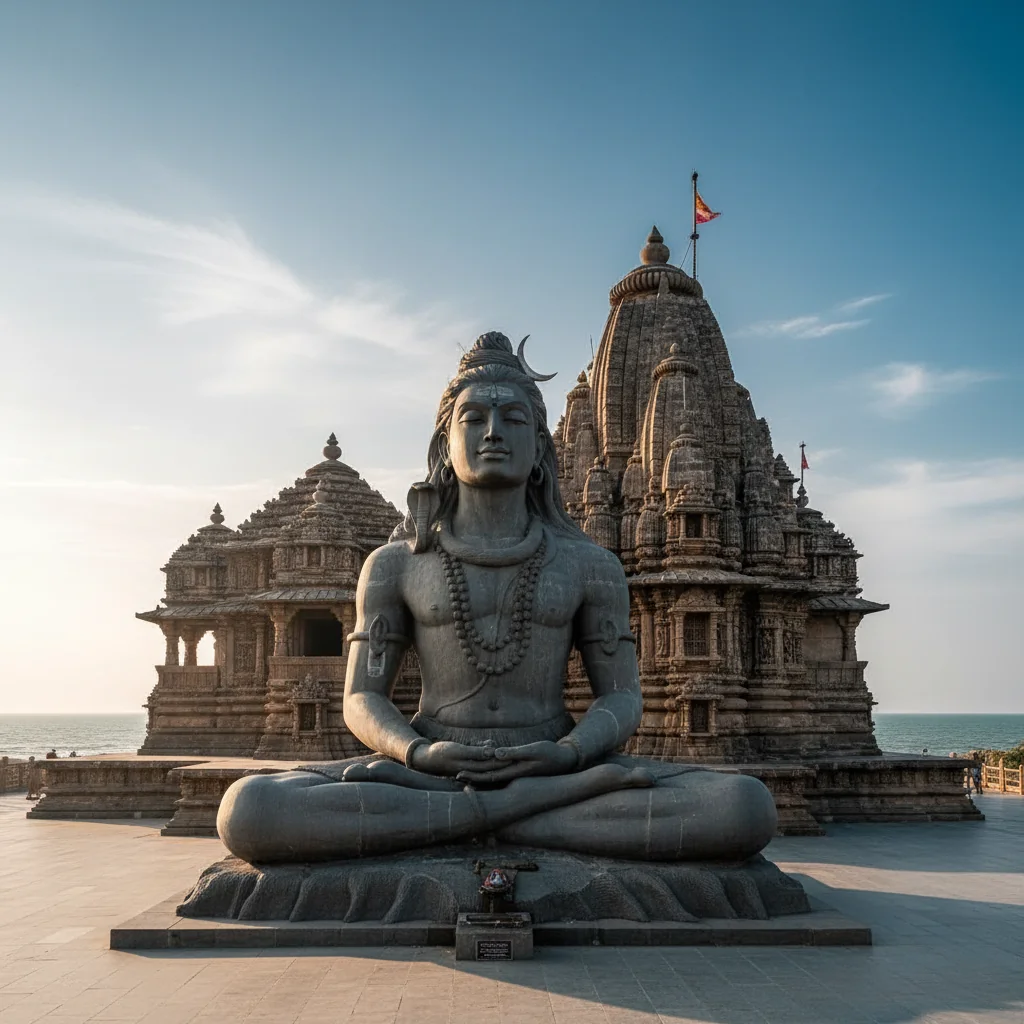
In Sanatana Dharma, a Mandir (consecrated temple) is not an ordinary congregation hall; it is an intricately engineered energetic nexus built in exact accordance with Agama Shastras and Vastu Purusha Mandala principles. From the subterranean placement of sacred copper yantras during foundation laying to the acoustic sanctum sanctorum (Garbhagriha) topped by the towering Vimana spire, an authentic temple functions as a cosmic battery. Entering through the gopuram, touching the threshold, circumambulating the sanctum (Pradakshina), and partaking in Darshan (beholding and being beheld by the consecrated deity) recalibrates human electromagnetic vitality. The Temple Finder & Sacred Darshan Guide Portal maps ancient Jyotirlingas, Shakti Peethas, Divya Desams, and prominent regional tirthas—providing authentic historical lore, temple architectural layouts, daily darshan timings, dress codes, and esoteric meditation instructions.
⚖️ Wellness & Legal Safety Disclaimer
This digital self-help exercise and informational guide are intended solely for educational, psychoeducational, and general personal wellness purposes. It does not constitute medical advice, clinical psychological assessment, psychiatric treatment, or a formal therapeutic relationship. Wellbeing exercises affect individuals differently; discontinue any somatic or cognitive practice that elicits distress and consult a licensed healthcare professional.
Emergency Crisis Resources: If you are experiencing acute psychological distress, panic crisis, or thoughts of self-harm, please reach out immediately to qualified emergency support services: Tele-MANAS (14416 / 1800-891-4416), KIRAN Mental Health Support (1800-599-0019, 24×7), or National Emergency Services (112 in India, 988 in the US/Canada).
The Energetic Anatomy of an Authentic Agama Temple
| Temple Architectural Element | Physical Structure & Geometry | Energetic & Neuro-Biological Impact |
|---|---|---|
| 1. Garbhagriha (Sanctum Sanctorum) | Windowless, square cubic chamber with copper yantra buried beneath the consecrated vigraha. | Maximum accumulation of subtle magnetic and sonic energy; stepping in front focuses the mind into instant stillness. |
| 2. Vimana / Shikhara (Temple Spire) | Pyramidal or curvilinear tower rising directly above the Garbhagriha topped with a Kalasha. | Acts as a cosmic antenna broadcasting the consecrated divine energy into the surrounding geographic settlement. |
| 3. Pradakshina Patha | Clockwise circumambulatory pathway encircling the inner sanctum. | Walking clockwise harmonizes personal bio-energetic nadis with the radiating magnetic field of the consecrated idol. |
| 4. Dhwaja Stambha (Flagstaff) | Tall consecrated pillar standing aligned with the main entrance and Garbhagriha axis. | Represents the spinal Sushumna nadi; devotees prostrate (Sashtanga Namaskar) here before entering the sanctum. |
Three Classical Rules for Visiting a Consecrated Temple
- Barefoot Grounding: Remove footwear outside to allow the granite and stone temple pathways—infused with centuries of mantra vibrations—to absorb electrostatic body tension.
- Eye-to-Eye Darshan: Direct your gaze straight into the consecrated deity’s eyes (Netra Darshan); in tradition, the supreme transmission of grace passes through the divine gaze.
- Silent Seated Integration: After darshan, classical custom strictly mandates sitting quietly on the temple floor for at least 5 to 10 minutes to absorb and integrate the sanctum’s energy before exiting.
Frequently Asked Questions
Why are we instructed to sit quietly after visiting a temple?
In traditional wisdom, if you rush immediately out of a temple, the subtle positive vibrations absorbed in the Garbhagriha dissipate into the street. Sitting quietly for 5 to 10 minutes seals the sacred energy into your nervous system.
What is the distinction between a Jyotirlinga and an ordinary Shiva temple?
An ordinary temple is consecrated by human priests using mantra rituals. The 12 Jyotirlingas (such as Somnath, Kashi Vishwanath, Mahakaleshwar) are Swayambhu (self-manifested) cosmic columns of divine light where Shiva’s presence was directly revealed.
Content published on Kriyasya Pulse represents editorial and educational insights uniting traditional wisdom with contemporary research. Readers are encouraged to apply discernment and seek qualified guidance where appropriate.