

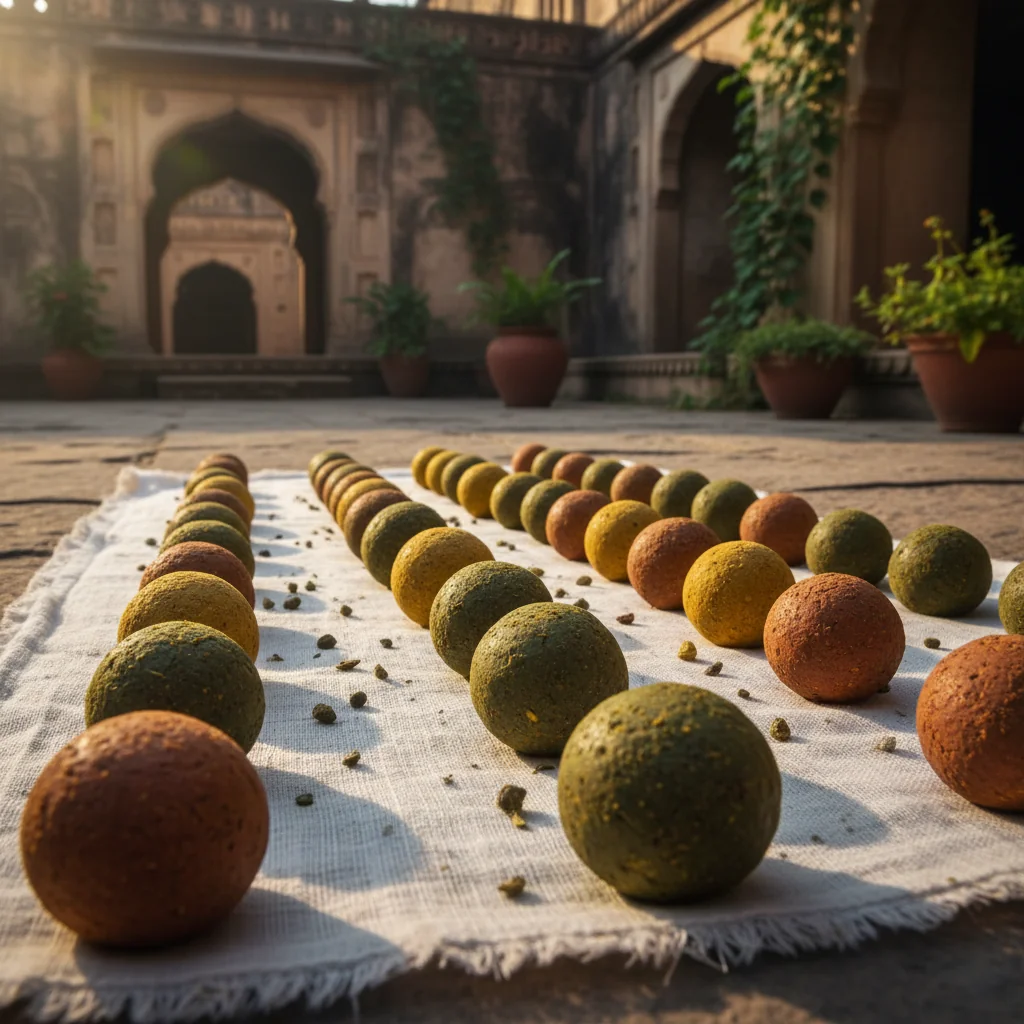
The ancient treatises of Ayurveda, including the Charaka Samhita, Sushruta Samhita, and Bhavaprakasha Nighantu, celebrate Palak (Spinach / Palankya) (Spinacia oleracea) as an indispensable dravya for restoring constitutional balance, nurturing the deeper tissues (Dhatus), and preserving vital life essence (Ojas). In this comprehensive master guide, we explore the pharmacological architecture, classical indications, and clinical applications of this renowned substance.
Classical Treatise Shloka & Sanskrit Anvaya
पालङ्क्यः स्वादुतिक्तश्च शीतलो गुरुतः सरः। रक्तपित्तहरो बत्यः श्लेष्मलो वातको मतः॥
— pālaṅkyaḥ svādutiktaśca śītalo gurutaḥ saraḥ, raktapittaharo balyaḥ śleṣmalo vātako mataḥ (Bhavaprakasha Nighantu, Shaka Varga / Raja Nighantu)
Sanskrit Anvaya & Translation: Spinach is sweet and bitter, cooling, heavy, and laxative (Sara); it quenches bleeding and burning Pitta disorders (Raktapittahara), imparts physical stamina, and gently increases Kapha.
Complete Dravya Guna & Energetic Profile
Ayurvedic pharmacology analyzes every food and herb through its elemental energetics. The fundamental properties of Palak (Spinach / Palankya) are outlined below:
Therapeutic Dosages, Best Timing & Potent Anupana Synergies
Optimal pharmacological assimilation depends upon precise grammage, biological timing (Kala), and the therapeutic vehicle (Anupana) selected. Clinical guidelines for Palak (Spinach / Palankya) dictate:
- Standard Adult Daily Dosage: 100g to 200g cooked spinach incorporated into warm curries, dhal, or warm vegetable soups.
- Chronobiological Timing: Morning intake during the Prana Vata phase supports mental clarity and systemic detox; midday consumption during the Pitta digestive peak maximizes enzymatic absorption.
- Therapeutic Anupana Carriers:
- For Vata Disorders: Warm A2 cow milk, medicated ghee, or warm sesame broth.
- For Pitta Disorders: Fresh coriander water, raw sugar syrup, or coconut nectar.
- For Kapha Disorders: Lukewarm water, trikatu decoction, or raw unheated forest honey.
Never exceed standard therapeutic dosages without direct supervision from a certified Ayurvedic Vaidya, particularly during acute inflammatory flare-ups.
✦ Interactive Ayurvedic Diagnostic: Ayurvedic Vision, Eye Strain & Pitta Diagnostic
Screen your ocular fatigue, Pitta eye heat, and tailored botanical vision therapies.
Practical Clinical FAQs
1. How long does it take to experience visible health benefits from Palak (Spinach / Palankya)?
Bowel movement regularity occurs within 24 hours; hemoglobin and optical resilience improve over 4 to 8 weeks.
2. Can Palak (Spinach / Palankya) be consumed daily throughout the year?
Excellent during late autumn, winter, and spring; consume cooked and spiced during summer months.
3. What is the most common mistake people make when using Palak (Spinach / Palankya)?
Drinking raw, unblanched green spinach smoothies daily, which floods kidneys with high oxalate loads and precipitates stones.
4. How does Palak (Spinach / Palankya) interact with prescription medications?
High vitamin K content can interact with warfarin/coumadin blood thinners; maintain a consistent daily intake level.
Editorial Vaidya Verdict & Shastric Summary
The classical texts of Ayurveda place Palak (Spinach / Palankya) among the most revered dravyas for long-term health maintenance and disease management. By honoring proper preparation rules, seasonal rhythms, and personal constitutional requirements, you harness the full restorative wisdom of classical Indian medicine for enduring vitality and longevity.
क्रियास्य पर साझा की गई आयुर्वेदिक जानकारी, आहार सिद्धांत, जड़ी-बूटियों के गुण एवं स्वास्थ्य पद्धतियां केवल सामान्य शैक्षणिक जागरूकता के उद्देश्य से हैं। यह किसी योग्य वैद्य अथवा चिकित्सक के प्रत्यक्ष चिकित्सीय परामर्श, रोग निदान या उपचार का विकल्प नहीं हैं। कोई भी नया हर्बल उपचार शुरू करने से पहले योग्य चिकित्सक से सलाह अवश्य लें।