

Tulsi
Tulasi Ocimum tenuiflorum (Ocimum sanctum synonym context)
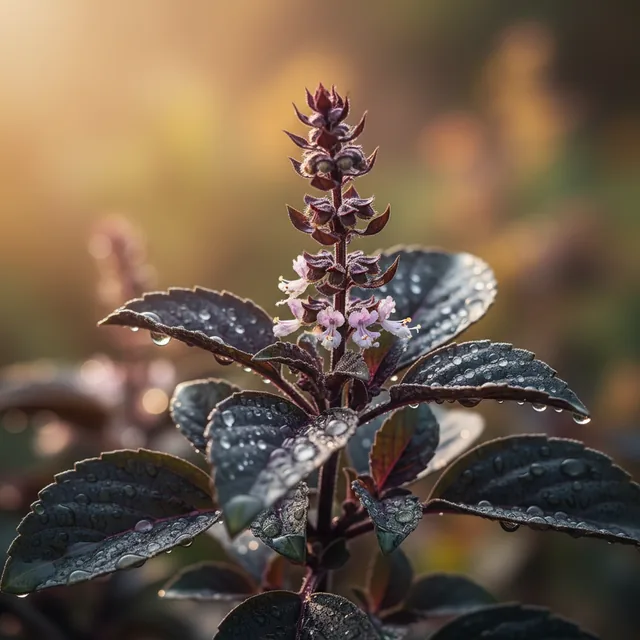
Tulsi, also known as Holy Basil, is a familiar aromatic herb with a long cultural and traditional background. It is commonly known for its fragrant leaves and is presented here only for general traditional education.
तुलसी हृद्यं कफवातनुत्
tulasī hṛdyaṃ kaphavātanut
Traditional context
Traditional and cultural prominence is acknowledged without making disease-treatment claims.
Traditional description
Evidence boundary
P05 establishes identity/provenance only and does not make a clinical-effectiveness recommendation.
What varies. Evidence and safety can vary by species identity, plant part, preparation, product quality, exposure, population, medicines and health conditions.
How to read this
Read this as cultural and traditional context, not as a recommendation to take anything. For personal use, consult a qualified practitioner.
Comprehensive Monograph & Research
Tulsi: The Sacred Herb for Daily Wellness
Tulsi, or Holy Basil, is revered in Ayurveda for its remarkable ability to support the body and mind. Known as an adaptogen, Tulsi helps the body adapt to stress and promotes mental clarity. Its warming nature kindles the digestive fire, making it an excellent choice for enhancing digestion. Tulsi's light and dry qualities help balance Kapha and Vata doshas, making it beneficial during cold and damp seasons. Traditionally, Tulsi is used to support respiratory health, thanks to its ability to clear congestion and promote easy breathing. In daily life, Tulsi can be enjoyed as a tea, added to meals, or used in herbal formulations. Its sattvic nature also supports a calm and focused mind, making it a beloved herb for meditation and spiritual practices.
Incorporate Tulsi into your daily routine by brewing a soothing Tulsi tea. Add fresh Tulsi leaves to soups and salads for a flavorful twist. Use Tulsi in herbal steam inhalations to support respiratory clarity.
तुलसी: दैनिक स्वास्थ्य के लिए पवित्र जड़ी-बूटी
तुलसी, जिसे पवित्र तुलसी भी कहा जाता है, आयुर्वेद में अपने अद्भुत गुणों के लिए प्रसिद्ध है। तुलसी एक अदाप्टोजेन के रूप में जानी जाती है, जो शरीर को तनाव के अनुकूल बनाने और मानसिक स्पष्टता को बढ़ावा देने में मदद करती है। इसकी उष्ण प्रकृति पाचन अग्नि को प्रज्वलित करती है, जिससे यह पाचन को सुधारने के लिए एक उत्कृष्ट विकल्प बनती है। तुलसी के हल्के और शुष्क गुण कफ और वात दोष को संतुलित करते हैं, जिससे यह ठंडे और नम मौसम में लाभकारी होती है। पारंपरिक रूप से, तुलसी का उपयोग श्वसन स्वास्थ्य को समर्थन देने के लिए किया जाता है, क्योंकि यह जमाव को साफ करने और आसानी से सांस लेने में मदद करती है। दैनिक जीवन में, तुलसी को चाय के रूप में, भोजन में मिलाकर, या हर्बल फॉर्मूलेशन में उपयोग किया जा सकता है। इसकी सात्विक प्रकृति एक शांत और केंद्रित मन को समर्थन देती है, जिससे यह ध्यान और आध्यात्मिक अभ्यासों के लिए प्रिय जड़ी-बूटी बनती है।
तुलसी को अपनी दैनिक दिनचर्या में शामिल करें, एक सुखदायक तुलसी चाय बनाकर। ताजे तुलसी के पत्तों को सूप और सलाद में मिलाकर एक स्वादिष्ट मोड़ दें। श्वसन स्पष्टता के लिए तुलसी को हर्बल स्टीम इनहेलेशन में उपयोग करें।
Safety context
This is educational information only. No dosage is given and no health outcome is claimed. Tulsi is commonly used in household contexts, but concentrated forms or extracts should not be self-used casually.
If pregnant or breastfeeding, do not self-use herbs; consult a qualified professional first.
Herbs can interact with medication. Speak with a professional before use if you take any medicine.
No dosage or personalized ingestion guidance is provided; concentrated use remains under qualified review.
Should not self-use: Pregnant or breastfeeding people; Anyone on medication; Anyone with a medical condition; Anyone with herb sensitivity, hormone-related concerns, bleeding concerns, or unclear product-quality concerns
Consult: A qualified Ayurveda practitioner or healthcare professional
No dosage, preparation strength or symptom-to-herb recommendation is given here.