

Neem
Nimba Azadirachta indica
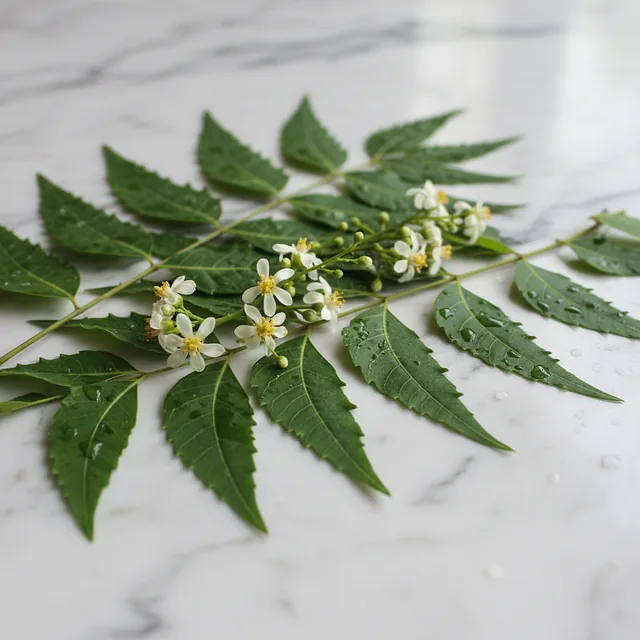
Neem is a traditional tree herb with a strong bitter taste and a long place in Ayurveda. Its leaves, bark, seeds, flowers, and oil are known in traditional herbal learning, and it is presented here only for safe, general education.
निम्बः कषायतिक्तोष्णः कफपित्तविनाशनः।
nimbaḥ kaṣāyatiktauṣṇaḥ kaphapittavināśanaḥ.
Traditional context
In Ayurveda, Neem is traditionally described as bitter, astringent, cooling, light, and dry. It is often discussed in classical herbal knowledge and is presented here as general education only.
Traditional description
How to read this
Read this as cultural and traditional context — not as a recommendation to take anything. For personal use, consult a qualified practitioner.
Comprehensive Monograph & Research
The Wisdom of Neem: Nature's Bitter Gift
Neem, known as 'Nimba' in Sanskrit, is a revered herb in Ayurveda, celebrated for its potent bitter taste and cooling properties. Often referred to as 'Nature's Pharmacy', neem is traditionally used for its purifying and cleansing qualities. Its leaves, bark, seeds, flowers, and oil have been utilized for centuries in various forms. The bitter and astringent taste of neem makes it excellent for balancing Pitta and Kapha doshas, though it should be used with caution by those with a Vata constitution. In daily life, neem can be incorporated into skincare routines, as its antibacterial properties are well-regarded. Additionally, neem oil is often used in hair care for its nourishing benefits. While neem is a powerful herb, it is essential to use it mindfully, especially during pregnancy or when taking certain medications. Always consult with a qualified Ayurvedic practitioner for personalized advice.
Incorporate neem into your daily routine by using neem-infused skincare products for its antibacterial properties. Neem oil can be applied to the scalp for healthy hair. Neem leaves can be brewed into a tea for occasional cleansing.
नीम की महिमा: प्रकृति का कड़वा उपहार
नीम, जिसे संस्कृत में 'निंब' कहा जाता है, आयुर्वेद में एक प्रतिष्ठित जड़ी-बूटी है, जो अपने तीव्र कड़वे स्वाद और शीतल गुणों के लिए जानी जाती है। इसे अक्सर 'प्रकृति की फार्मेसी' कहा जाता है, क्योंकि यह शुद्धिकरण और सफाई के गुणों के लिए प्रसिद्ध है। इसके पत्ते, छाल, बीज, फूल और तेल सदियों से विभिन्न रूपों में उपयोग किए जाते रहे हैं। नीम का कड़वा और कसैला स्वाद पित्त और कफ दोषों को संतुलित करने में उत्कृष्ट है, हालांकि इसे वात प्रकृति वाले लोगों द्वारा सावधानी से उपयोग करना चाहिए। दैनिक जीवन में, नीम को त्वचा की देखभाल की दिनचर्या में शामिल किया जा सकता है, क्योंकि इसके एंटीबैक्टीरियल गुण अच्छी तरह से माने जाते हैं। इसके अलावा, नीम का तेल बालों की देखभाल के लिए इसके पोषण गुणों के लिए अक्सर उपयोग किया जाता है। नीम एक शक्तिशाली जड़ी-बूटी है, इसलिए इसे विशेष रूप से गर्भावस्था के दौरान या कुछ दवाओं के सेवन के समय सावधानी से उपयोग करना आवश्यक है। व्यक्तिगत सलाह के लिए हमेशा एक योग्य आयुर्वेदिक चिकित्सक से परामर्श करें।
नीम को अपनी दैनिक दिनचर्या में शामिल करें। इसके एंटीबैक्टीरियल गुणों के लिए नीम युक्त त्वचा देखभाल उत्पादों का उपयोग करें। नीम का तेल स्वस्थ बालों के लिए खोपड़ी पर लगाया जा सकता है। नीम की पत्तियों को कभी-कभी सफाई के लिए चाय के रूप में उबाला जा सकता है।
Safety context
This is educational information only. No dosage is given and no health outcome is claimed.
If pregnant or breastfeeding, do not self-use herbs; consult a qualified professional first.
Herbs can interact with medication. Speak with a professional before use if you take any medicine.
Should not self-use: Pregnant or breastfeeding people; Children; Anyone on medication; Anyone with a medical condition
Consult: A qualified Ayurveda practitioner or healthcare professional
No dosage, preparation strength or symptom-to-herb recommendation is given here.