

Mustard
Sarshapa Brassica juncea (L.) Czern.
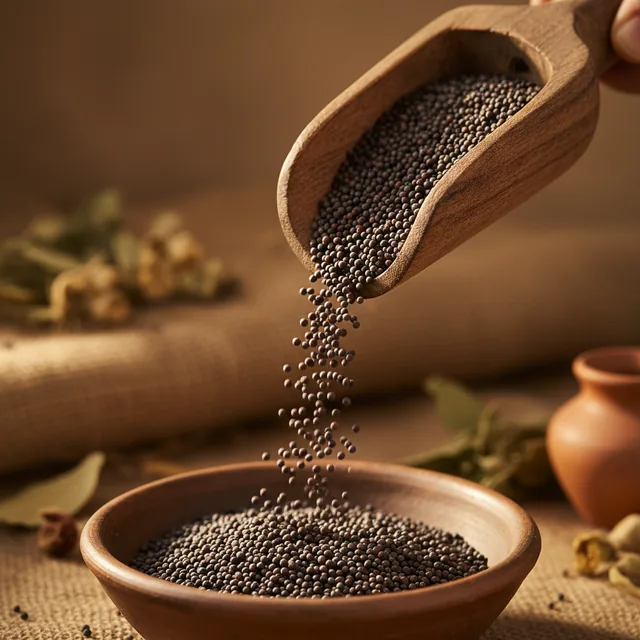
Mustard is a strong, pungent kitchen herb commonly used for its seeds, leaves, and oil. It has a sharp taste and is often used in small amounts in traditional cooking.
सिन्धुका सरषपाश्चैव तीक्ष्णोष्णा दीपनाः स्मृताः।
sindhukā saraṣapāścaiva tīkṣṇoṣṇā dīpanāḥ smṛtāḥ.
Traditional context
In Ayurveda, Mustard is known as Sarshapa and is traditionally described as warming, sharp, and dry. It is commonly associated with kitchen use, seasoning, and traditional household preparations, and is presented here as general education only.
Traditional description
How to read this
Read this as cultural and traditional context, not as a recommendation to take anything. For personal use, consult a qualified practitioner.
Comprehensive Monograph & Research
Mustard: The Pungent Powerhouse of Ayurveda
Mustard, known as 'Sarshapa' in Sanskrit, is a staple in many traditional kitchens. Its seeds, leaves, and oil are all used for their potent, pungent flavor and warming qualities. Mustard is celebrated in Ayurveda for its ability to stimulate digestion and balance Kapha and Vata doshas. Its warming nature makes it particularly useful in colder climates or seasons. The seeds are often used in tempering, adding a sharp, spicy kick to dishes. Mustard oil, with its robust flavor, is used both in cooking and for external applications, such as massages, due to its warming and stimulating properties. However, due to its heating nature, it should be used cautiously by those with a Pitta imbalance. Mustard's unique ability to enhance flavor while supporting digestion makes it a cherished herb in Ayurvedic culinary practices.
Incorporate mustard seeds in tempering for curries and dals. Use mustard oil for cooking or as a massage oil to stimulate warmth.
सरसों: आयुर्वेद का तीखा अद्भुत पौधा
सरसों, जिसे संस्कृत में 'सरषप' कहा जाता है, कई पारंपरिक रसोईघरों में एक महत्वपूर्ण स्थान रखता है। इसके बीज, पत्ते और तेल अपने तीखे स्वाद और गर्म गुणों के लिए उपयोग किए जाते हैं। आयुर्वेद में सरसों को पाचन को उत्तेजित करने और कफ और वात दोष को संतुलित करने की क्षमता के लिए सराहा जाता है। इसकी गर्म प्रकृति इसे ठंडे मौसम या स्थानों में विशेष रूप से उपयोगी बनाती है। सरसों के बीज अक्सर तड़के में उपयोग किए जाते हैं, जो व्यंजनों में तीखा स्वाद जोड़ते हैं। सरसों का तेल, अपने मजबूत स्वाद के साथ, खाना पकाने और बाहरी उपयोगों जैसे मालिश के लिए भी उपयोग किया जाता है, इसकी गर्म और उत्तेजक विशेषताओं के कारण। हालांकि, इसकी गर्म प्रकृति के कारण इसे पित्त असंतुलन वाले लोगों द्वारा सावधानीपूर्वक उपयोग करना चाहिए। सरसों की यह अनोखी क्षमता स्वाद बढ़ाने के साथ-साथ पाचन को समर्थन देने में इसे आयुर्वेदिक पाक कला में एक प्रिय जड़ी-बूटी बनाती है।
सरसों के बीजों का उपयोग करी और दालों में तड़के के लिए करें। सरसों के तेल का उपयोग खाना पकाने या मालिश के लिए करें ताकि गर्मी उत्पन्न हो।
Safety context
This is educational information only. No dosage is given and no health outcome is claimed. Mustard is strong, and concentrated forms, oils, or extracts should not be self-used casually.
If pregnant or breastfeeding, do not self-use herbs; consult a qualified professional first.
Herbs can interact with medication. Speak with a professional before use if you take any medicine.
Should not self-use: Pregnant or breastfeeding people; Anyone on medication; Anyone with a medical condition; Anyone with mustard allergy, seed sensitivity, skin sensitivity, or sensitivity to strong spices
Consult: A qualified Ayurveda practitioner or healthcare professional
No dosage, preparation strength or symptom-to-herb recommendation is given here.