

Licorice
Yashtimadhu Glycyrrhiza glabra
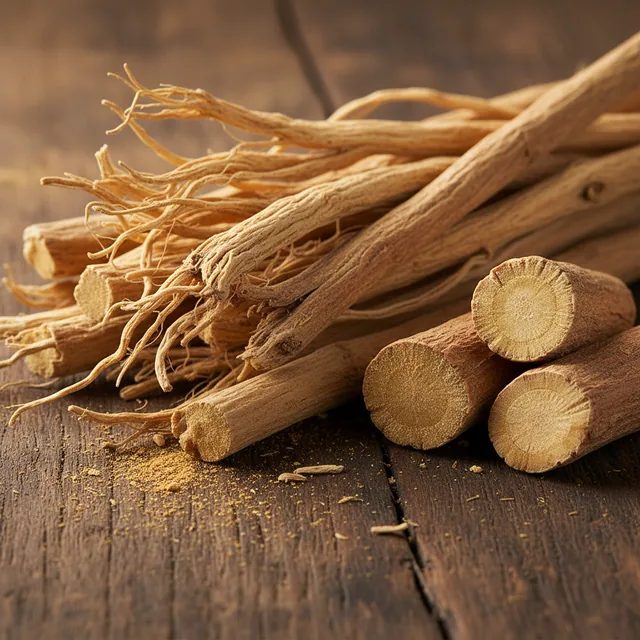
Licorice is a naturally sweet root with a long place in Ayurveda and traditional herbal learning. It is often known as Yashtimadhu or Mulethi and is presented here only for safe, general education.
यष्टिमधु स्निग्धं मधुरं वृष्यं च बल्यं च
yaṣṭimadhu snigdhaṁ madhuraṁ vṛṣyaṁ ca balyaṁ ca
Traditional context
In Ayurveda, Licorice is traditionally described as sweet, cooling, heavy, and oily. It is often discussed in classical herbal knowledge and is presented here as general education only.
Traditional description
How to read this
Read this as cultural and traditional context — not as a recommendation to take anything. For personal use, consult a qualified practitioner.
Comprehensive Monograph & Research
The Sweet Harmony of Licorice in Ayurveda
Licorice, known as Yashtimadhu in Sanskrit, is a cherished herb in Ayurveda celebrated for its sweet taste and soothing qualities. This root has been used for centuries to bring harmony to the body, particularly in balancing Vata and Pitta doshas. Its naturally sweet flavor makes it a delightful addition to herbal teas and remedies, often used to calm the throat and support respiratory health. The cooling nature of licorice helps to alleviate heat and inflammation, making it a gentle ally in maintaining inner peace and comfort. In today's fast-paced world, incorporating licorice into your daily routine can be a simple yet effective way to nurture your well-being.
Add a small piece of licorice root to your herbal tea for a naturally sweet flavor. You can also use licorice powder in warm milk or smoothies for a soothing effect.
आयुर्वेद में मुलेठी की मिठास और गुण
मुलेठी, जिसे संस्कृत में यष्टिमधु कहा जाता है, आयुर्वेद में अपनी मिठास और शीतल गुणों के लिए जानी जाती है। यह जड़ सदियों से शरीर में संतुलन लाने के लिए उपयोग की जाती रही है, विशेषकर वात और पित्त दोषों को संतुलित करने में। इसकी प्राकृतिक मिठास इसे हर्बल चाय और घरेलू उपायों में एक सुखदायक तत्व बनाती है, जो गले को शांत करने और श्वसन स्वास्थ्य को समर्थन देने में सहायक होती है। मुलेठी की शीतलता गर्मी और सूजन को कम करने में मदद करती है, जिससे यह आंतरिक शांति और आराम बनाए रखने में एक कोमल साथी बन जाती है। आज की तेज़ रफ्तार दुनिया में, अपनी दिनचर्या में मुलेठी को शामिल करना आपके स्वास्थ्य को पोषित करने का एक सरल और प्रभावी तरीका हो सकता है।
अपने हर्बल चाय में मुलेठी की एक छोटी टुकड़ी डालें जिससे प्राकृतिक मिठास मिले। आप मुलेठी पाउडर को गर्म दूध या स्मूदी में भी मिला सकते हैं।
Safety context
This is educational information only. No dosage is given and no health outcome is claimed.
If pregnant or breastfeeding, do not self-use herbs; consult a qualified professional first.
Herbs can interact with medication. Speak with a professional before use if you take any medicine.
Should not self-use: Pregnant or breastfeeding people; Anyone on medication; Anyone with a medical condition
Consult: A qualified Ayurveda practitioner or healthcare professional
No dosage, preparation strength or symptom-to-herb recommendation is given here.