

Haritaki
Haritaki Terminalia chebula
Haritaki is a traditional fruit-based herb with a long place in Ayurveda. It is often known as one of the three fruits used in Triphala and is presented here only for safe, general education.
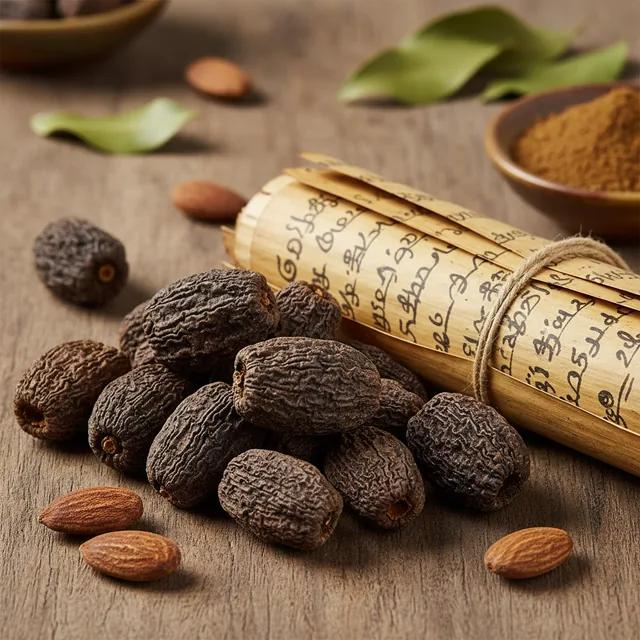
वयःस्थापनं रसायनं मेध्यं च हरितकी
vayasthāpanaṁ rasāyanaṁ medhyaṁ ca harītakī
Traditional context
In Ayurveda, Haritaki is traditionally described as mainly astringent, light, dry, and warming. It is often discussed in classical herbal learning and is presented here as general education only.
Traditional description
How to read this
Read this as cultural and traditional context — not as a recommendation to take anything. For personal use, consult a qualified practitioner.
Comprehensive Monograph & Research
Understanding Haritaki: The Revered Fruit of Ayurveda
Haritaki, known as Terminalia chebula in the botanical world, is a celebrated fruit in Ayurveda. Often recognized as one of the three fruits in the famous Triphala formulation, Haritaki is revered for its balancing effects on all three doshas: Vata, Pitta, and Kapha. Its unique combination of tastes—primarily astringent, with bitter and sweet undertones—makes it a versatile herb. In Ayurveda, Haritaki is considered a 'Rasayana,' meaning it has rejuvenative properties that promote longevity and vitality. The fruit is light and dry, making it particularly beneficial for those with excess Kapha. Its warming potency helps in balancing Vata, while its sweet post-digestive effect is soothing for Pitta. Haritaki's traditional uses include supporting digestive health and promoting regularity, making it a staple in many Ayurvedic practices. Incorporating Haritaki into your daily routine can be as simple as using it in powdered form with warm water or as part of the Triphala blend. However, it's important to approach its use with respect and awareness, especially if you are pregnant, nursing, or on medication.
Incorporate Haritaki into your daily routine by mixing a small amount of its powder with warm water and consuming it in the morning. It can also be used as part of the Triphala blend, which is commonly taken before bedtime to support digestion and regularity.
हरितकी: आयुर्वेद का पूजनीय फल
हरितकी, जिसे वनस्पति जगत में टर्मिनालिया चेबुला के नाम से जाना जाता है, आयुर्वेद में एक प्रसिद्ध फल है। त्रिफला के तीन फलों में से एक के रूप में पहचानी जाने वाली हरितकी को वात, पित्त और कफ तीनों दोषों को संतुलित करने के लिए सराहा जाता है। इसके स्वाद का अनोखा संयोजन—मुख्यतः कसैला, कड़वा और मीठा—इसे एक बहुमुखी जड़ी-बूटी बनाता है। आयुर्वेद में हरितकी को 'रसायन' माना जाता है, जिसका अर्थ है कि इसमें दीर्घायु और जीवन शक्ति को बढ़ावा देने वाले गुण होते हैं। यह फल हल्का और रूखा होता है, जो विशेष रूप से अधिक कफ वाले लोगों के लिए लाभकारी होता है। इसकी उष्ण प्रकृति वात को संतुलित करने में मदद करती है, जबकि इसका मधुर विपाक पित्त के लिए सुखदायक होता है। हरितकी का पारंपरिक उपयोग पाचन स्वास्थ्य का समर्थन करने और नियमितता को बढ़ावा देने के लिए किया जाता है, जिससे यह कई आयुर्वेदिक प्रथाओं में एक मुख्य घटक बन जाता है। अपनी दिनचर्या में हरितकी को शामिल करना उतना ही सरल हो सकता है जितना कि इसे गर्म पानी के साथ पाउडर के रूप में या त्रिफला मिश्रण के हिस्से के रूप में उपयोग करना। हालांकि, यदि आप गर्भवती हैं, स्तनपान करा रही हैं, या दवा पर हैं, तो इसके उपयोग के प्रति सम्मान और जागरूकता के साथ आगे बढ़ना महत्वपूर्ण है।
हरितकी को अपनी दिनचर्या में शामिल करने के लिए इसके पाउडर की थोड़ी मात्रा को गर्म पानी के साथ मिलाकर सुबह सेवन करें। इसे त्रिफला मिश्रण के हिस्से के रूप में भी उपयोग किया जा सकता है, जिसे आमतौर पर पाचन और नियमितता को समर्थन देने के लिए सोने से पहले लिया जाता है।
Safety context
This is educational information only. No dosage is given and no health outcome is claimed.
If pregnant or breastfeeding, do not self-use herbs; consult a qualified professional first.
Herbs can interact with medication. Speak with a professional before use if you take any medicine.
Should not self-use: Pregnant or breastfeeding people; Anyone on medication; Anyone with a medical condition
Consult: A qualified Ayurveda practitioner or healthcare professional
No dosage, preparation strength or symptom-to-herb recommendation is given here.