

Cardamom
Ela Elettaria cardamomum
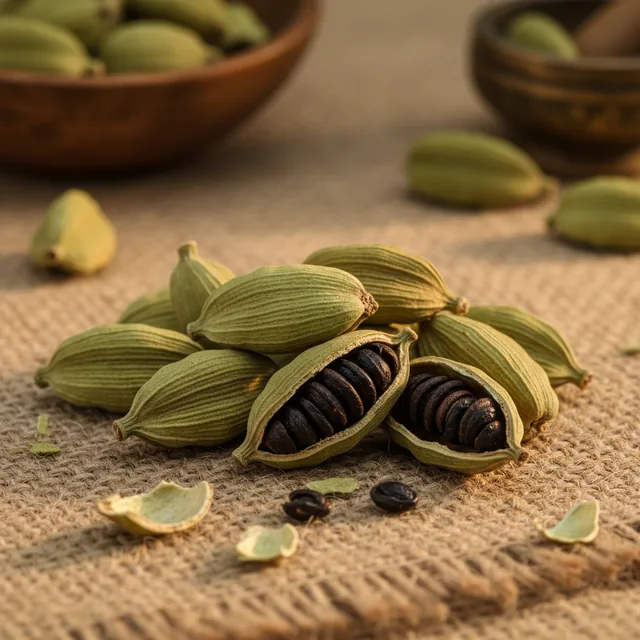
Cardamom is a fragrant kitchen spice with a sweet, fresh, and slightly sharp taste. It is often used in small amounts in teas, sweets, rice dishes, and spice blends.
एला तिक्तोष्णा लघ्वी च वातकफहरोचका।
elā tiktauṣṇā laghvī ca vātakaphaharocakā
Traditional context
In Ayurveda, Cardamom is traditionally described as light, dry, aromatic, and cooling. It is often used in traditional food routines for its pleasant aroma and is presented here as general education only.
Traditional description
How to read this
Read this as cultural and traditional context — not as a recommendation to take anything. For personal use, consult a qualified practitioner.
Comprehensive Monograph & Research
The Fragrant Magic of Cardamom
Cardamom, known as Ela in Sanskrit, is a cherished spice in Ayurveda, celebrated for its aromatic and digestive properties. This small green pod, packed with tiny black seeds, is a staple in many kitchens. Its sweet, fresh, and slightly sharp taste makes it a delightful addition to teas, sweets, and savory dishes alike. In Ayurveda, cardamom is appreciated for its ability to balance Vata and Kapha doshas, while its warming nature can slightly increase Pitta if consumed in excess. Its light and dry qualities make it an excellent digestive aid, often used to relieve bloating and improve appetite. Cardamom's unique prabhava, or special action, lies in its ability to freshen breath and enhance the flavor of foods. Whether sprinkled in a cup of chai or added to a pot of rice, cardamom brings a touch of fragrant magic to everyday meals.
Add a pinch of cardamom to your morning tea or coffee for a fragrant start. Use it in baking to enhance the flavor of cakes and cookies. Sprinkle ground cardamom on oatmeal or yogurt for a warming touch.
इलायची का सुगंधित जादू
इलायची, जिसे संस्कृत में एला कहा जाता है, आयुर्वेद में अपने सुगंधित और पाचन गुणों के लिए प्रसिद्ध है। यह छोटी हरी फली, जिसमें छोटे काले बीज होते हैं, कई रसोइयों में एक आवश्यक मसाला है। इसकी मिठास भरी, ताज़गी भरी और हल्की तीखी स्वाद इसे चाय, मिठाई और नमकीन व्यंजनों में एक अद्भुत जोड़ बनाता है। आयुर्वेद में, इलायची को वात और कफ दोष को संतुलित करने के लिए सराहा जाता है, जबकि इसकी उष्ण प्रकृति पित्त को थोड़ी मात्रा में बढ़ा सकती है। इसके हल्के और शुष्क गुण इसे एक उत्कृष्ट पाचन सहायक बनाते हैं, जो अक्सर अपच और भूख बढ़ाने के लिए उपयोग किया जाता है। इलायची का विशेष प्रभाव इसके सांस को ताज़ा करने और खाद्य पदार्थों के स्वाद को बढ़ाने की क्षमता में निहित है। चाहे चाय के कप में छिड़का जाए या चावल के बर्तन में डाला जाए, इलायची रोज़मर्रा के भोजन में सुगंधित जादू का स्पर्श लाती है।
सुबह की चाय या कॉफी में इलायची का एक चुटकी डालें। केक और कुकीज़ के स्वाद को बढ़ाने के लिए इसे बेकिंग में उपयोग करें। दलिया या दही पर पिसी हुई इलायची छिड़कें।
Safety context
This is educational information only. No dosage is given and no health outcome is claimed.
If pregnant or breastfeeding, do not self-use herbs; consult a qualified professional first.
Herbs can interact with medication. Speak with a professional before use if you take any medicine.
Should not self-use: Pregnant or breastfeeding people; Anyone on medication; Anyone with a medical condition
Consult: A qualified Ayurveda practitioner or healthcare professional
No dosage, preparation strength or symptom-to-herb recommendation is given here.