

Bibhitaki
Vibhitaki Terminalia bellirica (Gaertn.) Roxb.
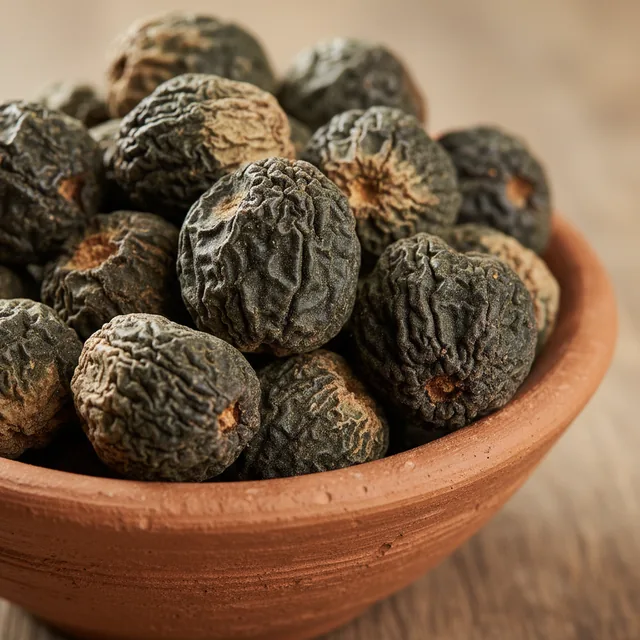
Bibhitaki is a traditional Ayurvedic herb known for its dried fruit. It is one of the three fruits used in Triphala and is presented here only for general traditional education.
त्रिफला हन्ति वातं पित्तं कफं च
triphala hanti vātaṃ pittaṃ kaphaṃ ca
Traditional context
In Ayurveda, Bibhitaki is traditionally described as astringent, light, dry, and warming. It is often mentioned in classical herb context and is presented here as general education only.
Traditional description
How to read this
Read this as cultural and traditional context, not as a recommendation to take anything. For personal use, consult a qualified practitioner.
Comprehensive Monograph & Research
Bibhitaki: The Fearless Fruit of Ayurveda
Bibhitaki, one of the three fruits in the famous Triphala formulation, is celebrated in Ayurveda for its unique qualities. Its name, meaning 'fearless', reflects its robust nature in supporting overall wellness. Bibhitaki is primarily astringent in taste, which can be likened to the sensation of unripe bananas or cranberries. This astringency, combined with its light and dry qualities, makes it particularly beneficial for balancing the Kapha dosha, which is often associated with heaviness and stagnation. Bibhitaki's cooling potency helps soothe Pitta, the fiery dosha, making it a versatile herb for maintaining equilibrium in the body. In daily life, Bibhitaki can be a gentle ally for those looking to support their body's natural cleansing processes. Its role in Triphala, a traditional Ayurvedic blend, underscores its importance in promoting digestive health and regularity. However, it's essential to use Bibhitaki with awareness, as its drying nature can potentially aggravate Vata if consumed in excess. Incorporating Bibhitaki into your routine can be as simple as enjoying it in a warm herbal tea or as part of a balanced diet, always keeping in mind the guidance of a knowledgeable practitioner.
Incorporate Bibhitaki into your daily routine by adding its powder to warm water or herbal teas. It can also be used in small amounts in smoothies or mixed with honey for a soothing paste.
बिभीतकी: आयुर्वेद का निर्भय फल
बिभीतकी, त्रिफला के तीन फलों में से एक, आयुर्वेद में अपनी अनोखी विशेषताओं के लिए प्रसिद्ध है। इसका नाम 'निर्भय' इसके मजबूत स्वभाव को दर्शाता है, जो समग्र स्वास्थ्य का समर्थन करता है। बिभीतकी का मुख्य स्वाद कसैला होता है, जो कच्चे केले या क्रैनबेरी के स्वाद जैसा होता है। इसकी कसैलापन, हल्के और रूक्ष गुणों के साथ मिलकर, इसे कफ दोष को संतुलित करने में विशेष रूप से लाभकारी बनाता है, जो अक्सर भारीपन और जड़ता से जुड़ा होता है। बिभीतकी की शीतल प्रकृति पित्त, जो कि अग्नि दोष है, को शांत करने में मदद करती है, जिससे यह शरीर में संतुलन बनाए रखने के लिए एक बहुमुखी जड़ी-बूटी बन जाती है। दैनिक जीवन में, बिभीतकी शरीर की प्राकृतिक सफाई प्रक्रियाओं का समर्थन करने के लिए एक कोमल साथी हो सकती है। त्रिफला में इसकी भूमिका, जो एक पारंपरिक आयुर्वेदिक मिश्रण है, इसके पाचन स्वास्थ्य और नियमितता को बढ़ावा देने के महत्व को रेखांकित करती है। हालांकि, बिभीतकी का उपयोग सावधानी से करना आवश्यक है, क्योंकि इसकी रूक्षता अधिक मात्रा में सेवन करने पर वात को बढ़ा सकती है। बिभीतकी को अपनी दिनचर्या में शामिल करना उतना ही सरल हो सकता है जितना कि इसे एक गर्म हर्बल चाय में या संतुलित आहार के हिस्से के रूप में आनंद लेना, हमेशा एक जानकार चिकित्सक के मार्गदर्शन को ध्यान में रखते हुए।
बिभीतकी को अपनी दैनिक दिनचर्या में शामिल करने के लिए इसके पाउडर को गर्म पानी या हर्बल चाय में मिलाएं। इसे स्मूदी में या शहद के साथ मिलाकर एक सुखदायक पेस्ट के रूप में भी उपयोग किया जा सकता है।
Safety context
This is educational information only. No dosage is given and no health outcome is claimed. Bibhitaki should not be self-used casually, especially in concentrated or supplement form.
If pregnant or breastfeeding, do not self-use herbs; consult a qualified professional first.
Herbs can interact with medication. Speak with a professional before use if you take any medicine.
Should not self-use: Pregnant or breastfeeding people; Anyone on medication; Anyone with a medical condition; Anyone unsure about the form or quality of the herb
Consult: A qualified Ayurveda practitioner or healthcare professional
No dosage, preparation strength or symptom-to-herb recommendation is given here.