

Arjuna
Arjuna Terminalia arjuna
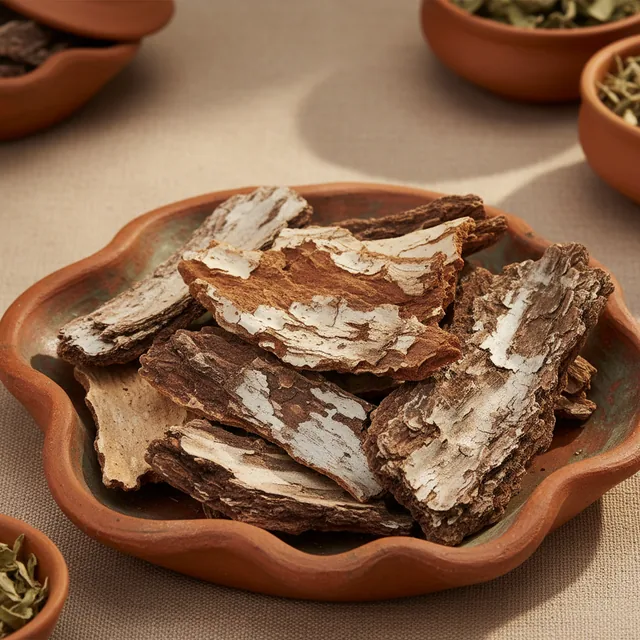
Arjuna is a traditional tree herb known for its bark. It has a long place in Ayurvedic learning and is presented here only for safe, general education.
अर्जुनो हृदयस्य च
arjuno hṛdayasya ca
Traditional context
Traditional materia-medica context is acknowledged, but Kriyasya does not convert it into a cardiovascular treatment claim.
Traditional description
Evidence boundary
P05 establishes identity/provenance rather than clinical efficacy.
What varies. Evidence and safety can vary by species identity, plant part, preparation, product quality, exposure, population, medicines and health conditions.
How to read this
Read this as cultural and traditional context — not as a recommendation to take anything. For personal use, consult a qualified practitioner.
Comprehensive Monograph & Research
Arjuna: The Heart's Guardian
Arjuna, known scientifically as Terminalia arjuna, is a revered tree in Ayurveda, especially for its bark. Traditionally, it has been associated with heart wellness. The bark of Arjuna is known for its astringent and bitter taste, which helps balance Kapha and Pitta doshas. Its light and dry qualities, along with a cooling potency, make it a unique herb for supporting the body's natural processes. In daily life, Arjuna can be a gentle ally for maintaining overall wellness, especially when combined with a balanced diet and lifestyle. Its historical use in Ayurveda highlights its importance as a supportive herb rather than a curative one.
Incorporate Arjuna by using its bark powder in warm water or herbal teas. It can also be added to smoothies or taken with honey. Always use in moderation.
अर्जुन: हृदय का रक्षक
अर्जुन, जिसे वैज्ञानिक रूप से टर्मिनालिया अर्जुना के नाम से जाना जाता है, आयुर्वेद में एक प्रतिष्ठित वृक्ष है, विशेष रूप से इसकी छाल के लिए। पारंपरिक रूप से, इसे हृदय स्वास्थ्य के साथ जोड़ा गया है। अर्जुन की छाल का कसैला और कड़वा स्वाद कफ और पित्त दोषों को संतुलित करने में मदद करता है। इसके हल्के और शुष्क गुण, साथ ही शीतल प्रकृति, इसे शरीर की प्राकृतिक प्रक्रियाओं का समर्थन करने के लिए एक अनूठी जड़ी-बूटी बनाते हैं। दैनिक जीवन में, अर्जुन संतुलित आहार और जीवनशैली के साथ मिलकर समग्र स्वास्थ्य के लिए एक कोमल साथी हो सकता है। आयुर्वेद में इसका ऐतिहासिक उपयोग इसे एक सहायक जड़ी-बूटी के रूप में दर्शाता है, न कि एक उपचारात्मक के रूप में।
अर्जुन को अपनी दिनचर्या में शामिल करने के लिए इसकी छाल का पाउडर गर्म पानी या हर्बल चाय में मिलाएं। इसे स्मूदी में भी डाला जा सकता है या शहद के साथ लिया जा सकता है। हमेशा संतुलित मात्रा में उपयोग करें।
Safety context
This is educational information only. No dosage is given and no health outcome is claimed.
If pregnant or breastfeeding, do not self-use herbs; consult a qualified professional first.
Herbs can interact with medication. Speak with a professional before use if you take any medicine.
No dosage, medicine replacement or disease-management guidance is provided; intended use remains under qualified review.
Should not self-use: Pregnant or breastfeeding people; Anyone on medication; Anyone with a medical condition
Consult: A qualified Ayurveda practitioner or healthcare professional
No dosage, preparation strength or symptom-to-herb recommendation is given here.