

Amla
Amalaki Phyllanthus emblica
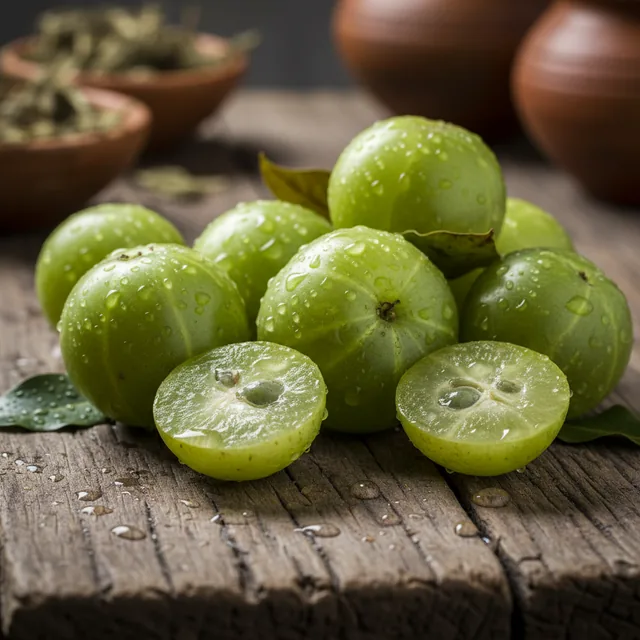
Amla, also known as Indian gooseberry, is a sour fruit with a long place in traditional Indian food and Ayurveda. It is often used in small amounts in foods, preserves, and traditional preparations.
आमलक्यः फलानां श्रेष्ठं त्रिदोषहरं लघु।
āmalakyaḥ phalānāṃ śreṣṭhaṃ tridoṣaharaṃ laghu.
Traditional context
Amla has established traditional materia-medica and food context. This record preserves identity/provenance only.
Traditional description
Evidence boundary
P05 does not make a clinical-effectiveness claim for Amla.
What varies. Evidence and safety can vary by species identity, plant part, preparation, product quality, exposure, population, medicines and health conditions.
How to read this
Read this as cultural and traditional context — not as a recommendation to take anything. For personal use, consult a qualified practitioner.
Comprehensive Monograph & Research
Amla: The Nourishing Indian Gooseberry
Amla, or Indian gooseberry, is a small, green fruit renowned in Ayurveda for its potent health benefits. With its sour and astringent taste, amla is a powerhouse of nutrients, particularly vitamin C. In Ayurveda, it is considered a 'Rasayana', meaning it has rejuvenating properties that help maintain vitality and wellness. Amla is known to balance all three doshas—Vata, Pitta, and Kapha—making it a versatile herb for various constitutions. Its cooling nature helps soothe the body, while its light and dry qualities aid digestion and metabolism. Traditionally, amla is used in various forms such as powders, juices, and as a key ingredient in the famous Ayurvedic formulation, Chyawanprash. Incorporating amla into your diet can be as simple as adding a small amount to smoothies, teas, or using it in pickles and preserves. Its rich antioxidant content supports overall health, making it a valuable addition to a balanced lifestyle.
Incorporate amla into your diet by adding its powder to smoothies or juices. Use fresh amla in chutneys or pickles. Amla candies or dried amla can be a healthy snack option.
आंवला: पोषण से भरपूर भारतीय फल
आंवला, जिसे भारतीय करौंदा भी कहा जाता है, आयुर्वेद में अपने शक्तिशाली स्वास्थ्य लाभों के लिए प्रसिद्ध है। खट्टे और कसैले स्वाद वाला यह छोटा हरा फल पोषक तत्वों, विशेषकर विटामिन C से भरपूर होता है। आयुर्वेद में इसे 'रसायन' माना जाता है, जिसका अर्थ है कि यह पुनर्योजक गुणों से युक्त है जो जीवन शक्ति और स्वास्थ्य को बनाए रखने में मदद करता है। आंवला वात, पित्त और कफ तीनों दोषों को संतुलित करता है, जिससे यह विभिन्न प्रकृतियों के लिए एक बहुमुखी जड़ी-बूटी बन जाती है। इसकी शीतल प्रकृति शरीर को शांति प्रदान करती है, जबकि इसके हल्के और शुष्क गुण पाचन और चयापचय में सहायक होते हैं। पारंपरिक रूप से आंवले का उपयोग पाउडर, रस और प्रसिद्ध आयुर्वेदिक तैयारी च्यवनप्राश में किया जाता है। अपने आहार में आंवला शामिल करना उतना ही सरल है जितना कि इसे स्मूदी, चाय या अचार और मुरब्बे में मिलाना। इसके समृद्ध एंटीऑक्सीडेंट सामग्री के कारण यह समग्र स्वास्थ्य का समर्थन करता है, जिससे यह संतुलित जीवनशैली का एक मूल्यवान हिस्सा बन जाता है।
अपने आहार में आंवला शामिल करने के लिए इसके पाउडर को स्मूदी या जूस में मिलाएं। ताजे आंवले का उपयोग चटनी या अचार में करें। आंवला कैंडी या सूखा आंवला एक स्वस्थ नाश्ते का विकल्प हो सकता है।
Safety context
This is educational information only. No dosage is given and no health outcome is claimed.
If pregnant or breastfeeding, do not self-use herbs; consult a qualified professional first.
Herbs can interact with medication. Speak with a professional before use if you take any medicine.
No personalized ingestion guidance is released from this record; concentrated products remain under qualified review.
Should not self-use: Pregnant or breastfeeding people; Anyone on medication; Anyone with a medical condition
Consult: A qualified Ayurveda practitioner or healthcare professional
No dosage, preparation strength or symptom-to-herb recommendation is given here.