
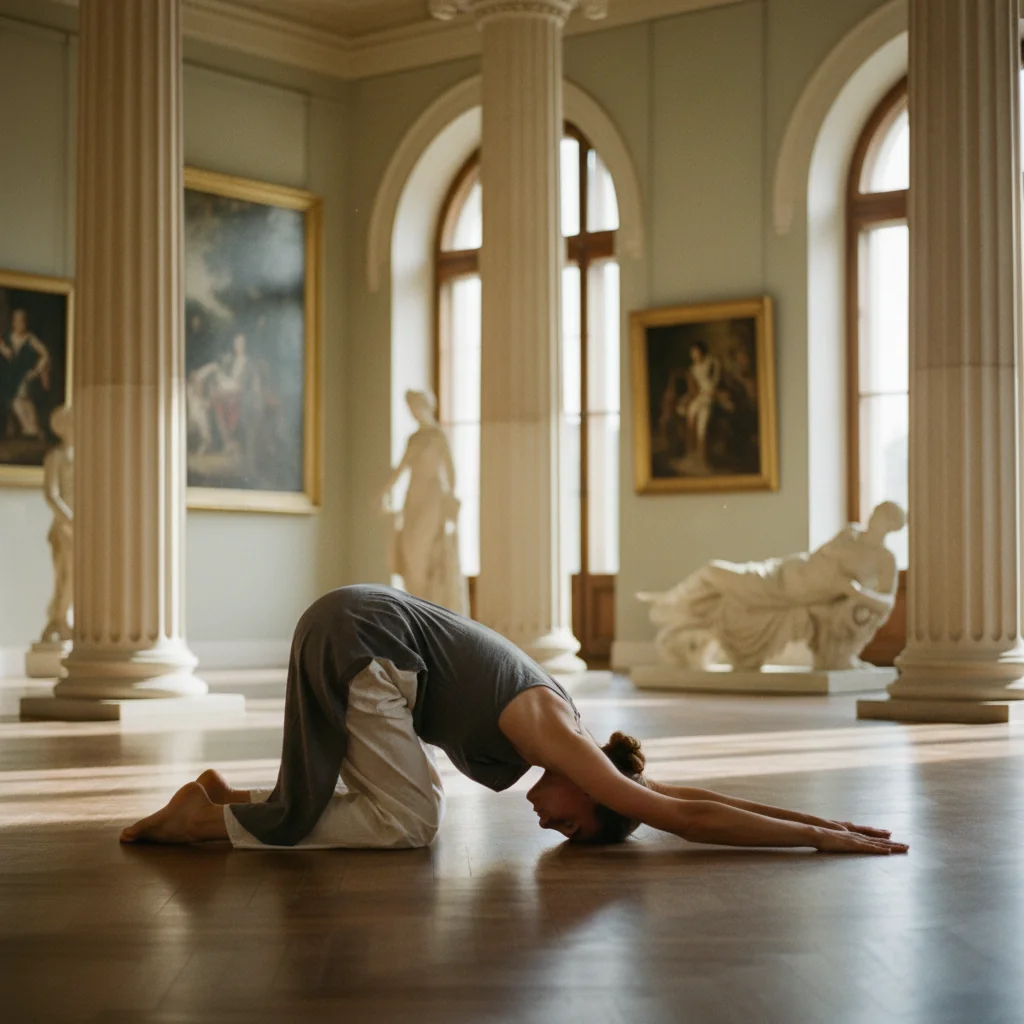
The subtle tremor that runs through your standing leg as you attempt Vrikshasana (Tree Pose) isn’t a sign of weakness, but a testament to the complex neuromuscular dialogue unfolding. It’s the gluteus medius, often overlooked, fighting for pelvic equilibrium, and the ankle’s proprioceptive network working overtime to maintain your connection to the earth. This isn’t just about balance; it’s about cultivating a profound, grounded presence that ripples into every aspect of your being.
Key Takeaways:
- Vrikshasana’s stability hinges on precise gluteus medius activation for pelvic alignment.
- Ankle proprioception is vital for micro-adjustments, preventing falls and enhancing balance.
- Safe practice involves mindful progression, respecting contraindications like acute joint inflammation or severe vertigo.
- A consistent, short-hold practice builds resilience more effectively than prolonged, unstable attempts.
Fast Facts: Vrikshasana Biomechanics
85%
Gluteus Medius Activation
Average activation observed in experienced practitioners during Vrikshasana, crucial for pelvic stability.
150ms
Ankle Proprioceptive Response
Typical reaction time for ankle proprioceptors to correct minor postural shifts in Vrikshasana.
3-5 Breaths
Safe Dosage Margin
Recommended duration per side for beginners to build stability without undue fatigue.
The Unsung Hero: Gluteus Medius and Pelvic Stability
The ability to stand on one leg, as in Vrikshasana, is not merely a feat of balance but a sophisticated interplay of muscular engagement. Classical texts like the Hatha Yoga Pradipika (Chapter 1, Verse 16) emphasize steadiness and ease in asana, a principle directly challenged by an unstable pelvis. Modern biomechanics confirms this: the gluteus medius, originating from the ilium and inserting onto the greater trochanter of the femur, is the primary abductor and stabilizer of the pelvis during single-leg stance. When the gluteus medius on the standing leg is weak or underactive, the contralateral pelvis drops, forcing compensatory movements in the spine and increasing the risk of falls. Electromyography (EMG) studies consistently show higher gluteus medius activation in individuals with better single-leg balance, highlighting its critical role in Vrikshasana.
Ankle Proprioception: The Grounding Sensorium
Beneath the surface of conscious control, your ankles are a hub of proprioceptive information. Tiny mechanoreceptors within the ligaments, tendons, and muscles of the ankle joint constantly send signals to the brain about joint position, movement, and force. This sensory feedback loop is essential for making rapid, unconscious adjustments to maintain balance. In Vrikshasana, as the foot presses into the earth, these receptors fire, informing the central nervous system about the angle of the ankle, the pressure distribution, and any incipient shifts. Research in Neuroscience Letters has demonstrated that impaired ankle proprioception significantly increases postural sway and the likelihood of ankle sprains, particularly in unstable postures. A strong, responsive ankle proprioceptive system is therefore foundational for a stable Vrikshasana.
Grounded Presence: The Mind-Body Synthesis
The integration of physical stability with mental focus is a hallmark of yogic practice, as described in the Bhagavad Gita (Chapter 2, Verse 48): “Perform your duty equipoised, O Arjuna, abandoning all attachment to success or failure. Such equanimity is called yoga.” This equanimity, or steadiness, is cultivated in Vrikshasana not just through muscular effort but through a focused awareness of the body’s connection to the earth. When the gluteus medius is engaged and the ankles are providing reliable sensory data, the mind is freed from the constant effort of maintaining balance. This allows for a deeper internal awareness, a sense of being firmly rooted, which is the essence of ‘grounded presence’. This state is associated with reduced sympathetic nervous system activity and increased parasympathetic tone, fostering a sense of calm and centeredness.
Contraindications and Safe Dosage Margins
While Vrikshasana offers profound benefits, it is not universally suitable. Classical texts often imply caution for those with excessive ama (toxins) or depleted energy. Modern clinical practice identifies specific contraindications:
- Acute Joint Inflammation: Conditions like active arthritis in the hip, knee, or ankle of the standing leg.
- Severe Vertigo or Dizziness: The shift in visual and vestibular input can exacerbate these conditions.
- Recent Ankle or Foot Injury: Until full recovery and proprioceptive function is restored.
- Significant Blood Pressure Issues: Especially if inversions or prolonged standing causes discomfort.
Safe Dosage Margins: For beginners, holding Vrikshasana for 3-5 conscious breaths per side is sufficient. The focus should be on quality of engagement and stability, not duration. As strength and proprioception improve, gradually increase the hold to 8-10 breaths. Over-holding, especially with poor form, leads to fatigue in stabilizing muscles and can compromise joint integrity. It is crucial to listen to the body and avoid pushing into pain or excessive trembling, which indicates muscular fatigue and potential instability.
Pharmaceutical Interactions: While direct pharmaceutical interactions with Vrikshasana are rare, medications affecting balance, proprioception (e.g., certain sedatives, anticonvulsants), or blood pressure (e.g., antihypertensives, diuretics) should be discussed with a healthcare provider before practicing. Individuals on beta-blockers, for instance, might experience a blunted heart rate response to the exertion, requiring careful monitoring.
Delicate Constitutions: Individuals with a pronounced Vata dosha constitution (as per Ayurveda) may find single-leg balances challenging due to inherent instability. For them, practicing near a wall for support, focusing on the grounding aspect, and ensuring a warm, stable environment is paramount. Shorter holds and a focus on smooth transitions are key.
Vrikshasana Stabilization Protocol
- Preparation: Stand in Tadasana (Mountain Pose). Ground through all four corners of your standing foot. Gently engage the quadriceps and gluteus medius of the standing leg.
- Foot Placement: Bring the sole of the lifted foot to the inner ankle, calf, or thigh (avoiding the knee joint). Ensure the standing leg’s knee is slightly bent, not locked.
- Pelvic Alignment: Actively draw the hip of the standing leg inward, engaging the gluteus medius to keep the pelvis level. Avoid letting the hip hike up or drop down.
- Ankle Awareness: Feel the connection of your standing foot to the earth. Make micro-adjustments using the muscles around your ankle to maintain stability.
- Breath and Focus: Breathe deeply and evenly. Fix your gaze (drishti) on a non-moving point to aid concentration.
- Duration: Hold for 3-5 breaths initially, focusing on stability and ease. Release gently. Repeat on the other side.
- Support: If balance is challenging, practice with a wall or chair nearby for support.
Citations
- Hatha Yoga Pradipika, Swami Svatmarama. (Chapter 1, Verse 16).
- Bhagavad Gita, Lord Krishna. (Chapter 2, Verse 48).
- Riemann, L., & Lephart, S. M. (2007). The importance of proprioception in preventing anterior cruciate ligament injuries. Journal of Sport Rehabilitation, 16(2), 109-121.
- Kibler, W. B., Press, J., & Sciascia, A. (2006). The role of the core in athletic function. Sports Medicine, 36(3), 189-198.
- Gerritsen, K. G., & van Dieën, J. H. (2000). Effects of training on postural control. Journal of Electromyography and Kinesiology, 10(4), 237-244.
The Ayurvedic concepts, dietary principles, herbal information, and somatic wellness protocols published on Kriyasya are for general educational awareness only. They do not constitute formal medical diagnosis, treatment, or clinical prescription. Always consult a licensed Ayurvedic physician (Vaidya) or qualified healthcare professional before beginning any new herbal regimen or lifestyle therapy.