

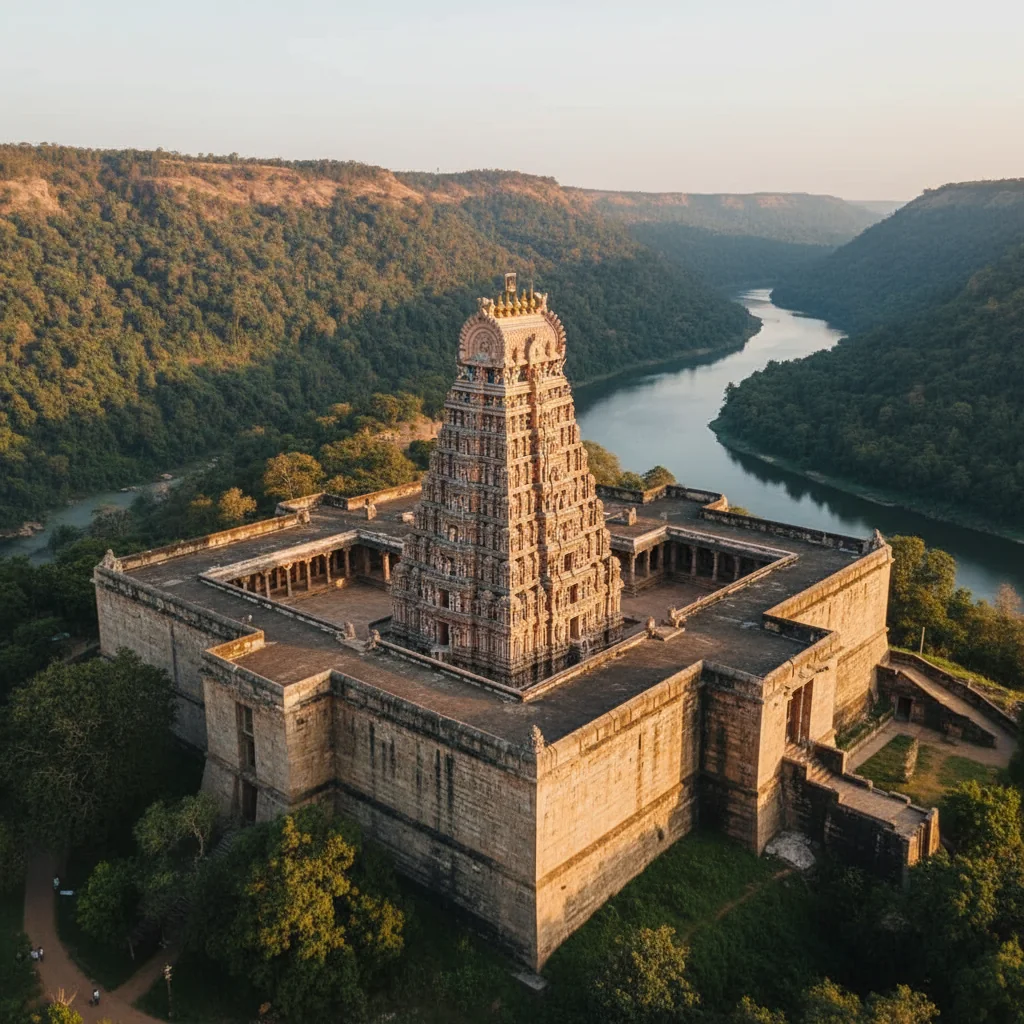
The Vastu Purusha Mandala is the metaphysical foundation of sacred Vedic architecture. Conceived as a cosmic diagram where the primordial cosmic being, the Vastu Purusha, lies face down across the spatial grid, it translates celestial geometry into tangible architectural form. Classical treatises including the Brihat Samhita and Manasara describe how every residential and commercial structure hosts 45 distinct energy fields—divided into 32 peripheral deities (Prakara Devatas) and 13 internal forces. When an architectural layout aligns harmoniously with these subtle grids, the inhabitants experience profound mental clarity, sustained prosperity, and biological vitality.
The Sacred Geometry of 81 Padas (Paramasayika Mandala)
While temples often employ the 64-pada Manduka grid, residential homes strictly follow the 81-square Paramasayika Mandala. This structure is arranged in concentric concentric layers of consciousness:
- Brahmasthan (Center): A 3×3 square zone (9 central padas) governed by Lord Brahma, the cosmic creator. It represents pure, unburdened ether (Akasha) and must remain entirely hollow, unobstructed, and weightless.
- Daivika Padas (Inner Ring): Four major cosmic deities—Aryama (East), Vivasvan (South), Mitra (West), and Bhudhara (North)—holding the foundational anchors of life stability.
- Manusha Padas (Intermediate Layer): The realm of practical human enterprise, supporting daily relationships, emotional resilience, and family equilibrium.
- Paishacha Padas (Outer Perimeter): The 32 peripheral fields through which cosmic light and environmental prana enter the living boundary.
| Directional Sector | Key Deity Fields | Governing Attribute | Severe Defect (Dosha) |
|---|---|---|---|
| Northeast (Ishanya) | Shikhi, Parjanya, Jayanta | Spiritual insight, mental clarity, inspiration | Toilet or septic tank causes chronic brain fog and paralysis of vision |
| Southeast (Agneya) | Agni, Pusha, Savita | Digestive fire, liquid cash flow, zeal | Underground water tank drains liquidity and sparks family litigation |
| Southwest (Nairrutya) | Indra, Jaya, Gandharva, Bhringraj | Ancestral grounding, authority, mastery | Cut corner or underground tank breeds instability and chronic vulnerability |
| Northwest (Vayavya) | Roga, Naga, Mukhya, Bhallata | Social support, banking credit, legal alliance | Heavy overhead concrete structure suffocates beneficial partnerships |
The Vulnerability of Marma Points (Energy Junctions)
Just as the human physical body possesses vital acupressure centers, the Vastu Purusha Mandala contains intersecting diagonal lines termed Maha-Sutras and Rajju lines. Where these lines intersect are delicate Marma Sthanas. Drilling pillars, placing heavy staircases, or locating septic tanks directly on these sensitive energy nodes creates systemic tension for the household, manifesting as recurring physical ailments in corresponding bodily regions of the occupants.
Content published on Kriyasya Pulse represents editorial and educational insights uniting traditional wisdom with contemporary research. Readers are encouraged to apply discernment and seek qualified guidance where appropriate.