

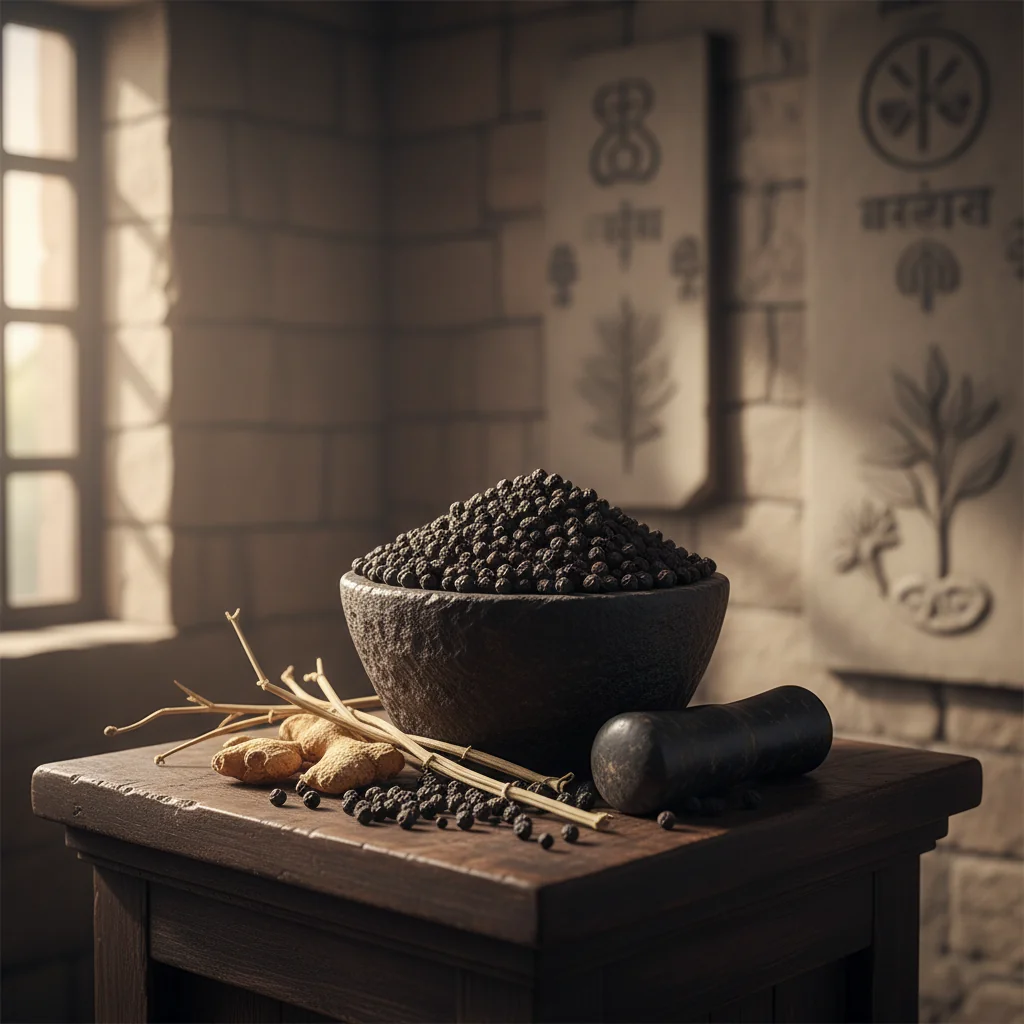
The ancient treatises of Ayurveda, including the Charaka Samhita, Sushruta Samhita, and Bhavaprakasha Nighantu, celebrate Shashtika Shali (60-Day Red Rice) (Oryza sativa var. shashtika) as an indispensable dravya for restoring constitutional balance, nurturing the deeper tissues (Dhatus), and preserving vital life essence (Ojas). In this comprehensive master guide, we explore the pharmacological architecture, classical indications, and clinical applications of this renowned substance.
Classical Treatise Shloka & Sanskrit Anvaya
स्निग्धो ग्राहि गुरुः स्वादुः कषायो दीपनः परः। षष्टिको वरदः श्रेष्ठः त्रिदोषशमनो लघुः॥
— snigdho grāhi guruḥ svāduḥ kaṣāyo dīpanaḥ paraḥ, ṣaṣṭiko varadaḥ śreṣṭhaḥ tridoṣaśamano laghuḥ (Charaka Samhita, Sutrasthana 27.13)
Sanskrit Anvaya & Translation: Shashtika Shali is sweet and slightly astringent, unctuous yet light to digest, kindle digestive Agni, pacify all three Doshas (Tridoshahara), and stand as the supreme medicinal grain for tissue nourishment.
Complete Dravya Guna & Energetic Profile
Ayurvedic pharmacology analyzes every food and herb through its elemental energetics. The fundamental properties of Shashtika Shali (60-Day Red Rice) are outlined below:
Culinary Processing Rules: Soaking, Cooking & Agni Optimization
Raw plant compounds and seeds contain phytic acids, enzyme inhibitors, and lectins that challenge human digestion. Classical Ayurveda mandates specific culinary transformations (Samskaras) for Shashtika Shali (60-Day Red Rice):
- Soaking Protocol: Soak heirloom unpolished grains for 30 to 45 minutes; boil in clay pot with 4-5 times water until soft and grains blossom completely. Soaking activates latent phytase enzymes, breaking down mineral-binding complexes and unlocking bioavailability.
- Thermal Activation (Deepana Spicing): Always temper Shashtika Shali (60-Day Red Rice) with digestive spices such as cumin, ginger, mustard seed, or hing to ignite the local stomach Agni.
- Vessel Selection: Utilize unglazed clay pots, heavy cast iron, or stainless steel. Avoid reactive aluminum or non-stick PTFE coated cookware that leaches endocrine disruptors into acidic preparations.
- Freshness Rules: Consume freshly cooked preparations within 3 hours (one Yama). Reheating refrigerated preparations generates Tamasic energy and deadens Pranic vitality.
Proper culinary transformation converts heavy, sluggish foods into light, easily assimilated medicinal nectar.
✦ Interactive Ayurvedic Diagnostic: Ayurvedic Prakriti & Metabolic Agni Assessment
Discover your unique Doshic constitution and digestive capacity to tailor optimal healing grain portions.
Practical Clinical FAQs
1. How long does it take to experience visible health benefits from Shashtika Shali (60-Day Red Rice)?
Within 7 to 14 days of daily consumption as medicinal porridge, patients typically experience enhanced digestive comfort, increased stamina, and stabilized energy levels.
2. Can Shashtika Shali (60-Day Red Rice) be consumed daily throughout the year?
Yes, Charaka Samhita designates Shashtika Shali as ‘Nitya Sevaniya’ (safe and beneficial for continuous daily consumption across all seasons).
3. What is the most common mistake people make when using Shashtika Shali (60-Day Red Rice)?
Polishing away the red bran or cooking in high-pressure cookers at excessive temperatures, which destroys delicate polyphenol compounds.
4. How does Shashtika Shali (60-Day Red Rice) interact with prescription medications?
Safe with all allopathic drugs; its gentle prebiotic fiber supports healthy gut flora during antibiotic or NSAID therapy.
Editorial Vaidya Verdict & Shastric Summary
The classical texts of Ayurveda place Shashtika Shali (60-Day Red Rice) among the most revered dravyas for long-term health maintenance and disease management. By honoring proper preparation rules, seasonal rhythms, and personal constitutional requirements, you harness the full restorative wisdom of classical Indian medicine for enduring vitality and longevity.
The Ayurvedic concepts, dietary principles, herbal information, and somatic wellness protocols published on Kriyasya are for general educational awareness only. They do not constitute formal medical diagnosis, treatment, or clinical prescription. Always consult a licensed Ayurvedic physician (Vaidya) or qualified healthcare professional before beginning any new herbal regimen or lifestyle therapy.