
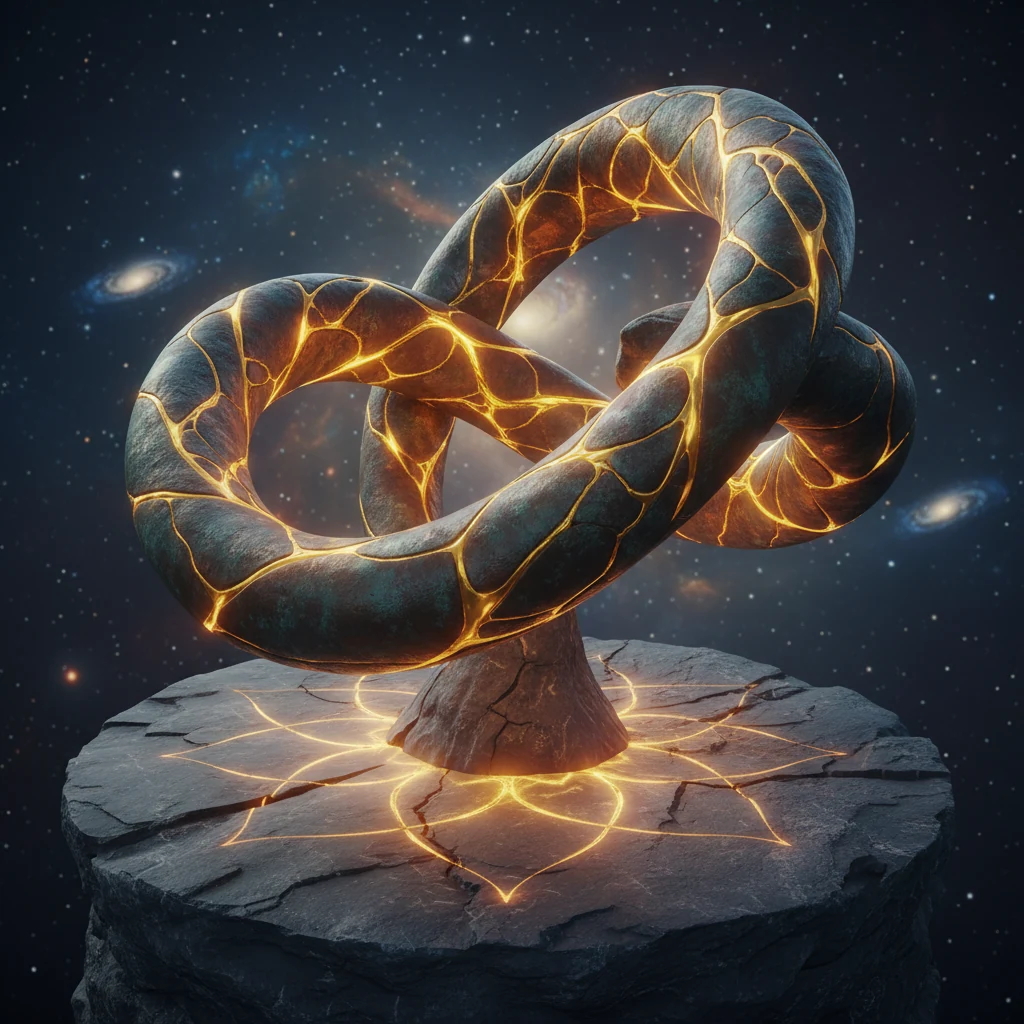
The subtle tension between effervescent communication and deep, solitary analysis defines the Life Path 3 and Expression 7 individual. It’s the internal dialogue between the desire to share expansive ideas and the imperative to meticulously dissect them, a cognitive matrix shaping their unique destiny.
Key Takeaways:
- Life Path 3 individuals are natural communicators, driven by creativity and emotional expression.
- Expression 7 individuals possess an analytical mind, seeking truth through deep introspection and research.
- The integration of these energies requires balancing outward expression with inward contemplation.
- Mastery involves leveraging intellectual depth to refine creative output and using communication to share profound insights.
Fast Facts: Life Path 3 & Expression 7
The Archetypal Synthesis: From Expression to Essence
Life Path 3, rooted in the energetic vibration of Jupiter (Brihat Parashara Hora Shastra, Adhyaya 3), signifies a life journey guided by expansion, creativity, and social interaction. These individuals often find their purpose through artistic endeavors, teaching, or any field that allows for vibrant self-expression. Their inherent optimism and charm draw others in, fostering a natural inclination towards communication and community. However, this outward focus can sometimes lead to superficiality if not grounded by deeper inquiry.
Conversely, Expression 7, governed by the introspective and analytical energy of Ketu (Brihat Parashara Hora Shastra, Adhyaya 3), points to the core way an individual expresses themselves and interacts with the world through their name. This energy demands solitude, intellectual pursuit, and a relentless search for truth. The Expression 7 individual is the philosopher, the scientist, the detective, driven by a need to understand the underlying mechanisms of existence. They are often perceived as reserved, preferring deep thought over casual conversation. The challenge lies in their potential for isolation and overthinking, which can stifle their natural communicative gifts.
The Cognitive Matrix: Navigating the Inner Dialogue
The confluence of Life Path 3 and Expression 7 creates a unique cognitive matrix. The Life Path 3’s desire to share is met by the Expression 7’s need to understand before speaking. This internal dynamic mirrors the yogic concept of Pratyahara (Patanjali Yoga Sutras, Sutra II.54) – the withdrawal of the senses – which is essential for the Expression 7’s analytical process, followed by Dharana (Patanjali Yoga Sutras, Sutra III.1) – concentration – to achieve deep insight. The Life Path 3 then provides the impetus for Samkhya (Patanjali Yoga Sutras, Sutra I.17) – discriminative knowledge – and ultimately Ananda (Patanjali Yoga Sutras, Sutra III.12) – bliss derived from understanding and integration.
Modern neuroscience illuminates this interplay through the prefrontal cortex (PFC). The Life Path 3 engages the ventromedial PFC, associated with social cognition and emotional processing, while the Expression 7 activates the dorsolateral PFC, crucial for executive functions like planning, working memory, and analytical reasoning. The challenge is to integrate these systems, preventing the analytical paralysis of the dlPFC from inhibiting the creative flow of the vmPFC, and vice-versa. This integration is key to avoiding the HPA-axis dysregulation that can arise from chronic overthinking or unexpressed creativity.
The Path to Mastery: Harmonizing Expression and Insight
Mastery for this archetype lies in the harmonious synthesis of outward expression and inward analysis. It’s about using the analytical rigor of the 7 to refine and deepen the creative output of the 3, and employing the communicative gifts of the 3 to articulate the profound insights gained through the 7’s introspection. This is not merely about balancing two energies, but about creating a synergistic feedback loop.
The Ayurvedic concept of Sattva (Charaka Samhita, Sutrasthana, Adhyaya 1) – clarity, balance, and harmony – is the ultimate goal. When Sattva predominates, the individual can leverage their analytical prowess without succumbing to cynicism, and express their creativity without falling into superficiality. This balance supports optimal gut-brain microbiome signaling, fostering mental clarity and emotional resilience.
Protocol for Integration: The Cognitive Alchemy
- Mindful Observation (Expression 7): Dedicate specific times for deep study and reflection. Engage in practices like Vipassanā or journaling to process thoughts without immediate judgment. This cultivates the analytical depth.
- Creative Expression (Life Path 3): Channel insights into creative outlets – writing, art, music, or public speaking. Focus on conveying the essence of your understanding with clarity and authenticity.
- Structured Dialogue: Engage in discussions where you can articulate your analytical findings (7) and receive feedback, allowing for refinement and broader perspective (3).
- Somatic Grounding: Practice techniques that integrate mind and body, such as Yoga Asana (Gheranda Samhita, Adhyaya 1) or mindful movement, to anchor the analytical mind and prevent overthinking.
- Purposeful Communication: Ensure your communication serves a higher purpose, sharing wisdom derived from your analytical journey, rather than mere chatter.
Citations:
- Brihat Parashara Hora Shastra (Classical Jyotish Treatise)
- Patanjali Yoga Sutras (Classical Yoga Scripture)
- Charaka Samhita (Classical Ayurvedic Text)
- Gheranda Samhita (Classical Hatha Yoga Text)
- Peer-reviewed research on Prefrontal Cortex function and HPA-axis regulation.
- Studies on Gut-Brain Microbiome Signaling and its impact on cognitive function.
Numerological analysis, name vibration studies, and life-path calculations provided on Kriyasya are interpretive tools designed for introspection, personal exploration, and symbolic study. They do not guarantee specific life events or deterministic outcomes.