

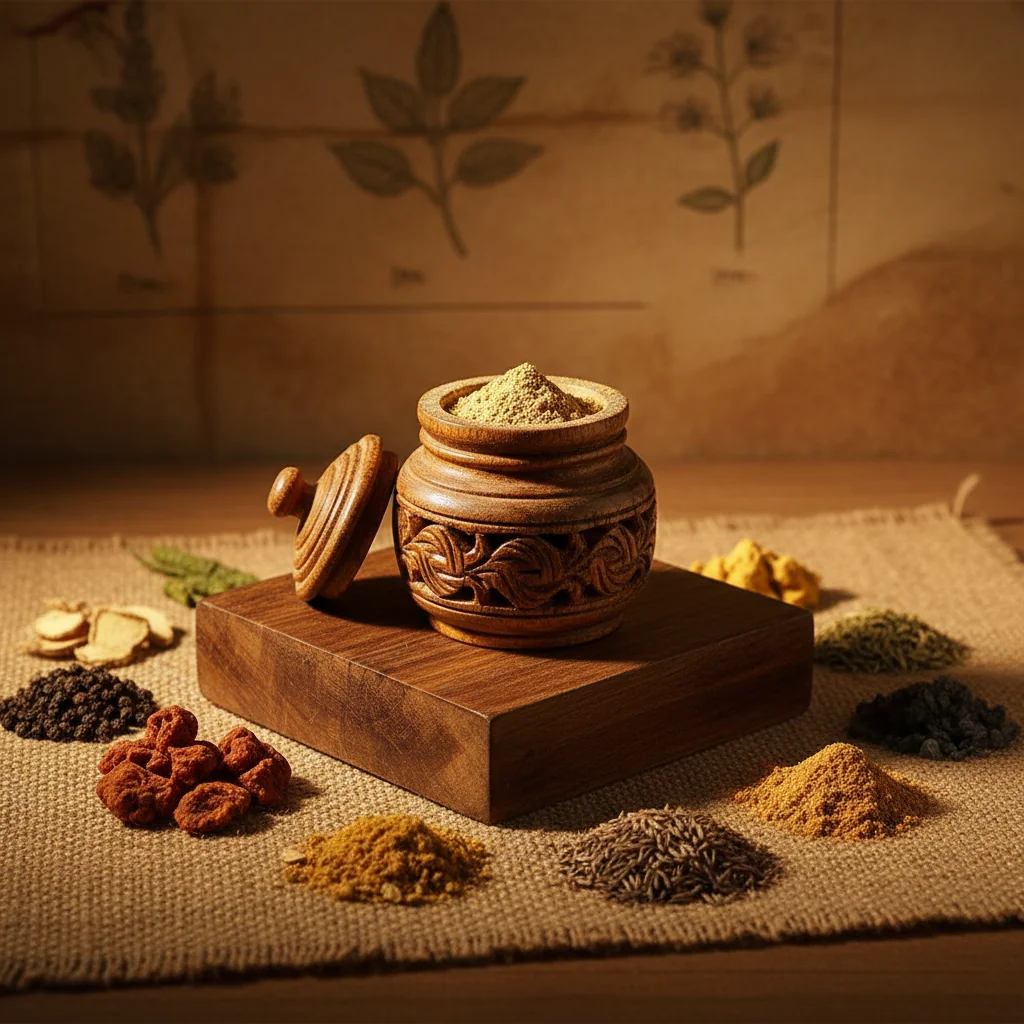
The ancient treatises of Ayurveda, including the Charaka Samhita, Sushruta Samhita, and Bhavaprakasha Nighantu, celebrate Jeera (Cumin Seeds / Jiraka / Cuminum cyminum) (Cuminum cyminum) as an indispensable dravya for restoring constitutional balance, nurturing the deeper tissues (Dhatus), and preserving vital life essence (Ojas). In this comprehensive master guide, we explore the pharmacological architecture, classical indications, and clinical applications of this renowned substance.
Classical Treatise Shloka & Sanskrit Anvaya
जीरकत्रितयं रूक्षं कटूष्णं दीपनं लघु। सङ्ग्राहि पित्तलं मेध्यं गर्भाशयविशोधनम्॥
— jīrakatritayaṁ rūkṣaṁ kaṭūṣṇaṁ dīpanaṁ laghu, saṅgrāhi pittalaṁ medhyaṁ garbhāśayaviśodhanam (Charaka Samhita, Sutrasthana 27.296 / Bhavaprakasha Nighantu)
Sanskrit Anvaya & Translation: Cumin is dry, pungent, warming, ignites digestive fire (Deepana), light to digest; it binds the bowels (Sangrahi), promotes intellect (Medhya), and cleanses the uterus and reproductive channels (Garbhashaya Vishodhana).
Complete Dravya Guna & Energetic Profile
Ayurvedic pharmacology analyzes every food and herb through its elemental energetics. The fundamental properties of Jeera (Cumin Seeds / Jiraka / Cuminum cyminum) are outlined below:
Impact on Tridosha: Vata, Pitta & Kapha Balancing Guidelines
The constitutional behavior of Jeera (Cumin Seeds / Jiraka / Cuminum cyminum) is categorized as: Foremost pacifier of Vata and Kapha; safe for Pitta in moderate amounts when infused into boiled water (Jeera Udaka). Understanding how to customize its intake based on individual Prakriti is essential to avoid aggravation:
1. Vata Dosha (Ether & Air)
Jeera (Cumin Seeds / Jiraka / Cuminum cyminum) exerts a specific influence on Vata. If inherently dry or light, it must be prepared with unctuous vehicles such as Desi Ghee or warm spiced broths. For individuals suffering from dryness, constipation, or nervous hyper-reactivity, correct cooking eliminates any Vata-destabilizing tendencies.
2. Pitta Dosha (Fire & Water)
Because its thermal potency is Ushna (Heating), Pitta individuals must observe thermal balancing. Paired with cooling spices such as coriander, fennel, or rose petal infusions, it nourishes Pitta tissues without triggering bile reflux, hyperacidity, or inflammatory breakouts.
3. Kapha Dosha (Water & Earth)
For Kapha individuals with sluggish digestion (Mandagni) or excess lymphatic stagnation, Jeera (Cumin Seeds / Jiraka / Cuminum cyminum) should be formulated with warming digestive stimulants like dry ginger (Shunti), black pepper (Maricha), and long pepper (Pippali) to prevent water retention and mucus accumulation.
✦ Interactive Ayurvedic Diagnostic: Ayurvedic Bloating & Gut Fermentation Diagnostic
Screen your intestinal gas formation, Agni rhythm, and personalized digestive tea plans.
Practical Clinical FAQs
1. How long does it take to experience visible health benefits from Jeera (Cumin Seeds / Jiraka / Cuminum cyminum)?
Abdominal bloating and flatulence dissipate within 15 to 30 minutes of drinking warm cumin seed tea.
2. Can Jeera (Cumin Seeds / Jiraka / Cuminum cyminum) be consumed daily throughout the year?
Yes, revered as a premier daily digestive spice fit for consumption across all seasons.
3. What is the most common mistake people make when using Jeera (Cumin Seeds / Jiraka / Cuminum cyminum)?
Consuming raw, unroasted, unboiled cumin seeds which are difficult for sluggish digestive Agni to assimilate.
4. How does Jeera (Cumin Seeds / Jiraka / Cuminum cyminum) interact with prescription medications?
Completely safe alongside modern pharmaceutical treatments; assists healthy gut drug absorption.
Editorial Vaidya Verdict & Shastric Summary
The classical texts of Ayurveda place Jeera (Cumin Seeds / Jiraka / Cuminum cyminum) among the most revered dravyas for long-term health maintenance and disease management. By honoring proper preparation rules, seasonal rhythms, and personal constitutional requirements, you harness the full restorative wisdom of classical Indian medicine for enduring vitality and longevity.
The Ayurvedic concepts, dietary principles, herbal information, and somatic wellness protocols published on Kriyasya are for general educational awareness only. They do not constitute formal medical diagnosis, treatment, or clinical prescription. Always consult a licensed Ayurvedic physician (Vaidya) or qualified healthcare professional before beginning any new herbal regimen or lifestyle therapy.