
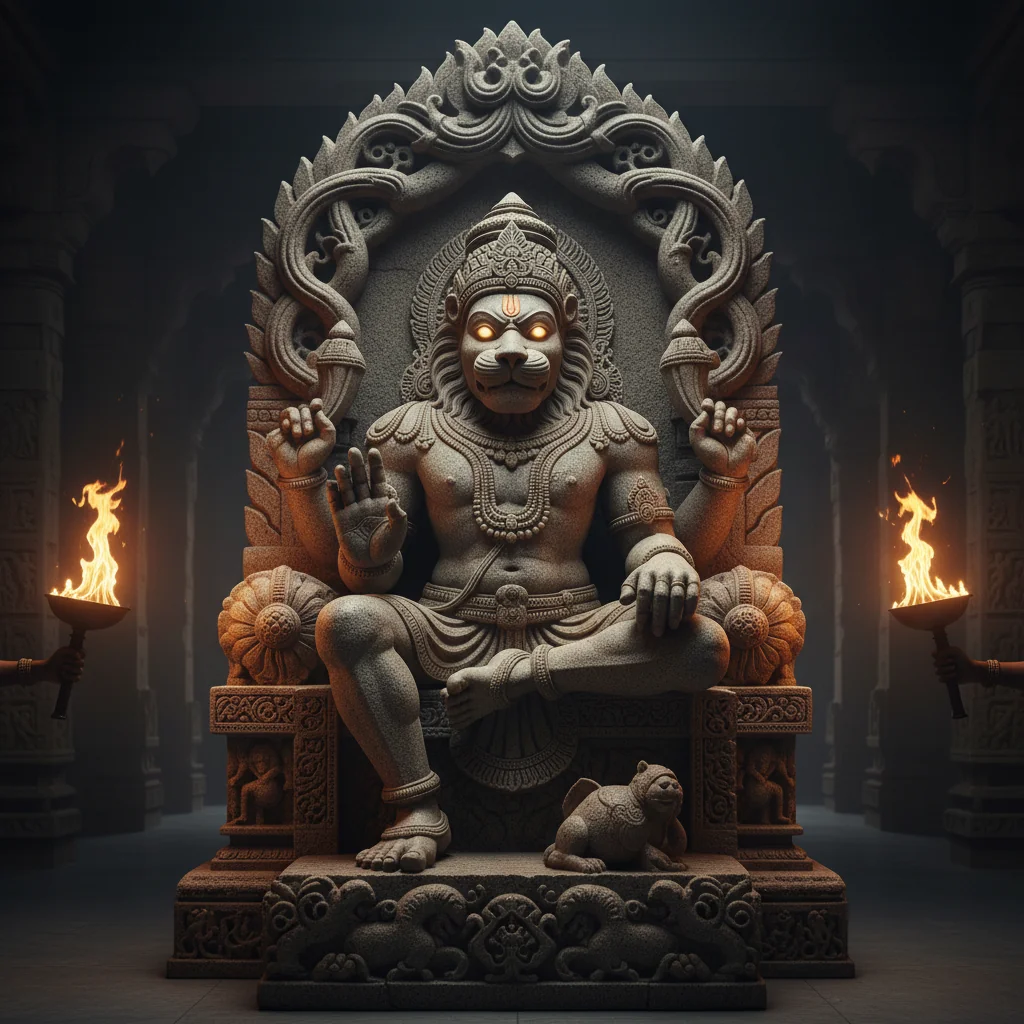
Lord Brahma is known in Hindu tradition as the creator deity and one of the three deities of the Trimurti, along with Vishnu and Shiva. He is commonly shown with four heads and is linked with creation, sacred knowledge, and the Vedas. Even though he is important in mythology, worship dedicated directly to Brahma is much less common than worship of Vishnu or Shiva.
This is one reason Brahma Chalisa feels unique. It praises Brahma not only as the creator of the universe, but also as a source of wisdom, order, and divine understanding. The hymn also reflects old devotional and Puranic storytelling, where Brahma is connected with cosmic origin, Vishnu, sacred knowledge, and holy places like Pushkar. Pushkar in Rajasthan is one of the best-known pilgrimage places associated with Brahma and its principal temple and lake are dedicated to him.
Another beautiful part of Brahma bhakti is its connection with knowledge. Brahma is associated with sacred texts, while Saraswati is revered as the goddess of learning, speech, music, and the arts; in later Hindu tradition she is also connected with Brahma in different ways across myths.
In this article, you will read the full Brahma Chalisa, its Hinglish version, easy meaning in Hindi and English, interesting facts, life lessons, and useful FAQs.
Full Brahma Chalisa with Hinglish and Easy Meaning
Doha 1
करहु कृपा निज दास पै, रहहु सदा अनुकूल॥
Jai Brahma jai Swayambhu, Chaturanan sukhmool.
Karahu kripa nij daas pai, rahahu sada anukool.
हे स्वयम्भू ब्रह्मा, आपकी जय हो। आप चार मुख वाले और सुख के मूल हैं। अपने दास पर कृपा कीजिए और सदा अनुकूल रहिए।
Victory to self-born Lord Brahma, the four-faced source of happiness. Please bless your devotee and always stay kind.
Doha 2
विश्वविधाता कीजिये, जन पै कृपा ललाम॥
Tum srijak brahmand ke, aj vidhi ghata naam.
Vishwavidhata kijiye, jan pai kripa lalaam.
आप ब्रह्माण्ड के रचयिता हैं। हे विश्व के विधाता, अपने भक्त पर विशेष कृपा कीजिए।
You are the creator of the universe. O maker of the world, please shower your special grace on your devotee.
1
Jai jai Kamalasan jagmoola. Rahahu sada jan pai anoola.
हे कमलासन ब्रह्मा, आपकी जय हो। आप जगत के मूल हैं। भक्तों पर हमेशा कृपा बनाए रखिए।
Victory to lotus-seated Brahma, source of the world. Always remain favorable to your devotees.
2
Roop chaturbhuj param suhaavan. Tumhen ahain chaturdik aanan.
आपका रूप बहुत सुंदर है। आपके चार मुख हैं, जो चारों दिशाओं की ओर हैं।
Your form is beautiful, and you have four faces looking in all directions.
3
Raktavarn tav subhag sharira. Mastak jatajut gambheera.
आपका शरीर लाल आभा वाला और सुंदर है। आपके मस्तक की जटा गंभीर शोभा देती है।
Your body shines with a reddish glow, and the matted hair on your head gives a majestic look.
4
Taake upar मुकुट birajai. Daadhi shvet mahachhavi chhajai.
आपके सिर पर मुकुट शोभा देता है और आपकी सफेद दाढ़ी आपकी छवि को और बढ़ाती है।
A crown shines on your head, and your white beard adds to your grand appearance.
5
Shvetvastra dhaare tum sundar. Hai yagyopaveet ati manhar.
आपने सुंदर सफेद वस्त्र धारण किए हैं और यज्ञोपवीत बहुत मनोहर लगता है।
You wear beautiful white garments, and the sacred thread looks graceful on you.
6
Kanan kundal subhag birajahin. Gal motin ki mala rajahin.
आपके कानों में सुंदर कुण्डल हैं और गले में मोतियों की माला शोभा देती है।
Lovely earrings adorn your ears, and a pearl garland shines around your neck.
7
Charihu Ved tumhin pragataaye. Divya gyan tribhuvanhin sikhaye.
चारों वेद आपके द्वारा प्रकट हुए और आपने तीनों लोकों को दिव्य ज्ञान दिया।
The four Vedas were revealed through you, and you taught divine knowledge to the three worlds.
8
Brahmalok shubh dham tumhara. Akhil bhuvan mahn yash bistara.
ब्रह्मलोक आपका पवित्र धाम है और आपका यश सारे लोकों में फैला हुआ है।
Brahmaloka is your holy abode, and your glory spreads across all worlds.
9
Ardhangini tav hai Savitri. Apar naam hiye Gayatri.
इस चौपाई में आपकी अर्धांगिनी सावित्री कही गई हैं, जिन्हें गायत्री नाम से भी याद किया जाता है।
This verse says your consort is Savitri, also remembered here by the name Gayatri.
10
Saraswati tab suta manohar. Veena vadini sab vidhi munder.
इस चौपाई में सरस्वती को सुंदर और वीणा बजाने वाली कहा गया है।
This verse praises Saraswati as beautiful and as the veena-playing goddess.
11
Kamalasan par rahe biraje. Tum Haribhakti saaj sab saaje.
आप कमलासन पर विराजते हैं और दिव्य भक्ति से जुड़े सभी गुणों से युक्त हैं।
You sit upon the lotus seat and are adorned with the qualities of divine devotion.
12
Kshir sindhu sovat surbhoopa. Nabhi kamal bho pragat anoopa.
जब भगवान विष्णु क्षीरसागर में शयन कर रहे थे, तब उनकी नाभि से कमल प्रकट हुआ।
When Lord Vishnu rested on the cosmic ocean, a lotus arose from his navel.
13
Tehi par tum aaseen kripala. Sada karahu santan pratipala.
उसी कमल पर आप विराजे, हे कृपालु प्रभु, और संतों की रक्षा करते हैं।
You were seated on that lotus, O compassionate Lord, and you protect the holy ones.
14
Ek baar ki katha prachaari. Tum kahn moh bhayeu man bhaari.
एक बार ऐसी कथा हुई कि आपके मन में मोह उत्पन्न हो गया।
Once, as the story goes, your mind became deeply confused.
15
Kamalasan lakhi keen bichara. Aur na kou ahai sansara.
कमलासन को देखकर आपने सोचा कि शायद संसार में और कोई नहीं है।
Seeing the lotus seat, you wondered if nothing else existed in the universe.
16
Tab tum kamalnaal gahi linha. Ant bilokan kar pran kinha.
तब आपने कमल की डंडी पकड़ी और उसके अंत तक पहुँचने का निश्चय किया।
Then you held the lotus stalk and resolved to find its end.
17
Kotik varsh gaye yahi bhaanti. Bhramat bhramat bite din raati.
बहुत लंबे समय तक आप खोज करते रहे और दिन-रात भटकते रहे।
A very long time passed as you kept wandering in search, day and night.
18
Pai tum taakar ant na paaye. Hvai niraash atishay dukhiyaaye.
लेकिन आप उसका अंत नहीं पा सके और बहुत निराश हो गए।
But you could not find the end, and you became deeply disappointed.
19
Puni bichar man mahn yah kinha. Mahapadm yah ati pracheen.
फिर आपने सोचा कि यह महान कमल बहुत प्राचीन है।
Then you thought to yourself that this great lotus must be very ancient.
20
Yaako janm bhayo ko kaaran. Tabahin mohi karyo yah dhaaran.
आपने सोचा कि इसका जन्म किस कारण हुआ और मैं इसमें कैसे आया।
You wondered how this lotus was born and why you had come to exist upon it.
21
Akhil bhuvan mahn kahn koi nahin. Sab kuchh ahai nihit mo maahin.
फिर आपने सोचा कि पूरे जगत में शायद मुझसे अलग कोई नहीं है, सब कुछ मुझमें ही है।
You then thought that perhaps nothing existed apart from you, and everything was contained within you.
22
Yah nishchay kari garab badhayo. Nij kahn Brahm maani sukh paaye.
ऐसा सोचकर आपके भीतर गर्व बढ़ा और आपने स्वयं को ही सर्वोच्च मान लिया।
Thinking this, pride arose in you, and you began to see yourself as the highest reality.
23
Gagan gira tab bhai gambheera. Brahma vachan sunahu dhari dheera.
तब आकाशवाणी हुई और गंभीर स्वर में आपको सुनने के लिए कहा गया।
Then a deep heavenly voice spoke and asked you to listen calmly.
24
Sakal srishti kar swami joi. Brahm anaadi alakh hai soi.
उस वाणी ने कहा कि समस्त सृष्टि का वास्तविक स्वामी वह अनादि और अदृश्य ब्रह्म है।
The voice said that the true Lord of creation is the eternal, unseen Supreme Brahman.
25
Nij ichchha in sab niramaye. Brahma Vishnu Mahesh banaye.
उसी परम सत्ता ने अपनी इच्छा से ब्रह्मा, विष्णु और महेश को प्रकट किया।
That Supreme Reality, by its own will, brought forth Brahma, Vishnu, and Mahesh.
26
Srishti laagi pragate traydeva. Sab jag inki karihai seva.
सृष्टि के काम के लिए ये तीन देव प्रकट हुए और जगत इनकी सेवा करेगा।
These three deities appeared for the work of creation, and the world would honor them.
27
Mahapadm jo tumharo aasan. Ta pai ahai Vishnu ko shaasan.
जिस महाकमल पर आप बैठे हैं, उसका आधार विष्णु से जुड़ा है।
The great lotus that serves as your seat rests upon the power of Vishnu.
28
Vishnu nabhiten pragatyo aai. Tum kahn satya deenh samujhai.
वह कमल विष्णु की नाभि से निकला था, और यही सच्चाई आपको समझाई गई।
The lotus had arisen from Vishnu’s navel, and this truth was explained to you.
29
Bhentahu jaai Vishnu hitmaani. Yah kahi band bhai nabhavani.
आकाशवाणी ने कहा कि जाओ और विष्णु से मिलो, फिर वह वाणी शांत हो गई।
The heavenly voice told you to go meet Vishnu, and then it fell silent.
30
Taahi shravan kahi acharaj maana. Puni Chaturanan keen payana.
यह सुनकर आपको आश्चर्य हुआ, फिर चारमुख वाले ब्रह्मा वहाँ से चल पड़े।
Hearing this, you were amazed, and then four-faced Brahma set out on the journey.
31
Kamal naal dhari neeche aava. Tahan Vishnu ke darshan paava.
आप कमलनाल के सहारे नीचे गए और वहाँ विष्णु के दर्शन किए।
You went down along the lotus stalk and there you beheld Vishnu.
32
Shayan karat dekhe surbhoopa. Shyamavarn tanu param anoopa.
आपने विष्णु को शयन करते देखा। उनका श्याम वर्ण शरीर अत्यंत सुंदर था।
You saw Vishnu in divine rest, with a dark and wonderfully beautiful form.
33
Sohat chaturbhuja ati sundar. Kreetmukut rajat mastak par.
उनकी चार भुजाएँ बहुत सुंदर थीं और सिर पर मुकुट शोभा दे रहा था।
His four arms were magnificent, and a shining crown adorned his head.
34
Gal baijanti maal birajai. Koti surya ki shobha laajai.
उनके गले में वैजयंती माला थी और उनकी आभा करोड़ सूर्यों को भी लजा दे।
The Vaijayanti garland shone on his neck, and his radiance outshone millions of suns.
35
Shankh chakra aru gada manohar. Shesh naag shayya ati manhar.
उनके हाथों में शंख, चक्र और गदा थी, और शेषनाग की शय्या बहुत सुंदर लग रही थी।
He held the conch, discus, and mace, and the bed of Sheshnag looked wonderful.
36
Divyarup lakhi keen pranamu. Harshit bhe Shripati sukh dhamu.
उस दिव्य रूप को देखकर आपने प्रणाम किया, और श्रीपति भी प्रसन्न हुए।
Seeing that divine form, you bowed down, and the Lord of Lakshmi became pleased.
37
Bahu vidhi vinay keen Chaturanan. Tab Lakshmi pati kaheud mudit man.
चारमुख वाले ब्रह्मा ने बहुत विनय की, तब लक्ष्मीपति ने प्रसन्न होकर कहा।
Four-faced Brahma offered many humble prayers, and then Vishnu spoke joyfully.
38
Brahma doori karahu abhimana. Brahmaroop ham dou samaana.
विष्णु ने कहा, हे ब्रह्मा, अपना अहंकार छोड़ो। हम दोनों एक ही परम सत्य के रूप हैं।
Vishnu said, “Brahma, give up pride. Both of us are expressions of the same supreme reality.”
39
Teesre Shri Shivshankar aahin. Brahmaroop sab tribhuvan maahin.
तीसरे शिवशंकर भी उसी ब्रह्म स्वरूप के प्रकट रूप हैं।
Shiva too is another manifestation of that same supreme reality.
40
Tum son hoi srishti vistara. Hum palan karihain sansara.
तुमसे सृष्टि का विस्तार होगा और मैं संसार का पालन करूँगा।
From you creation will expand, and I will preserve the world.
41
Shiv sanhar karahin sab kera. Hum teenhun kahn kaaj dhanera.
शिव संहार करेंगे। इस तरह हम तीनों के अलग-अलग कार्य हैं।
Shiva will bring dissolution. In this way, each of the three has a divine role.
42
Agunroop Shri Brahma bakhanahu. Nirakaar tinkah tum jaanahu.
उस परम ब्रह्म को निर्गुण और निराकार जानो।
Know the Supreme Brahman as beyond qualities and without form.
43
Hum saakaar roop traydeva. Karihai sada Brahm ki seva.
हम तीनों देव उस निराकार ब्रह्म के साकार रूप हैं और उसी की सेवा करते हैं।
We three deities are visible forms of that formless Supreme and always serve that truth.
44
Yah suni Brahma param sihaaye. Parabrahm ke yash ati gaye.
यह सुनकर ब्रह्मा बहुत प्रसन्न हुए और परब्रह्म की महिमा गाने लगे।
Hearing this, Brahma became deeply pleased and sang the glory of the Supreme.
45
So sab vidit Ved ke naama. Mukti roop so param lalaama.
वेद उसी परम सत्य का वर्णन करते हैं, जो मुक्ति स्वरूप है।
The Vedas speak of that supreme truth, which is the very form of liberation.
46
Yahi vidhi Prabhu bho janam tumhara. Puni tum pragat keen sansara.
इस प्रकार आपका प्रकट होना हुआ, और फिर आपने संसार की रचना की।
In this way your manifestation took place, and then you brought forth the world.
47
Naam Pitamah sundar payeu. Jad chetan sab kahn niramayeu.
आपको पितामह नाम मिला और आपने जड़ और चेतन सबकी रचना की।
You received the revered name Pitamaha and created both living and non-living beings.
48
Leenh anek baar avatara. Sundar suyash jagat vistara.
आपने अनेक रूपों में अपनी शक्ति दिखाई और आपका यश जगत में फैल गया।
You revealed your power in many ways, and your noble fame spread through the world.
49
Devdanuj sab tum kahn dhyavahin. Manvanchhit tum san sab pavahin.
देव और दानव दोनों आपका ध्यान करते हैं और आपसे अपनी इच्छाएँ पाते हैं।
Gods and demons alike meditate on you, and all seek fulfillment from you.
50
Jo kou dhyan dharai nar naari. Taaki aas pujhavahu saari.
जो भी स्त्री या पुरुष आपका ध्यान करता है, उसकी सच्ची आशाएँ पूरी होती हैं।
Any man or woman who meditates on you has sincere hopes fulfilled.
51
Pushkar teerth param sukhdaai. Tahan tum basahu sada surraai.
पुष्कर तीर्थ बहुत पवित्र और सुख देने वाला है। वहाँ आपका विशेष निवास माना गया है।
Pushkar is a very sacred and joy-giving pilgrimage place, and it is especially associated with you.
52
कुण्ड नहाइ करहि जो पूजन। ता कर दूर होई सब दूषण॥
Hinglish:
Kund nahai karahi jo poojan. Ta kar door hoi sab dooshan.
सरल हिंदी अर्थ:
जो वहाँ स्नान करके पूजा करता है, उसके दोष दूर होते हैं।
Easy English Meaning:
One who bathes there and worships with devotion is believed to be freed from faults and impurities.
Summary of Brahma Chalisa
If we understand the whole Brahma Chalisa in very simple words, its message is this:
- Brahma is the creator and source of sacred knowledge.
- Pride can confuse even great beings.
- True wisdom begins when ego becomes smaller.
- The universe works through divine order.
- Knowledge should lead to humility, not arrogance.
- Devotion and understanding go together.
That is why Brahma Chalisa is not only a hymn of praise. It is also a prayer for right thinking, humility, knowledge, and grace.
Why Lord Brahma Is Important
Brahma is one of the principal deities in Hindu mythology and is especially known as the creator in the Trimurti. He is usually shown with four heads and is associated with sacred knowledge and the Vedas. At the same time, Brahma has far fewer temples and much less direct worship than Vishnu or Shiva.
This makes Brahma devotion especially interesting. Even though he is less commonly worshipped, he remains deeply important in Hindu stories of cosmic creation and divine order. Pushkar in Rajasthan is one of the best-known sacred places linked with Brahma; it is a pilgrimage center where the principal temple and Pushkar Lake are dedicated to him.
Brahma is also tied to knowledge traditions. Britannica notes that Brahma is associated with creation, knowledge, and sacred texts, while Saraswati is the goddess of learning, speech, music, and the arts and is linked with Brahma in later Hindu tradition.
Interesting Facts You Can Add to the Blog
1) Brahma is the creator in the Trimurti
In the Trimurti, Brahma is linked with creation, Vishnu with preservation, and Shiva with destruction.
2) Brahma is usually shown with four heads
His iconography commonly includes four heads or faces, reflecting his cosmic and knowledge-related nature.
3) Brahma is much less commonly worshipped than Vishnu or Shiva
Despite his important place in mythology, temples and direct worship for Brahma are comparatively rare.
4) Pushkar is one of the most important places connected with Brahma
Pushkar is a major pilgrimage town, and its principal temple and sacred lake are dedicated to Brahma.
5) Brahma is associated with sacred knowledge
He is connected with creation, sacred texts, and the Vedas, which is why Brahma Chalisa often feels deeply linked with knowledge and wisdom.
Life Lessons from Brahma Chalisa
1) Knowledge without humility can become pride
A major message of this Chalisa is that even high knowledge should remain humble.
2) Creation begins with divine order
The hymn presents the universe as meaningful, not random.
3) Ego blocks true understanding
The story element in the Chalisa shows that truth becomes clearer when pride goes down.
4) Wisdom is not just information
Real wisdom also means surrender, balance, and right understanding.
5) Devotion can deepen knowledge
The Chalisa joins bhakti and wisdom together in a very beautiful way.
FAQs
Who is Lord Brahma?
Lord Brahma is the Hindu creator deity and one of the three deities of the Trimurti, alongside Vishnu and Shiva. He is commonly associated with creation and sacred knowledge.
Why is Brahma not worshipped as widely as Vishnu or Shiva?
Reliable references note that although Brahma is important in mythology, worship and temples devoted to him are comparatively rare.
What is Brahma Chalisa?
Brahma Chalisa is a devotional hymn in praise of Lord Brahma. It celebrates his creative role, divine knowledge, and spiritual greatness.
What is the main message of Brahma Chalisa?
Its main message is creation, wisdom, humility, devotion, and freedom from ego.
Is Brahma connected with the Vedas?
Yes. Brahma is associated with sacred knowledge and the Vedas in Hindu tradition.
What is special about Pushkar for Brahma devotees?
Pushkar is one of the best-known sacred places connected with Brahma. It is a pilgrimage center whose principal temple and lake are dedicated to him.
Is Saraswati connected with Brahma?
Saraswati is the goddess of learning, speech, music, and the arts, and later Hindu tradition links her with Brahma in different mythic ways.
Can beginners read Brahma Chalisa?
Yes. Beginners can read it slowly, line by line, and understand the easy meanings before learning the full text.
Brahma Chalisa is full of wisdom, devotion, and spiritual depth. It praises Lord Brahma as the creator, the giver of sacred understanding, and a divine force connected with cosmic order. But beyond praise, it also teaches a deeper message: knowledge should make a person humble, not proud.
That is why Brahma Chalisa feels special. It is not only about prayer. It is also about understanding life, creation, and the right use of wisdom.
Jai Shri Brahma Dev.
क्रियास्य पर प्रदर्शित सभी भक्ति भजन, आरती, चालीसा एवं स्तोत्र के बोल केवल सांस्कृतिक, शैक्षणिक एवं व्यक्तिगत भक्ति उपासना के उद्देश्य से प्रस्तुत किए गए हैं। हम सभी मूल रचनाकारों, संगीतकारों एवं कलाकारों का पूर्ण सम्मान करते हैं तथा किसी भी प्रकार के कॉपीराइट उल्लंघन को प्रोत्साहित नहीं करते हैं। यदि आप इस संगीत का आनंद लेते हैं, तो कृपया संबंधित कलाकारों का समर्थन करें और यूट्यूब म्यूजिक, स्पॉटिफाय, गाना, जियोसावन अथवा एप्पल म्यूजिक जैसे अधिकृत प्लेटफॉर्म से मूल संगीत सुनें या खरीदें। गीत के अधिकार धारक किसी भी प्रकार की आपत्ति अथवा सामग्री संबंधित समाधान के लिए [email protected] पर संपर्क कर सकते हैं; हमारी टीम 48 घंटे के भीतर त्वरित समाधान सुनिश्चित करती है।