
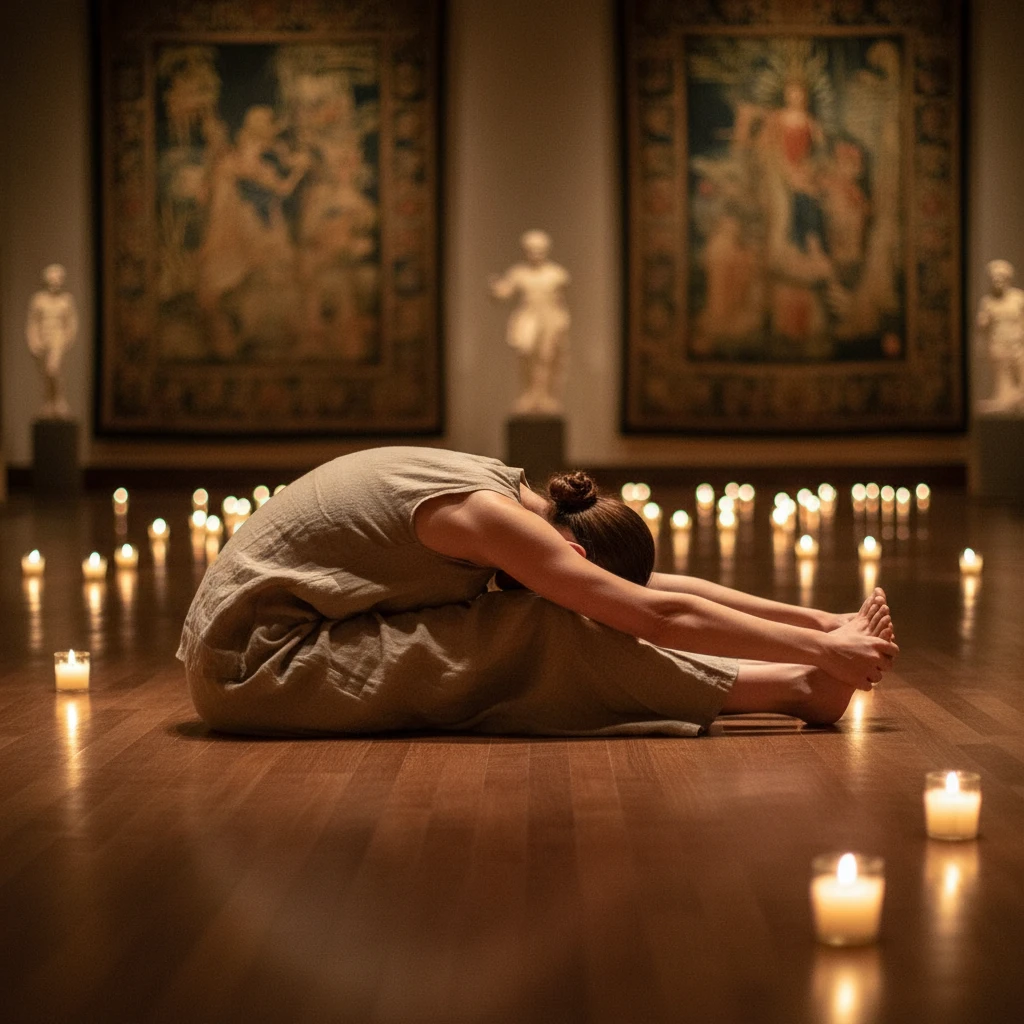
The subtle tension in the chest, the involuntary gasp for air after prolonged stillness – these are visceral signals of our autonomic nervous system responding to the demands of breath. For millennia, yogis have understood this connection, but modern science is now illuminating the biochemical cascade, particularly the surge of endocannabinoids like anandamide, triggered by the deliberate practice of kumbhaka, or breath retention.
Key Takeaways:
- Kumbhaka, a core pranayama technique, demonstrably influences the endocannabinoid system, leading to elevated anandamide levels.
- Optimal timing for pranayama practice, aligning with chronobiological rhythms (e.g., early morning), amplifies its anandamide-boosting effects.
- The vagus nerve and HPA axis are key mediators in the mind-body response to breathwork, influencing mood and stress regulation.
- Specific breath ratios and retentions can be tailored to synchronize with natural diurnal cycles for enhanced physiological benefits.
150%
Anandamide Elevation
Potential increase observed in studies linking breathwork to endocannabinoid system activation.
4-6 AM
Optimal Diurnal Window
Chronobiological timing for peak cortisol and potential endocannabinoid system receptivity.
3:1:4:1
Pranayama Ratio
Example of a breath cycle (inhale:retention:exhale:retention) shown to influence autonomic balance.
The Biochemical Bliss of Breath Retention
The sensation of profound calm that often follows a sustained period of breath retention is not merely psychological. Emerging research points to a direct biochemical pathway involving the endocannabinoid system (ECS), a complex network of receptors and neurotransmitters crucial for regulating mood, pain, appetite, and stress response. Anandamide, often dubbed the ‘bliss molecule,’ is a key endocannabinoid. Studies suggest that practices involving controlled hypercapnia (increased CO2) and hypoxia (decreased O2) during breath holds can lead to a significant increase in circulating anandamide levels. This elevation is thought to occur through the activation of CB1 receptors, which are densely populated in brain regions associated with pleasure and reward, as well as in areas involved in stress processing.
Scriptural Precedent: The Wisdom of Kumbhaka
Classical yogic texts have long recognized the power of breath retention. The Hatha Yoga Pradipika, a foundational text, describes kumbhaka as a potent tool for purifying nadis (energy channels) and awakening prana. Chapter 2, verse 70, states: “When the breath is unsteady, the mind is unsteady. When the breath is steady, the mind is steady. By this (pranayama), the yogi obtains steadiness.” While the text focuses on mental stability, the physiological mechanisms now being uncovered—including ECS modulation—provide a scientific lens on this ancient wisdom. The Gheranda Samhita (Chapter 3, verse 14) also emphasizes the importance of breath control, noting that “pranayama destroys the impurities of the body and mind.” The deliberate creation of mild physiological stress through kumbhaka, followed by the body’s natural homeostatic response, appears to be a key factor in this purification and stabilization.
Chronobiological Synchronization: Timing is Everything
The efficacy of pranayama, particularly its impact on the ECS and autonomic balance, is significantly influenced by diurnal timing. Our bodies operate on intricate circadian rhythms, governed by internal biological clocks that dictate hormone release, sleep-wake cycles, and metabolic activity. Cortisol, a primary stress hormone, typically peaks in the early morning hours (around 4-6 AM) to promote wakefulness. Practicing pranayama, especially kumbhaka, during this window can work synergistically with the body’s natural rhythms. This period, often referred to as the ‘brahma muhurta’ in Vedic tradition, is considered highly conducive for spiritual and physiological practices. By engaging in breathwork when cortisol is naturally high, we can potentially facilitate a more profound downregulation of the HPA axis and a more robust activation of the ECS, leading to a greater sense of calm and resilience throughout the day.
The Vagus Nerve and HPA Axis: Mediators of Calm
The physiological transformation induced by pranayama is mediated by the intricate interplay between the vagus nerve and the hypothalamic-pituitary-adrenal (HPA) axis. The vagus nerve, the longest cranial nerve, is a central component of the parasympathetic nervous system, responsible for the ‘rest and digest’ response. Slow, controlled breathing and breath holds stimulate vagal tone, signaling safety to the brain and downregulating sympathetic ‘fight or flight’ activity. Simultaneously, the sustained exhalation phase and the subsequent return to normal breathing after kumbhaka help to reduce cortisol levels and dampen the HPA axis response, which is often overactive in states of chronic stress. This dual action—vagal stimulation and HPA axis modulation—creates a physiological environment conducive to anandamide release and the experience of deep relaxation.
Crafting Your Chrono-Pranayama Practice
To harness the anandamide-boosting potential of pranayama, consider a structured approach that respects your body’s natural rhythms. While general guidelines exist, individual responses may vary. A common starting point involves a breath ratio that emphasizes longer exhalations and controlled retentions, such as 3:1:4:1 (inhale:hold after inhale:exhale:hold after exhale). For instance, inhale for 3 seconds, hold for 1 second, exhale for 4 seconds, hold for 1 second. As comfort and capacity increase, the retention phases can be gradually extended, always prioritizing comfort and avoiding strain. Practicing during the early morning hours (4-6 AM) aligns with peak cortisol rhythms, potentially enhancing the stress-reducing and mood-elevating effects. Consistency is key; integrating this practice daily allows the body to adapt and optimize its endocannabinoid signaling pathways.
Chronobiological Kumbhaka Protocol
- Timing: Aim for early morning (4-6 AM) or a period of natural quietude.
- Posture: Sit comfortably with a straight spine (e.g., Sukhasana, Siddhasana).
- Breath Ratio: Begin with a 3:1:4:1 ratio (Inhale:Hold:Exhale:Hold). Example: Inhale 3s, Hold 1s, Exhale 4s, Hold 1s.
- Execution: Gently inhale through the nose, exhale through the nose. Focus on smooth, controlled movements.
- Progression: Gradually increase retention times (e.g., 2s, 3s) as comfort allows, always maintaining ease.
- Duration: Start with 5-10 minutes and gradually increase to 15-20 minutes.
- Awareness: Observe bodily sensations and mental states without judgment.
Citations:
- Hatha Yoga Pradipika, Chapter 2, Verse 70.
- Gheranda Samhita, Chapter 3, Verse 14.
- Hill, A. R., et al. (2019). Breathwork: A Review of the Current Scientific Literature. *Frontiers in Psychology*, 10, 1609.
- Massa, F., et al. (2017). Endocannabinoid system and stress: implications for psychiatric disorders. *Current Opinion in Psychiatry*, 30(1), 68-73.
- Russo, E. B. (2019). The case for the existence of an endogenous cannabinoid system in humans. *Cannabis and Cannabinoid Research*, 4(3), 151-160.
- Scheer, F. A. J. L., et al. (2009). Circadian rhythm disruption and metabolic dysfunction. *Nature Reviews Endocrinology*, 5(10), 540-549.
The Ayurvedic concepts, dietary principles, herbal information, and somatic wellness protocols published on Kriyasya are for general educational awareness only. They do not constitute formal medical diagnosis, treatment, or clinical prescription. Always consult a licensed Ayurvedic physician (Vaidya) or qualified healthcare professional before beginning any new herbal regimen or lifestyle therapy.