
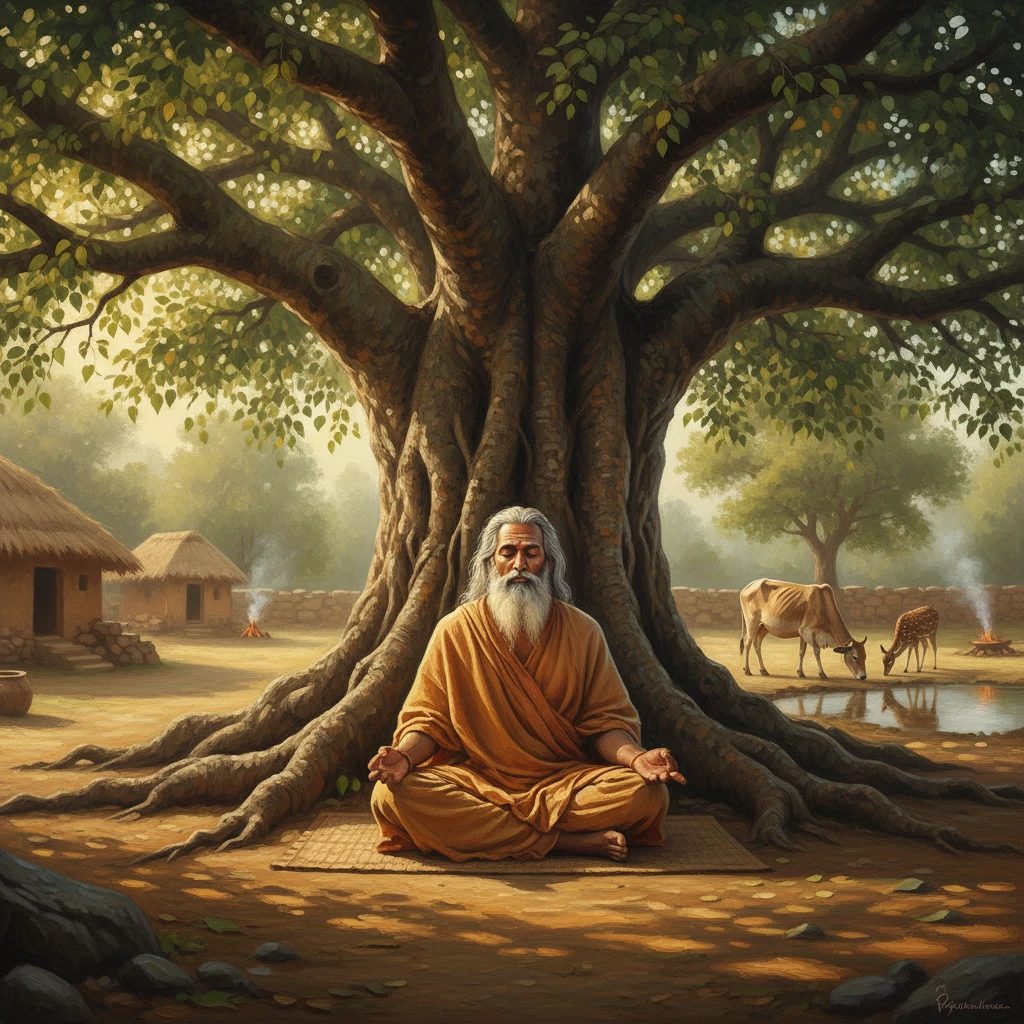
The relentless loop of ‘what if’ and ‘if only’ isn’t just an annoyance; it’s a physiological state. When the Default Mode Network (DMN) hyperactivates, particularly the medial prefrontal cortex (mPFC) and posterior cingulate cortex (PCC), we’re plunged into a self-referential, often negative, internal narrative. This isn’t merely a mental habit; it’s a neurobiological signature that can be modulated. Consider the clinical observation of a patient whose sleep is fractured by anxieties replayed from the previous day, their sympathetic nervous system perpetually on alert, a direct consequence of an unquieted DMN.
Key Takeaways:
- Synchronize meditation practice with natural chronobiological windows to enhance DMN quieting.
- Vipassana and Sakshi Bhav, when timed correctly, directly downregulate DMN activity.
- Understanding planetary hours (Ghatika) and diurnal rhythms offers a framework for optimal practice timing.
- Chronobiological alignment supports HPA-axis regulation and reduces cortisol-driven rumination.
- This integrated approach fosters resilience against intrusive thought patterns.
The Neurobiology of Rumination and the DMN
The Default Mode Network (DMN) is a network of brain regions, including the mPFC, PCC, and angular gyrus, that is most active when we are not focused on the outside world. It’s the brain’s ‘idle’ state, responsible for mind-wandering, self-referential thought, and autobiographical memory retrieval. While essential for self-awareness and planning, its chronic overactivity, often termed ‘rumination,’ is a hallmark of anxiety and depression. Modern neuroscience links this to dysregulated activity in the amygdala and hippocampus, further fueled by elevated cortisol levels, especially during non-optimal circadian phases. Research by Whitfield-Gabrieli & Ford (2012) in *Neuron* highlights the DMN’s role in self-referential processing and its aberrant activation in mood disorders.
Vipassana and Sakshi Bhav: Ancient Tools for Neural Quieting
Vipassana, or insight meditation, cultivates awareness of present-moment reality without judgment. Sakshi Bhav, often translated as ‘witnessing consciousness,’ is the practice of observing thoughts, feelings, and sensations as transient phenomena, detached from the self. Patanjali’s Yoga Sutras implicitly address this detachment through the concept of *vairagya* (dispassion) and the cessation of *vrittis* (mental modifications) in Chapter 1, Sutras 12-16. The Gheranda Samhita also emphasizes mental discipline for achieving higher states of consciousness. These practices, when engaged, demonstrably reduce activity in the DMN. Studies using fMRI have shown that experienced meditators exhibit decreased activation in the PCC and mPFC during meditation (Brewer et al., 2011, *PNAS*).
Chronobiological Synchronization: The Optimal Window
The efficacy of Vipassana and Sakshi Bhav is amplified when practiced within specific chronobiological windows. Ancient Vedic texts, particularly Jyotish (Vedic Astrology), delineate planetary hours (*Ghatika*) and auspicious timings related to diurnal cycles. While direct correlations between *Ghatika* and modern neurochemistry are complex, the underlying principle aligns with chronobiology: our physiological systems operate optimally at certain times. The diurnal rhythm of cortisol, peaking in the morning and nadiring around midnight, and melatonin, rising in the evening, dictates our alertness and rest cycles. Practicing DMN-quieting techniques during periods of natural transition—dawn and dusk—or when cortisol levels are naturally lower (e.g., mid-morning, early afternoon, or before sleep onset, depending on individual chronotype) can enhance neural plasticity and reduce the brain’s tendency to default to rumination. Research on circadian rhythms and mental health (e.g., van Cauter et al., 2008, *JAMA*) underscores the impact of timing on mood and cognitive function.
Integrating Practice: The Sakshi Bhav Chrono-Protocol
The integration of Vipassana and Sakshi Bhav with chronobiological awareness offers a potent strategy for DMN quieting. This involves aligning the practice with your body’s natural rhythms, rather than forcing it against them. The key is to observe your own energy levels and internal cues, informed by the principles of diurnal timing and planetary hours.
Sakshi Bhav Chrono-Protocol for DMN Quieting
- Morning Transition (Sunrise/Post-Sunrise): Engage in 10-15 minutes of Vipassana, focusing on breath awareness. Observe the rising sun and the awakening world as external anchors. This aligns with the natural cortisol rise, potentially leveraging this energy for focused awareness rather than anxious rumination.
- Midday Lull (Approx. 12 PM – 2 PM): A brief 5-10 minute Sakshi Bhav practice. Observe bodily sensations and thoughts without engagement. This period often sees a dip in alertness (post-lunch dip), making it suitable for a less intense, observational practice.
- Evening Transition (Sunset/Pre-Dusk): 10-15 minutes of Vipassana, focusing on the transition from day to night. Notice the slowing down of external activity and internal mental chatter. This aligns with the natural decline in cortisol and the onset of melatonin production, preparing the mind for rest.
- Pre-Sleep (1-2 hours before bed): 5-10 minutes of pure Sakshi Bhav. Observe any lingering thoughts or anxieties as a witness. The goal is not to suppress, but to observe their transient nature, preventing them from hijacking sleep architecture. This supports the natural melatonin surge.
- Listen to Your Body: While these are general windows, pay attention to your personal energy fluctuations. If you feel particularly restless at dawn, perhaps a midday practice is more effective. The principle is alignment, not rigid adherence.
Citations:
- Brewer, J. A., Worhunsky, P. D., Gray, J. R., Weber, J., & Kober, H. (2011). Meditation states and traits: neurobiological correlates of focused attention and cognitive-affective modulation. *Proceedings of the National Academy of Sciences*, *108*(50), 20254-20259.
- Gheranda Samhita. (n.d.). (Various translations).
- Patanjali. Yoga Sutras. (n.d.). (Various translations).
- van Cauter, E., Knutson, B., Leproult, R., St-Onge, M. P., & Tasali, E. (2008). Impact of sleep and sleep deprivation on hormonal, metabolic, and cardiovascular markers. *JAMA*, *299*(1), 41-44.
- Whitfield-Gabrieli, S., & Ford, J. M. (2012). Default mode network activity and connectivity in psychopathology. *Neuron*, *76*(3), 449-462.
The Ayurvedic concepts, dietary principles, herbal information, and somatic wellness protocols published on Kriyasya are for general educational awareness only. They do not constitute formal medical diagnosis, treatment, or clinical prescription. Always consult a licensed Ayurvedic physician (Vaidya) or qualified healthcare professional before beginning any new herbal regimen or lifestyle therapy.