
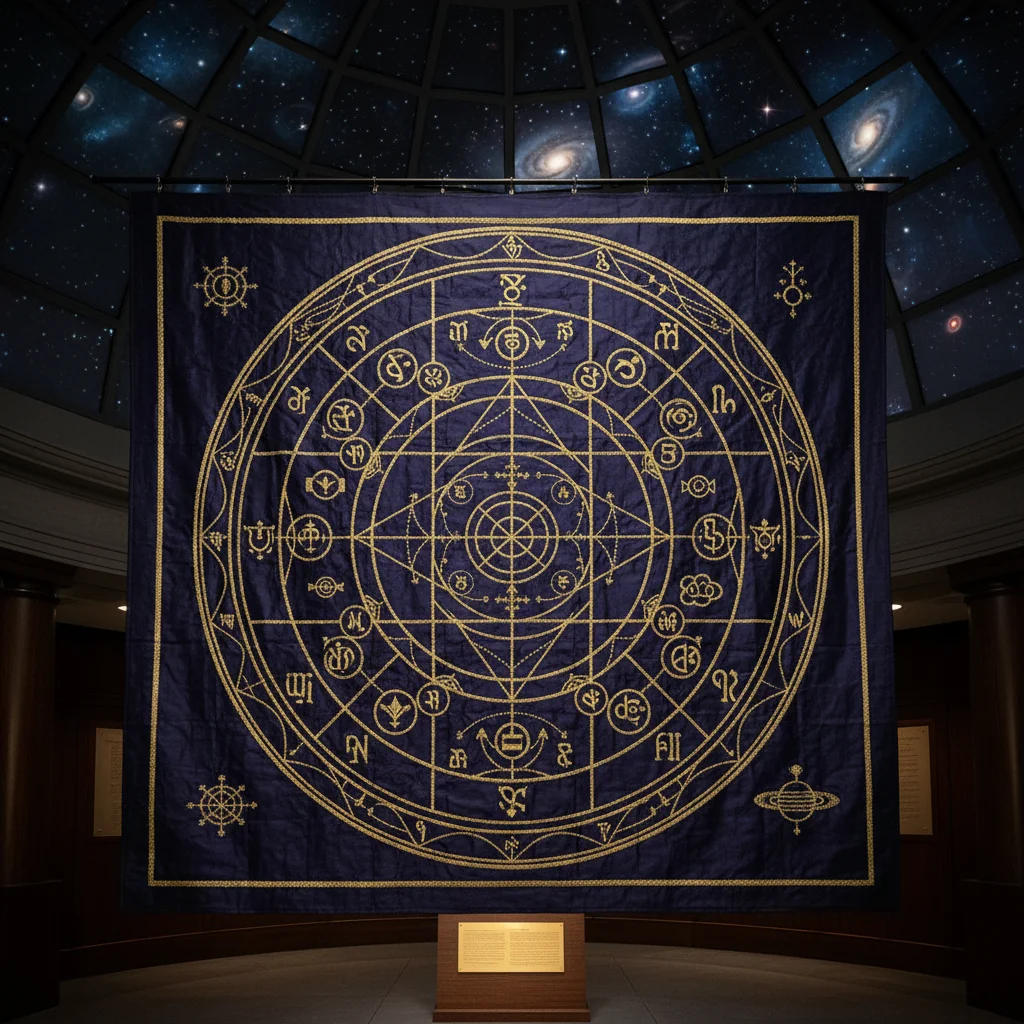
The gnawing frustration of a missed deadline, the fog of mid-afternoon brain fog, the feeling of being perpetually out of sync with your own professional rhythm – these are not mere personal failings. They are often signals of a deeper disconnect between our innate biological timing and the demands of our public vocation. The ancient Vedic astrologers understood this interplay, embedding profound insights into the D10 Dasamsa chart, a divisional chart specifically dedicated to career and public life. When we overlay this wisdom with modern chrono-biology, a powerful framework emerges for optimizing executive function and aligning our professional endeavors with our inherent cosmic and biological clocks.
Key Takeaways:
- The D10 Dasamsa reveals your innate vocational blueprint and planetary influences on career success.
- Planetary hours (Ghatika) offer diurnal windows aligned with specific planetary energies, influencing executive function.
- Circadian rhythm synchronization is crucial for optimal cognitive performance, mood regulation, and HPA-axis stability.
- Integrating D10 Dasamsa insights with chrono-biological principles allows for strategic timing of demanding professional tasks.
The D10 Dasamsa: Your Vocational Blueprint
The D10, or Dasamsa chart, is derived by dividing each sign into ten equal parts. It offers a granular view of your public persona, career path, achievements, and the specific planetary energies that shape your professional life. The strength and dignity of planets placed in the D10, and the houses they rule, provide critical clues to your vocational aptitude and potential for success. For instance, a strong Jupiter in the D10 might indicate a career involving teaching, guidance, or expansion, while a well-placed Saturn could point towards disciplined leadership or a role in infrastructure and governance.
Classical texts like the Brihat Parasara Hora Shastra extensively discuss the significance of divisional charts, including the D10, for understanding specific life areas. The placement of the Lagna (ascendant) and key planets like the Sun, Moon, Mercury, and Jupiter within the D10 are paramount. The Sun, representing authority and public recognition, and Mercury, governing intellect and communication, are particularly vital for executive function and career advancement.
Planetary Hours: Aligning with Cosmic Rhythms
Beyond the static placement of planets in the birth chart, Vedic astrology offers a dynamic system of planetary hours, known as Ghatika or Hora. Each day is divided into 24 planetary hours, with the sequence determined by the ruling planet of the day. For example, a Sunday (ruled by the Sun) begins with the Sun’s hour, followed by Venus, Mercury, Moon, Saturn, Jupiter, Mars, and then repeating. These hours are not arbitrary; they are believed to carry the energetic signature of the ruling planet, influencing the activities best suited for that time.
Modern science corroborates the profound impact of timing on our physiology and cognitive abilities. Chronobiology reveals that our bodies operate on intricate biological clocks, including the ~24-hour circadian rhythm and shorter ultradian rhythms (approx. 90 minutes). These rhythms govern hormone release (like cortisol and melatonin), sleep-wake cycles, and crucially, our capacity for focused attention and complex cognitive tasks – the very essence of executive function. The prefrontal cortex, responsible for planning, decision-making, and impulse control, exhibits peak activity during specific phases of these rhythms.
The Chrono-Biological Optimal Window for Executive Function
The synergy between the D10 Dasamsa and planetary hours, viewed through the lens of chrono-biology, offers a powerful strategy for professional optimization. The D10 identifies your inherent strengths and vocational path, while planetary hours suggest auspicious times for specific types of work. Chrono-biology provides the scientific framework for understanding *why* certain times are more conducive to peak performance.
For instance, if your D10 indicates a leadership role requiring strategic planning and decisive action, and the planetary hour is governed by Jupiter (associated with wisdom and expansion) or Mercury (associated with intellect and communication), this confluence, occurring during your natural peak alertness phase (often mid-morning, aligned with circadian cortisol peaks), presents an optimal window. Conversely, attempting high-level strategic work during a Saturnine hour in the late evening, when the body’s natural circadian drive is towards rest and melatonin production, is likely to be met with diminished executive function and increased error rates.
Research in neuroscience highlights the role of the hypothalamic-pituitary-adrenal (HPA) axis in stress response and cognitive function. Circadian synchronization helps regulate cortisol levels, preventing chronic elevation that can impair prefrontal cortex activity. Vagus nerve stimulation, influenced by rhythmic breathing patterns often associated with meditative practices (which can be timed to planetary hours), also plays a role in cognitive flexibility and emotional regulation, both critical for executive function.
Action Protocol: Synchronizing Your Professional Peak
- Consult Your D10 Dasamsa: Identify the key planets influencing your career and their significations. Note the houses they occupy and rule.
- Determine Planetary Hours: Use a reliable Vedic astrology resource or app to find the planetary hours for your location and the specific day.
- Map Your Ultradian Rhythms: Observe your natural cycles of focus and fatigue throughout the day. When do you feel most alert and capable of deep work?
- Align High-Cognitive Tasks: Schedule demanding tasks requiring peak executive function (strategic planning, complex problem-solving, critical decision-making) during planetary hours that resonate with your D10 significations AND fall within your natural ultradian peak alertness periods.
- Integrate Circadian Wisdom: Ensure your sleep-wake cycle is regular. Avoid intense cognitive work late at night when your circadian rhythm signals rest. Leverage morning and early afternoon hours for high-impact activities.
- Mindful Transitions: Use the transition between ultradian cycles for short breaks, mindfulness exercises, or light tasks to reset cognitive resources.
Citations:
- Brihat Parasara Hora Shastra, Uttara Khanda, Chapter 10 (Divisional Charts).
- Charaka Samhita, Sutrasthana, Chapter 4 (Daily Regimen – Dinacharya).
- Gheranda Samhita, Chapter 1 (Asana) & Chapter 5 (Mudra).
- Patanjali Yoga Sutras, Vibhuti Pada (Focus on concentration and mental powers).
- Buysse, D. J., & Monk, T. H. (2019). Sleep, Circadian Rhythms, and Public Health. *Sleep Medicine Clinics*, *14*(3), 329–337.
- Walker, M. P. (2017). *Why We Sleep: Unlocking the Power of Sleep and Dreams*. Scribner.
- Czeisler, C. A. (2013). Perspective: Casting light on sleep deficiency. *Nature*, *494*(7437), 301-302.
- Sapolsky, R. M. (2004). *Why Zebras Don’t Get Ulcers*. Henry Holt and Co.
Vedic astrology, numerology, and planetary insights shared on Kriyasya are rooted in classical Indian treatises and provided solely for spiritual reflection, philosophical self-awareness, and cultural study. These interpretations are subjective and should not be used as a substitute for certified medical, psychological, legal, or financial professional counsel.