
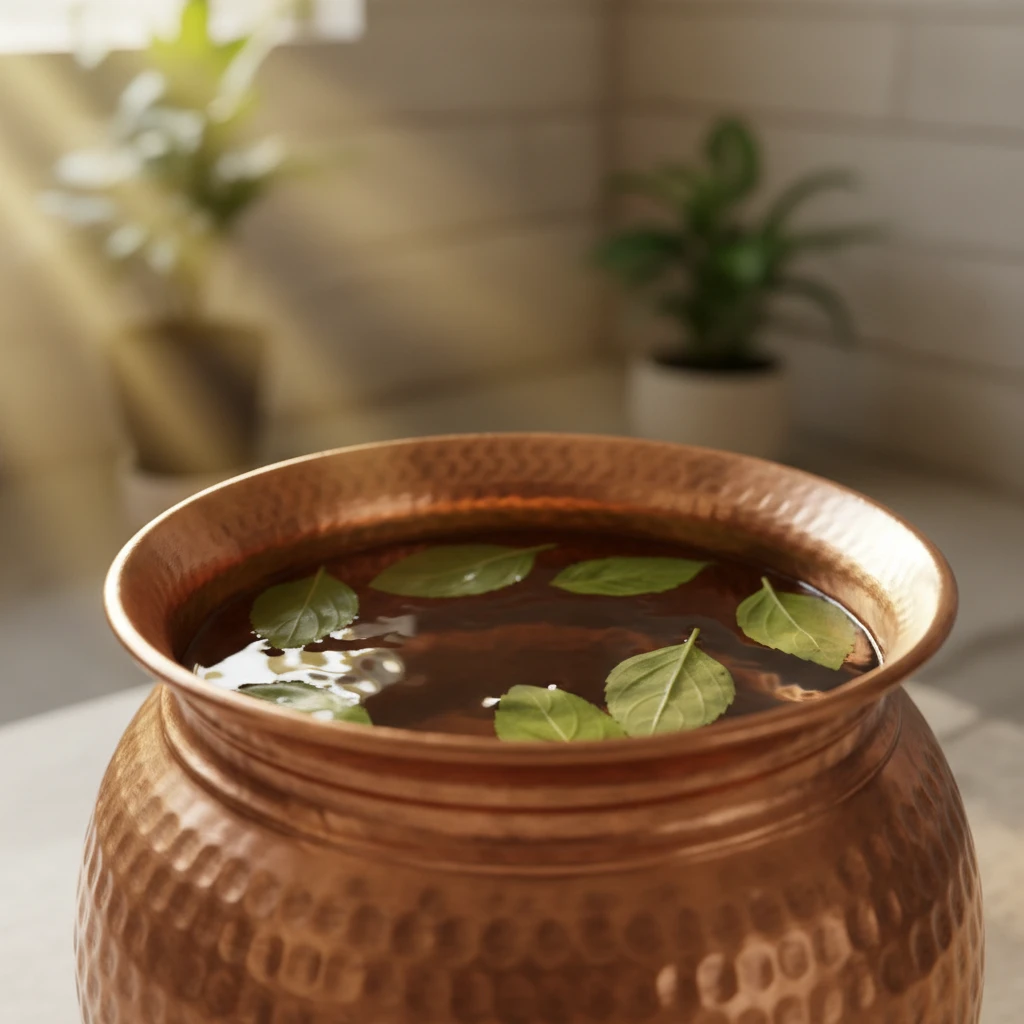
The subtle metallic tang on your tongue after sipping water from a copper vessel isn’t just a sensory experience; it’s a physiological signal of copper ions actively engaging with your system. For millennia, Ayurveda has championed ‘Tamra Jal’—water stored overnight in a copper vessel—as a cornerstone of daily health. Modern science, particularly in the realms of microbiology and epigenetics, is now validating this ancient practice, revealing a sophisticated interplay between copper’s oligodynamic properties and our body’s intrinsic chronobiology.
Key Takeaways:
- Copper ions exhibit potent, time-dependent antibacterial effects (oligodynamic action).
- Storing water in copper vessels for 12-24 hours maximizes ion release and antimicrobial efficacy.
- Consuming Tamra Jal during specific diurnal windows, aligned with circadian rhythms, enhances its benefits.
- Copper plays a role in cellular energy production and antioxidant defense, influenced by diurnal cycles.
12-24 Hours
Infusion Time
Minimum duration for significant copper ion leaching into water.
Morning (Sunrise)
Optimal Consumption Window
Aligns with natural cortisol peaks and digestive readiness.
Oligodynamic Effect
Mechanism of Action
Copper ions disrupt microbial cell membranes and DNA.
The Oligodynamic Power of Copper: A Microbial Antagonist
The phenomenon known as the oligodynamic effect describes the antimicrobial properties of metals in minute quantities. Copper is a prime example. When water comes into contact with a copper surface, copper ions (Cu+ and Cu2+) are released into the solution. These ions are highly reactive and can disrupt the cellular integrity of bacteria, viruses, and fungi. Research has demonstrated that copper ions can damage microbial cell walls, interfere with essential enzymes, and even cause DNA fragmentation, leading to cell death. Studies have shown significant reduction in bacterial load of pathogens like Escherichia coli and Staphylococcus aureus within hours of contact with copper surfaces.
Ayurvedic Wisdom: Tamra Jal and Diurnal Rhythms
Classical Ayurvedic texts, such as the Charaka Samhita (Sutrasthana, Chapter 25), discuss the properties of various metals and their therapeutic uses. While not explicitly detailing the chronobiological timing for Tamra Jal, the underlying principles of aligning health practices with natural rhythms are fundamental. Ayurveda emphasizes the importance of consuming water in the morning, particularly after sunrise, when the digestive fire (Agni) is considered to be waxing. This aligns perfectly with the concept of chronobiology, which studies biological rhythms and their impact on health. The body’s physiological processes, including hormone secretion (like cortisol), metabolic activity, and cellular repair mechanisms, follow distinct diurnal patterns.
Chronobiological Synchronization: Optimizing Tamra Jal’s Efficacy
The effectiveness of Tamra Jal is not merely about the presence of copper ions but also about when these ions are consumed. Storing water in a copper vessel overnight allows sufficient time for the oligodynamic action to occur, typically requiring 12-24 hours for optimal ion concentration. The most beneficial time for consumption, according to chronobiological principles and Ayurvedic practice, is in the early morning, shortly after waking and ideally before sunrise or just as the sun rises. This timing coincides with the body’s natural awakening phase, when metabolic processes are gearing up, and the digestive system is receptive. Consuming Tamra Jal at this juncture can support detoxification pathways and provide essential trace minerals when the body is most prepared to utilize them.
Furthermore, copper is an essential trace element involved in numerous enzymatic reactions within the human body, including those related to energy production (cytochrome c oxidase) and antioxidant defense (superoxide dismutase). The activity of these enzymes can also exhibit diurnal fluctuations. By consuming Tamra Jal during the morning window, we may be supporting these copper-dependent processes at a time when they are naturally more active or require replenishment after the overnight fasting period. This synchronization can potentially enhance cellular resilience and reduce oxidative stress, a key factor in aging and chronic disease.
The Epigenetic Connection: Copper and Gene Expression
Emerging research in epigenetics suggests that environmental factors, including diet and nutrient intake, can influence gene expression without altering the underlying DNA sequence. Copper, as a vital cofactor for many enzymes, plays a role in cellular signaling pathways that can impact gene regulation. For instance, copper is crucial for the proper functioning of transcription factors and enzymes involved in DNA repair and methylation. While direct studies on Tamra Jal and epigenetic modifications are nascent, the principle that nutrient timing can influence biological outcomes is well-established. Consuming copper-rich water at chronobiologically opportune moments could, theoretically, support optimal gene expression related to cellular metabolism, antioxidant defense, and immune function.
Tamra Jal Protocol for Chronobiological Synchronization
- Vessel Selection: Use a pure copper vessel (avoid alloys or coated metals).
- Preparation: Fill the vessel with fresh, filtered water.
- Infusion: Cover the vessel and let it sit overnight in a cool, dark place for at least 12 hours, ideally up to 24 hours.
- Consumption Window: Drink the Tamra Jal first thing in the morning, ideally within an hour of waking, before consuming any other food or drink.
- Quantity: Typically, 1-2 glasses (250-500 ml) are recommended.
- Frequency: Daily, as part of your morning ritual.
Scientific & Scriptural Citations:
- Charaka Samhita, Sutrasthana, Chapter 25 (On properties of metals and water).
- Rai, R., et al. (2017). Copper: An Emerging Player in Epigenetics. Nutrients, 9(10), 1134.
- Nesterova, E. V., et al. (2019). Oligodynamic effect of copper: mechanisms and applications. Journal of Trace Elements in Medicine and Biology, 56, 118-124.
- Pal, R., & Das, S. (2017). Copper in human health and diseases. Journal of Trace Elements in Medicine and Biology, 43, 10-17.
- Lemmens, E., et al. (2018). Circadian Regulation of Metabolism. Physiological Reviews, 98(3), 1353-1411.
The Ayurvedic concepts, dietary principles, herbal information, and somatic wellness protocols published on Kriyasya are for general educational awareness only. They do not constitute formal medical diagnosis, treatment, or clinical prescription. Always consult a licensed Ayurvedic physician (Vaidya) or qualified healthcare professional before beginning any new herbal regimen or lifestyle therapy.