

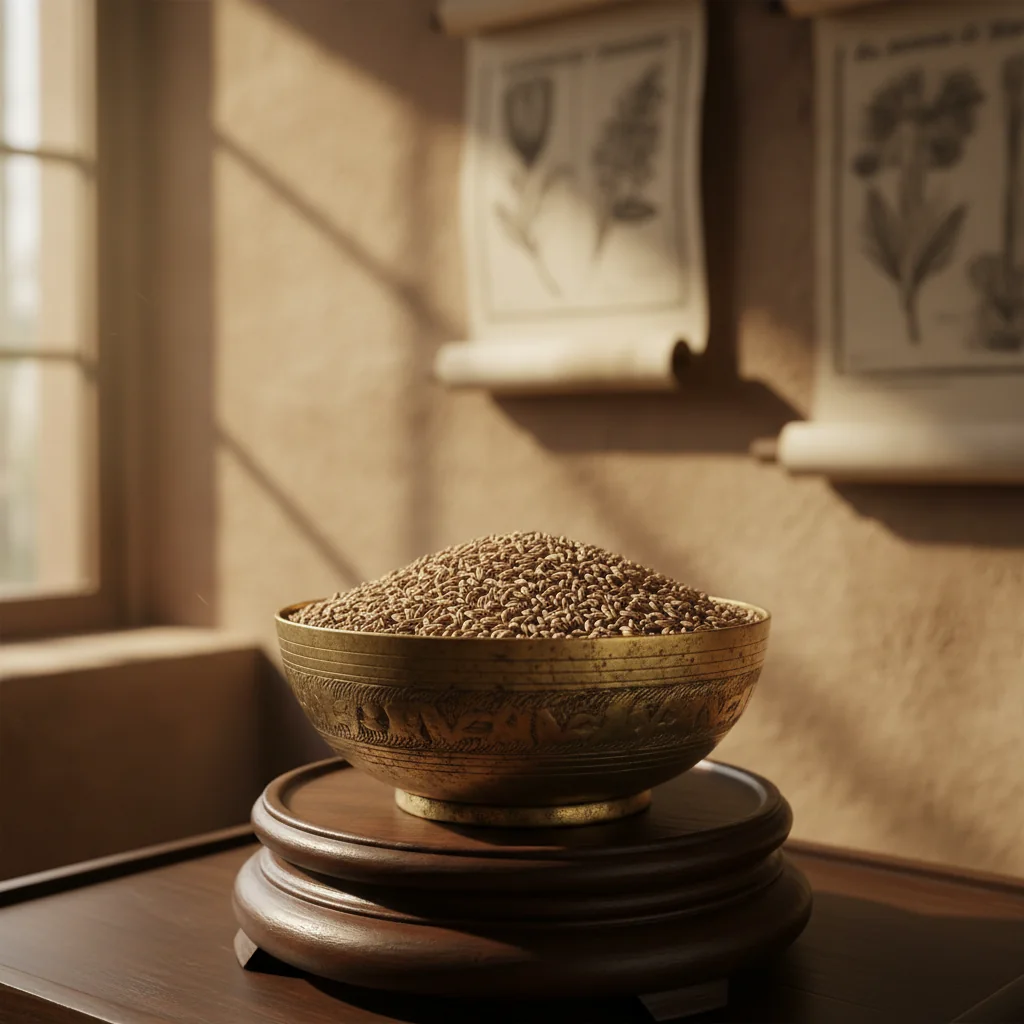
In classical Ayurveda (Ahara Chikitsa), food is considered the foremost medicine. The timeless adage states: “When diet is wrong, medicine is of no use; when diet is correct, medicine is of no need.” Understanding how Chronic Gas Bloating Flatulence and Carminative Ayurvedic Diet originates and heals through nutritional alchemy offers a permanent, root-cause path to vibrant health.
Healing Kitchen Spices, Classical Herbs & Botanical Formulations
According to authoritative medical treatises such as Charaka Samhita (Chikitsa Sthana 28), Sushruta Samhita & Sharangdhara, physical health hinges upon the equilibrium of digestive fire (Jatharagni) and the elimination of metabolic toxins (Ama). When Vitiated Samana and Apana Vayu Trapped in Digestive Loops (Adhmana / Anaha) vitiates, Pakwashaya (Large Intestine), Small Bowel, and Abdominal Wall faces chronic metabolic stagnation, affecting Purishavaha Srotas (Excretory Bowel Channels).
Comprehensive carminative dietary manual for conquering chronic abdominal distension, intestinal flatulence, and painful gas cramps (Adhmana): facilitating smooth downward movement of Apana Vayu and neutralizing intestinal fermentation.
Nutritional & Ayurvedic Parameters
- Underlying Dosha Imbalance: Vitiated Samana and Apana Vayu Trapped in Digestive Loops (Adhmana / Anaha)
- Digestive Fire (Agni) State: Vishamagni (Erratic Digestive Heat Leading to Gas Fermentation)
- Impacted Bodily Dhatus (Tissues): Purishavaha Srotas (Excretory Bowel Channels)
- Primary Therapeutic Foods: Hing (asafoetida), ajwain seeds, ginger, cumin tea, cooked pumpkin, and warm mung soup
- Key Inflammatory Triggers to Avoid: Raw broccoli, uncooked cauliflower, rajma beans without hing, cold fizzy sodas, and chewing gum
Daily Routine (Dinacharya) & Practical Healing Protocols
Sustainable healing requires integrating therapeutic foods into a steady, supportive daily biological rhythm:
- Morning Cleansing Ritual: Chew half a teaspoon of roasted ajwain seeds with a pinch of rock salt and warm water. Gently kindles digestive fire without shocking the stomach.
- Primary Botanical Support: Hing (Asafoetida), Ajwain, Jeera, Shunthi (Dry Ginger), and Hingwashtak Churna. These traditional herbs clear circulating metabolic endotoxins (Ama).
- Night Restorative Ritual: Take half a teaspoon of Hingwashtak Churna with the first mouthful of warm dinner rice and ghee. Supports cellular autophagy and optimal overnight liver detoxification.
- Mindful Eating Practice: Eating in a calm, screen quiet atmosphere, chewing each bite thoroughly to activate enzymatic saliva.
Ayurvedic Herbal Formulations & Home Preparations
Ancient Vaidyas formulated simple yet potent home preparations to accelerate recovery:
Prescribed Healing Decoction & Daily Upayas
Om Agnaye Namah Om Apana Vayu Prashamanaya Namah
Sip warm cumin-coriander-fennel tea throughout the day; walk 100 paces (Shatapadi) immediately after meals; avoid drinking cold water during food consumption.
Frequently Asked Questions
Q1: Why is Hing (Asafoetida) the supreme carminative spice in Indian cooking?
Hing is Deepana (digestive stimulant) and Vata Anulomana (downward-directing); it instantly releases trapped gas pockets and stops gut bacterial putrefaction.
Q2: What is the mistake people make with drinking water during meals?
Gulping cold water during meals extinguishes Jatharagni, turning food into fermenting slush that produces intense methane and bloating.
The Ayurvedic concepts, dietary principles, herbal information, and somatic wellness protocols published on Kriyasya are for general educational awareness only. They do not constitute formal medical diagnosis, treatment, or clinical prescription. Always consult a licensed Ayurvedic physician (Vaidya) or qualified healthcare professional before beginning any new herbal regimen or lifestyle therapy.