

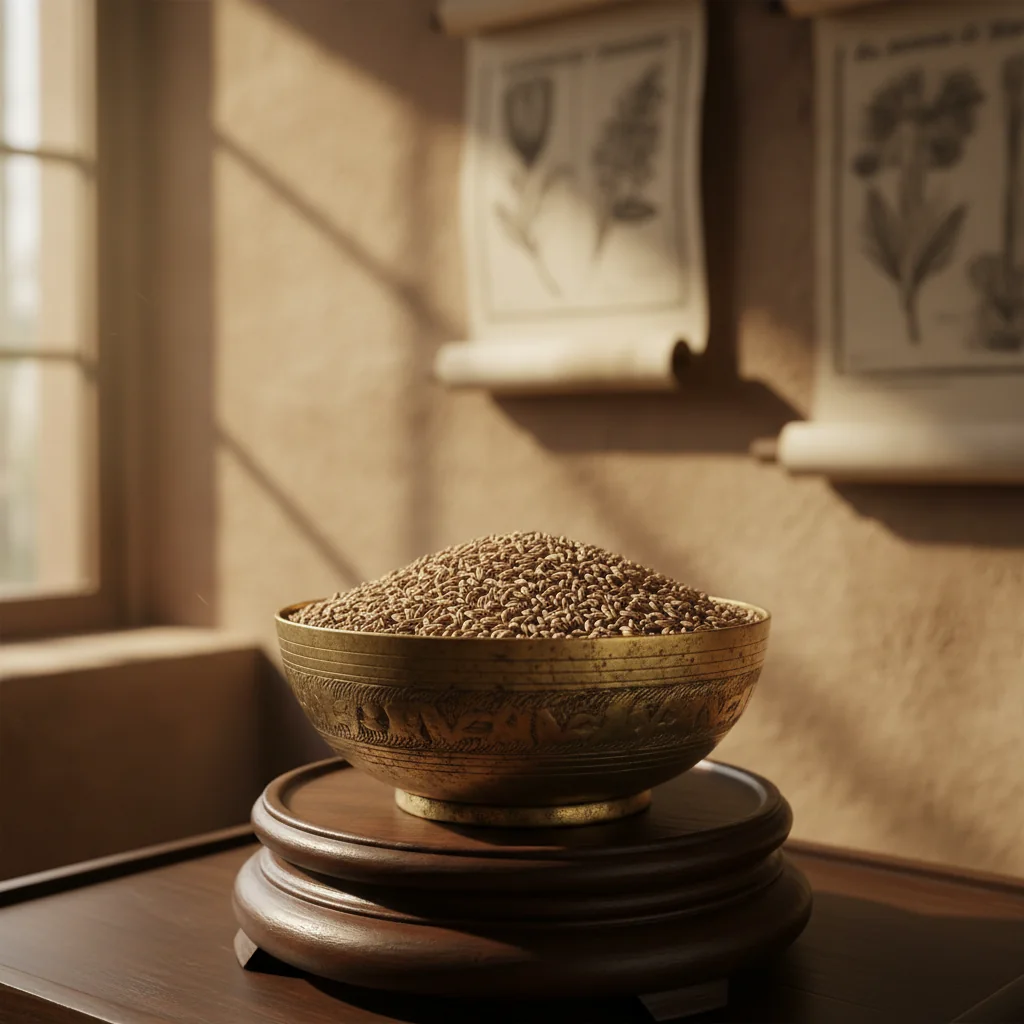
The ancient treatises of Ayurveda, including the Charaka Samhita, Sushruta Samhita, and Bhavaprakasha Nighantu, celebrate Kuttu (Buckwheat / Kutu) (Fagopyrum esculentum) as an indispensable dravya for restoring constitutional balance, nurturing the deeper tissues (Dhatus), and preserving vital life essence (Ojas). In this comprehensive master guide, we explore the pharmacological architecture, classical indications, and clinical applications of this renowned substance.
Classical Treatise Shloka & Sanskrit Anvaya
कुट्टुष्णः कषायश्च मधुरो ग्राही वातकः। पित्तकफप्रशमनः पुष्टिदश्च रसायने॥
— kuṭṭuṣṇaḥ kaṣāyaśca madhuro grāhī vātakaḥ, pittakaphapraśamanaḥ puṣṭidaśca rasāyane (Bhavaprakasha Nighantu / Traditional Ayurvedic Materia Medica)
Sanskrit Anvaya & Translation: Buckwheat is warming, astringent and sweet, binding to the colon, pacifies Kapha and Pitta when cooked properly, and provides profound tissue nourishment as a non-cereal functional grain.
Complete Dravya Guna & Energetic Profile
Ayurvedic pharmacology analyzes every food and herb through its elemental energetics. The fundamental properties of Kuttu (Buckwheat / Kutu) are outlined below:
Primary Clinical Indications & Shastric Health Benefits
In classical Ayurvedic pharmacology, Kuttu (Buckwheat / Kutu) is documented as an exceptional therapeutic food and botanical medicine. It specifically targets the Raktavaha Srotas (Blood vessels), Mamsa, and Asthi tissue systems, restoring structural integrity, metabolic balance, and immune resilience.
- Tissue Regeneration & Cellular Vitality: Acts as a potent restorative substance that nourishes cellular dhatus without creating metabolic sluggishness or Ama.
- Therapeutic Action: Gluten sensitivity, capillary fragility, varicose veins, hypertension, and polycystic ovarian syndrome (PCOS).
- Bioactive Synergies: High concentration of naturally occurring bio-compounds including Rutin (quercetin-3-rutinoside), D-chiro-inositol, fagopyritols, high-quality lysine protein, which directly modulate cellular metabolic pathways and protect vascular membranes.
- Srotoshodhana & Micro-Channel Health: Cleanses cellular pathways while ensuring uninterrupted delivery of essential micronutrients to the peripheral tissues.
When consumed routinely in accordance with proper seasonal guidelines (Ritucharya), Kuttu (Buckwheat / Kutu) serves as a foundational Pillar of preventative healthcare, promoting sustained cellular vitality and physiological equilibrium.
✦ Interactive Ayurvedic Diagnostic: Ayurvedic PCOS & Hormonal Balance Diagnostic
Screen your doshic hormonal markers and discover personalized restorative ahara.
Practical Clinical FAQs
1. How long does it take to experience visible health benefits from Kuttu (Buckwheat / Kutu)?
Vascular tone and energy stability demonstrate clinical enhancements within 2 to 4 weeks of consistent dietary use.
2. Can Kuttu (Buckwheat / Kutu) be consumed daily throughout the year?
Excellent during autumn, winter, and spring fasting days; consume in moderation during peak summer.
3. What is the most common mistake people make when using Kuttu (Buckwheat / Kutu)?
Consuming heavy deep-fried Kuttu Puris during religious fasts instead of light rotis or boiled groats.
4. How does Kuttu (Buckwheat / Kutu) interact with prescription medications?
Potentiates bioflavonoid antioxidant networks; safe alongside antihypertensive protocols.
Editorial Vaidya Verdict & Shastric Summary
The classical texts of Ayurveda place Kuttu (Buckwheat / Kutu) among the most revered dravyas for long-term health maintenance and disease management. By honoring proper preparation rules, seasonal rhythms, and personal constitutional requirements, you harness the full restorative wisdom of classical Indian medicine for enduring vitality and longevity.
The Ayurvedic concepts, dietary principles, herbal information, and somatic wellness protocols published on Kriyasya are for general educational awareness only. They do not constitute formal medical diagnosis, treatment, or clinical prescription. Always consult a licensed Ayurvedic physician (Vaidya) or qualified healthcare professional before beginning any new herbal regimen or lifestyle therapy.