

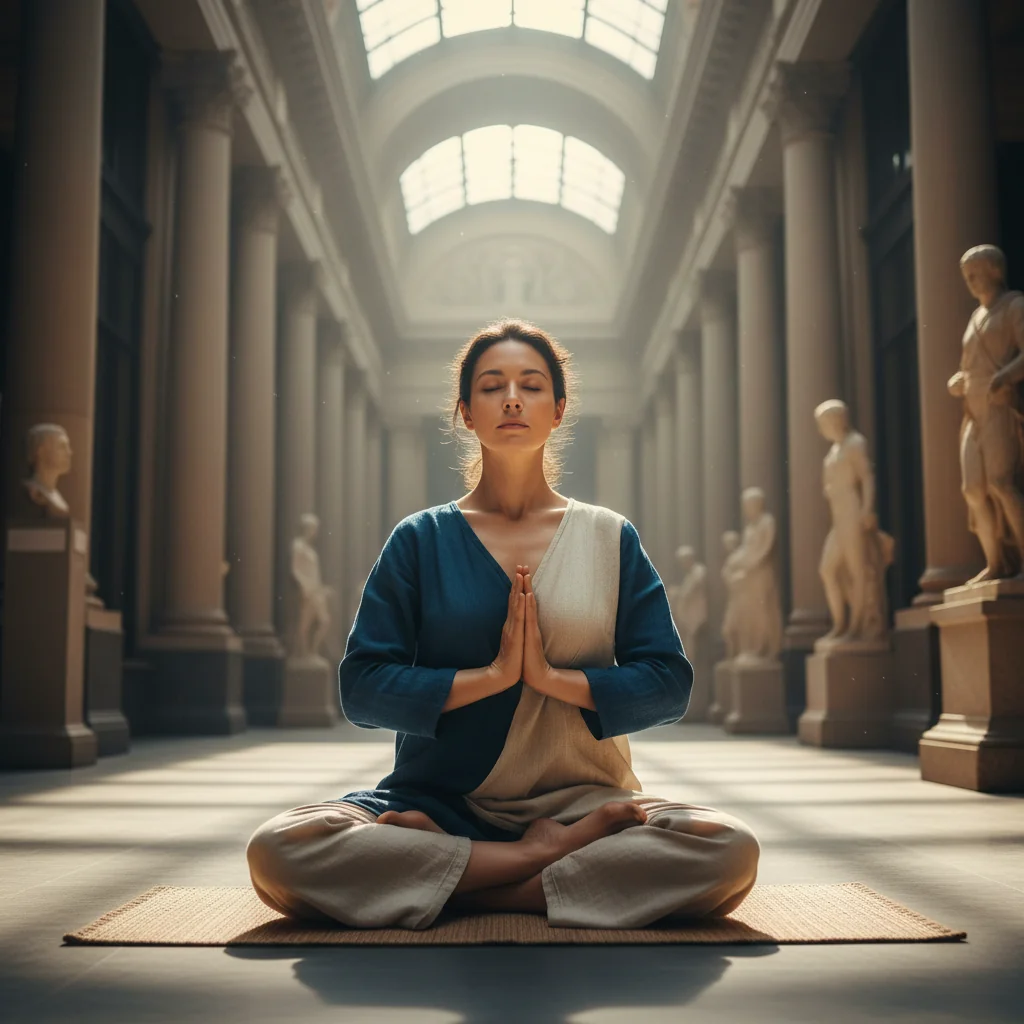
The Hatha Yoga Pradipika, authored by the venerable Sage Swatmarama in the 15th century, stands as the paramount foundational manual of physical yogic technology. Classical Hatha asanas were engineered not for cardiovascular exhaustion or vanity, but to accomplish three profound bio-mechanical milestones: Sthairya (unshakable musculoskeletal stability), Arogya (complete freedom from disease), and Angalaghavam (cellular lightness of the limbs). Swatmarama details fifteen core classical asanas—including Svastikasana, Gomukhasana, Virasana, Kurmasana, Kukkutasana, Dhanurasana, Matsyendrasana, Paschimottanasana, Mayurasana, and Shavasana—each engineered to compress abdominal glands, recalibrate the endocrine system, and purify physical Nadis. The Kriyasya Hatha Yoga Studio dissects these postures through modern musculoskeletal biomechanics.
Top Classical Hatha Postures & Endocrine Benefits
- Paschimottanasana (Seated Forward Bend): Stretches the entire posterior fascial chain from heels to crown. Awakens the gastric fire, compresses the abdominal viscera, tones kidneys, and channels prana into the Sushumna.
- Matsyendrasana (Spinal Twist): Increases spinal rotational mobility, massages the pancreas and liver, stimulates insulin regulation, and prevents pelvic stagnation.
- Mayurasana (Peacock Pose): Balancing total body weight on the elbows pressed into the navel. Swatmarama declares this pose obliterates all toxic poisons, cures severe enlargement of spleen and liver, and kindles super-human digestive fire.
- Dhanurasana (Bow Pose): Opens thoracic chest cavity, stretches hip flexors, relieves lower back fatigue, and optimizes thyroid and adrenal output.
- Shavasana (Corpse Pose): Complete conscious surrender. Dissolves physical fatigue, balances autonomic tone, and settles cerebral brainwaves into alpha/theta states.
Master Classical Hatha Alignment on Kriyasya
Access detailed pose breakdowns, joint angles, and progressive modifications for all levels.
Content published on Kriyasya Pulse represents editorial and educational insights uniting traditional wisdom with contemporary research. Readers are encouraged to apply discernment and seek qualified guidance where appropriate.