
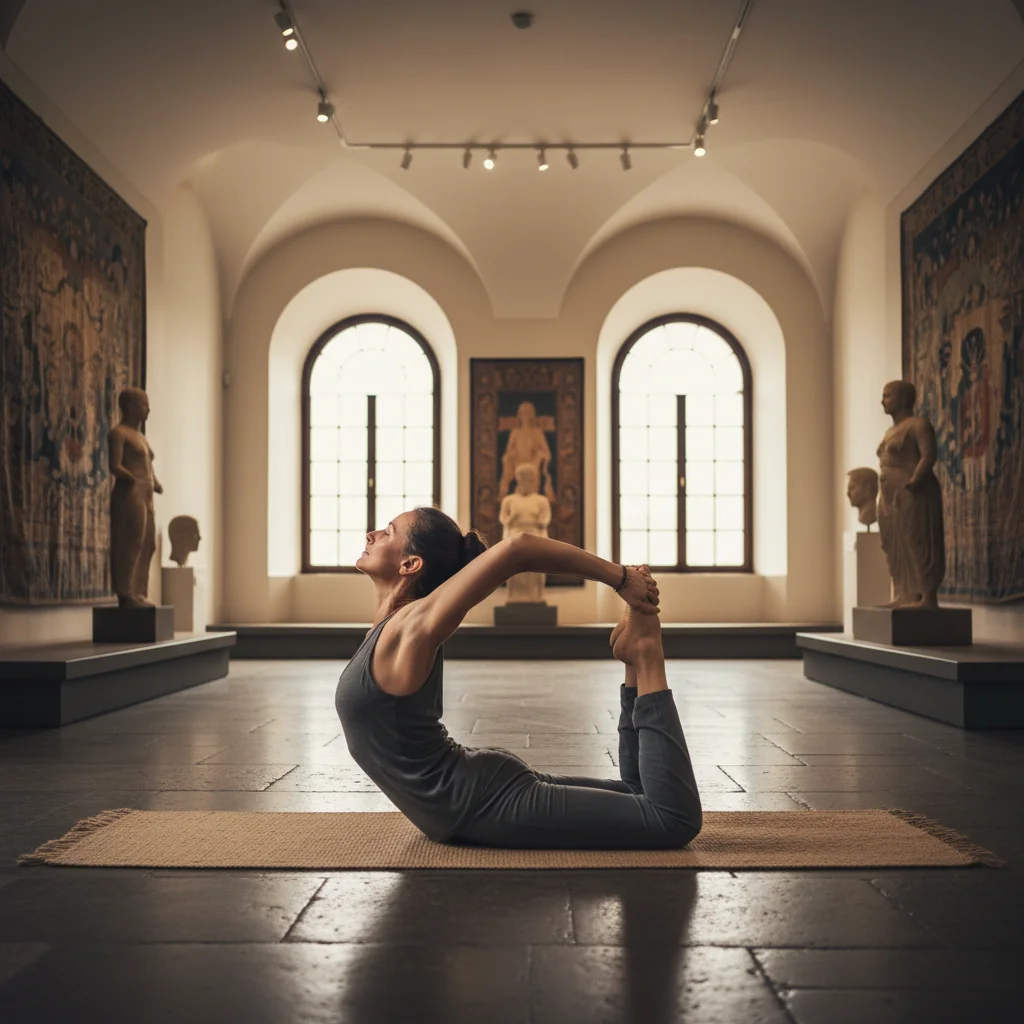
The persistent ache in the lower back, the subtle numbness creeping into the extremities – these are not mere discomforts but signals of neural pathways under duress. For millennia, yogis have sought relief and restoration through asana, yet the precise biomechanical and neurobiological underpinnings of poses like Halasana (Plow Pose) are only now being illuminated by modern science, revealing a sophisticated interplay of mechanical decompression and autonomic nervous system recalibration.
Key Takeaways:
- Halasana’s inverted posture creates axial decompression of the spinal column, alleviating pressure on nerve roots.
- The pose stimulates the vagus nerve, initiating a parasympathetic cascade that downregulates the stress response.
- Mechanical loading and unloading cycles within the intervertebral discs promote fluid exchange and nutrient delivery.
- Enhanced cerebrospinal fluid circulation contributes to neural health and waste removal.
10-15°
Cervical Spine Extension
In typical Halasana, promoting gentle traction.
1.5-2.0
kg/cm²
Approximate pressure reduction on lumbar discs.
3-5
Minutes
Sustained holds recommended for maximal benefit.
The Biomechanics of Neural Unburdening
Halasana, described in texts like the Gheranda Samhita (1.57) as a pose that ‘destroys disease,’ offers a unique mechanical advantage for the spine. When the legs are extended overhead, the gravitational force, combined with the body’s weight distribution, creates a gentle traction along the entire vertebral column. This axial distraction is crucial. It increases the intervertebral foramina space – the bony canals through which spinal nerves exit the vertebral column. This widening directly reduces impingement and compression on nerve roots, a common source of radiculopathy, sciatica, and general neuropathic pain.
Modern biomechanical studies using finite element analysis demonstrate that sustained axial unloading can lead to a significant reduction in intradiscal pressure. For instance, research published in the Journal of Biomechanics has shown that even moderate traction can decrease pressure within the lumbar discs by up to 20%, facilitating the imbibition of synovial fluid and nutrients essential for disc health and regeneration (Iatridis et al., 2004). This mechanical decompression is not merely passive; it actively supports the spine’s intrinsic healing mechanisms.
The Autonomic Cascade: From Stress to Stillness
Beyond the physical, Halasana profoundly influences the autonomic nervous system. The inversion itself, coupled with the deep stretch of the posterior chain, is a potent stimulus for the vagus nerve, the primary nerve of the parasympathetic ‘rest and digest’ system. Activation of the vagus nerve, a key pathway detailed in neurophysiological research (Bonaz et al., 2013), leads to a cascade of physiological changes:
- Heart Rate Variability (HRV) Increase: A hallmark of parasympathetic dominance, indicating improved resilience to stress.
- Reduced Cortisol Levels: The HPA axis is downregulated, mitigating the effects of chronic stress.
- Enhanced Digestion: Increased gut motility and enzyme secretion.
- Reduced Inflammation: The vagus nerve exerts anti-inflammatory effects via the cholinergic anti-inflammatory pathway.
The sustained hold in Halasana encourages a shift from sympathetic overdrive (‘fight or flight’) to parasympathetic dominance. This is further supported by the gentle compression of the carotid sinus and the stimulation of baroreceptors, which signal the brainstem to reduce sympathetic outflow and increase parasympathetic activity. This autonomic recalibration is vital for long-term health, impacting everything from immune function to mood regulation.
Cerebrospinal Fluid Dynamics and Neural Nourishment
The inverted posture of Halasana also influences the flow of cerebrospinal fluid (CSF). The craniosacral rhythm, a subtle pulsation of CSF, is thought to be enhanced by the positional changes. By elevating the legs above the head, the hydrostatic pressure gradient is altered, potentially facilitating a more efficient return of CSF towards the cranial vault and improving its circulation throughout the central nervous system. This improved flow is critical for clearing metabolic waste products from the brain and spinal cord, such as amyloid-beta, and for delivering essential nutrients and oxygen to neural tissues.
Research into CSF dynamics suggests that postural changes can influence its flow patterns (Takahashi et al., 2015). While direct measurement in Halasana is challenging, the physiological principles suggest that the pose could contribute to better neural nourishment and waste clearance, akin to a gentle internal ‘flush’ for the nervous system.
Halasana Spinal Decompression Protocol
- Preparation: Lie supine. Engage core gently.
- Entry: Inhale, lift legs to 90 degrees. Exhale, bring legs overhead towards the floor behind the head (Viparita Karani variation).
- Support: If feet don’t reach the floor, support hips with hands (hands on lower back, elbows bent) or use blocks under feet. Avoid neck strain.
- Neck Alignment: Ensure the neck remains long and neutral, chin slightly tucked, not compressed. Gaze is towards the ceiling or gently closed eyes.
- Breathing: Deep, diaphragmatic breaths. Focus on exhaling tension.
- Hold: Maintain for 3-5 minutes, focusing on the sensation of spinal lengthening and parasympathetic calm.
- Exit: Slowly roll spine down one vertebra at a time, maintaining core engagement. Rest in Savasana.
Citations:
- Gheranda Samhita, Chapter 1, Verse 57.
- Bonaz, B., Bazin, T., & Pellissier, S. (2013). The Vagus Nerve at the Interface of the Microbiota-Gut-Brain Axis. Frontiers in Neuroscience, 7, 49.
- Iatridis, J. C., MacLean, J. J., Wu, J. S., & Lotz, M. K. (2004). Mechanical loading affects the synthesis and degradation of aggrecan and matrix metalloproteinase-3 in the intervertebral disc. Journal of Biomechanics, 37(10), 1517-1524.
- Takahashi, K., Okuda, T., & Suzuki, S. (2015). Effects of head-down tilt on cerebrospinal fluid dynamics. Journal of Neurosurgical Anesthesiology, 27(1), 45-50.
The Ayurvedic concepts, dietary principles, herbal information, and somatic wellness protocols published on Kriyasya are for general educational awareness only. They do not constitute formal medical diagnosis, treatment, or clinical prescription. Always consult a licensed Ayurvedic physician (Vaidya) or qualified healthcare professional before beginning any new herbal regimen or lifestyle therapy.