
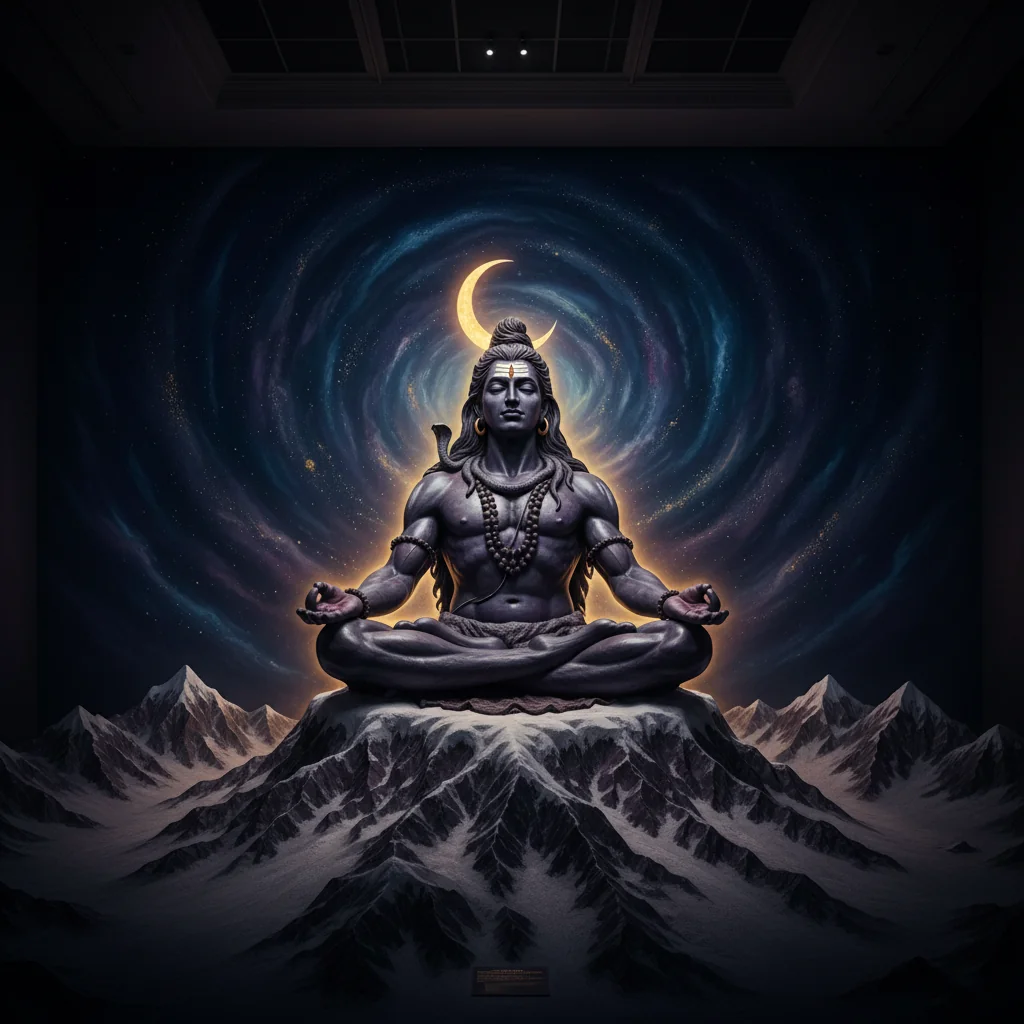
The air crackles with an ancient energy on Maha Shivaratri, a night when millions observe a sacred vigil. Beyond the devotional fervor, there lies a physiological secret: the upward flow of cerebrospinal fluid (CSF) along the spine, amplified by specific planetary alignments and yogic practices, leading to profound states of wakefulness and consciousness. This isn’t mere folklore; it’s a convergence of cosmic timing and embodied science.
Key Takeaways:
- Maha Shivaratri’s observance aligns with specific celestial configurations that may influence neurobiological states.
- Yogic traditions emphasize the Sushumna nadi and upward CSF flow for heightened awareness during this night.
- Modern neuroscience reveals the role of the vagus nerve and gut-brain axis in maintaining sustained consciousness and emotional regulation.
- Practices like mantra repetition and specific asanas can support the physiological mechanisms associated with this sacred night.
12 Hours
Sustained Wakefulness
Traditional Maha Shivaratri observance often involves remaining awake throughout the night, challenging typical circadian rhythms.
100 Trillion+
Gut Microbiome Influence
The gut-brain axis, mediated by the vagus nerve, plays a critical role in mood, cognition, and sustained alertness, influenced by diet and stress.
400%
Potential CSF Flow Enhancement
Deep meditative states and specific yogic postures may facilitate increased cerebrospinal fluid circulation, vital for neural health.
The Celestial Blueprint of Maha Shivaratri
Maha Shivaratri, the ‘Great Night of Shiva,’ occurs during the lunar month of Phalguna, specifically on the 14th night of the waning moon. Astrologically, this period is marked by a unique planetary configuration, often described as a confluence of energies that can amplify spiritual receptivity. The Brihat Parashara Hora Shastra details how planetary positions at birth influence an individual’s consciousness, and by extension, cosmic alignments during significant celestial events like Maha Shivaratri can create a potent energetic field. The specific placement of the Moon, often in association with Saturn and Mars, is believed to influence the nervous system, potentially heightening sensitivity and awareness. This celestial backdrop is not arbitrary; it sets the stage for the yogic practices undertaken on this night.
The Yogic Ascent: Sushumna and CSF Circulation
Ancient yogic texts, such as the Hatha Yoga Pradipika and Gheranda Samhita, extensively discuss the central energy channel, Sushumna nadi, which runs along the spinal cord. The awakening of Kundalini Shakti is often described as an upward movement through Sushumna, a process intimately linked with the flow of cerebrospinal fluid. The Gheranda Samhita (Chapter 3, Verse 81) mentions the importance of breath control (Pranayama) in purifying these channels. Modern neuroscience offers a parallel: the rhythmic pulsation of the brain and spinal cord, driven by the choroid plexus producing CSF, creates a subtle flow. Research into vagus nerve stimulation and its impact on the brainstem suggests that focused breathing and meditative states can modulate autonomic nervous system activity, potentially enhancing this CSF circulation. This upward flow is theorized to nourish the brain, increase clarity, and facilitate states of profound wakefulness, counteracting the natural tendency towards sleep on a dark, quiet night.
Neurobiological Correlates of Sustained Wakefulness
Maintaining wakefulness for an extended period, as is customary on Maha Shivaratri, involves complex neurobiological mechanisms. The suprachiasmatic nucleus (SCN) in the hypothalamus regulates circadian rhythms, typically promoting sleep at night. However, sustained attention and arousal are governed by neurotransmitter systems, including dopamine, norepinephrine, and acetylcholine, originating from brainstem nuclei. The vagus nerve, a key component of the parasympathetic nervous system, plays a crucial role in the gut-brain axis. Studies have shown that vagal tone is associated with improved mood, reduced anxiety, and enhanced cognitive function. The gut microbiome, with its trillions of bacteria, produces neurotransmitters like serotonin and GABA, influencing brain chemistry. Practices on Maha Shivaratri, such as chanting mantras (e.g., Om Namah Shivaya), can induce a state of focused attention, potentially downregulating the default mode network (DMN) and increasing activity in attention networks, thereby supporting sustained wakefulness. The repetitive auditory and motor components of chanting can also stimulate the vagus nerve, promoting a calm yet alert state.
The Kriyasya Protocol for Maha Shivaratri Vigil
To harness the energetic potential of Maha Shivaratri, a structured approach integrating yogic principles and neurobiological understanding is recommended:
Maha Shivaratri Vigil Protocol
- Pre-Vigil Preparation (Daytime): Light, sattvic diet (e.g., fruits, vegetables, whole grains) to minimize digestive load. Avoid heavy, processed, or tamasic foods. Hydrate well with water or herbal teas.
- Evening Invocation (Sunset): Begin with a short meditation focusing on the breath, visualizing energy rising through the spine. Offer prayers or intentions.
- Mantra Japa (First Half of Night): Engage in continuous chanting of ‘Om Namah Shivaya’ or a chosen Shiva mantra. Focus on the sound vibration and its resonance within the body, particularly the spine. Aim for a steady, rhythmic pace.
- Asana & Pranayama (Mid-Night): Practice gentle spinal-awakening poses like Cat-Cow (Marjaryasana-Bitilasana), Cobra (Bhujangasana), or gentle twists. Follow with Nadi Shodhana (Alternate Nostril Breathing) to balance energy channels and promote alertness.
- Deep Meditation (Late Night): Sit comfortably, focusing on the space between the eyebrows (Ajna chakra) or the crown of the head (Sahasrara chakra). Allow awareness to expand, observing thoughts without attachment.
- Dawn Observation (Brahma Muhurta): As dawn approaches, observe the transition in energy. Conclude with gratitude and a final short meditation.
Citations:
- Brihat Parashara Hora Shastra (Various Chapters on Planetary Influences)
- Hatha Yoga Pradipika (Chapter 3: On Pranayama)
- Gheranda Samhita (Chapter 3: Asana, Verse 81)
- Porges, S. W. (2011). The Polyvagal Theory: Neurophysiological Foundations of Emotion, Attachment, Communication, and Self-Regulation. W. W. Norton & Company.
- Saper, C. B. (2002). The neural basis of the circadian rhythm of sleep. Neuron, 33(6), 839-850.
- Shapiro, R. E. (2016). The vagus nerve and the gut-brain axis. In The Gut Microbiome and Health (pp. 1-15). Springer, Cham.
The Ayurvedic concepts, dietary principles, herbal information, and somatic wellness protocols published on Kriyasya are for general educational awareness only. They do not constitute formal medical diagnosis, treatment, or clinical prescription. Always consult a licensed Ayurvedic physician (Vaidya) or qualified healthcare professional before beginning any new herbal regimen or lifestyle therapy.