
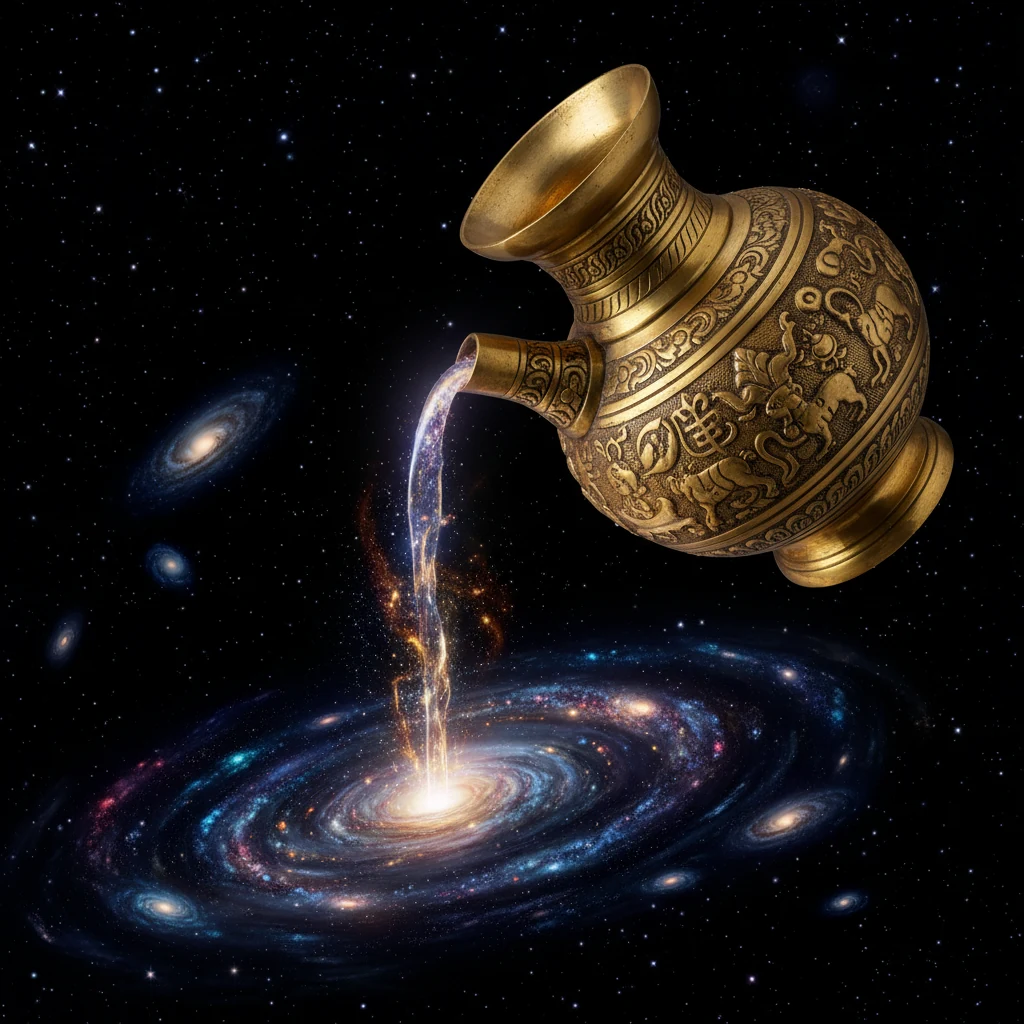
The quiet hum of a Life Path 7 individual often masks an intense internal dialogue, a relentless pursuit of truths that lie beyond the superficial. This isn’t mere introversion; it’s a profound, almost gravitational pull towards introspection, a characteristic deeply resonant with the Vedic concept of Ketu and the Neptunian archetype of seeking the ineffable.
Key Takeaways:
- Life Path 7 is the number of the mystic, the philosopher, and the seeker of hidden knowledge.
- Ketu’s influence fosters detachment from material pursuits, encouraging deep introspection and spiritual inquiry.
- Neptune’s energy amplifies intuition but can also lead to confusion or escapism if not grounded.
- Modern neuroscience reveals the benefits of solitude for prefrontal cortex activity and self-awareness.
- Integrating skepticism with faith is crucial for the Life Path 7’s journey towards epistemic certainty.
The Ketu-Neptunian Confluence: Detachment and Divine Seeking
In Vedic numerology, the number 7 vibrates with the energy of introspection, analysis, and spiritual wisdom. It is intrinsically linked to Ketu, the lunar node that signifies detachment, past-life wisdom, and a pull away from worldly distractions towards inner exploration. Ketu compels a deep dive into the unknown, often manifesting as a desire for solitude to process complex ideas and spiritual truths. This is not a rejection of the world, but a necessary withdrawal to understand its underlying principles.
Complementing this is the influence of Neptune, the planet associated with intuition, mysticism, and the subconscious. Neptune governs our connection to the divine, our dreams, and our capacity for empathy. For a Life Path 7, this combination creates a powerful drive to seek epistemic truth – knowledge that is justified and true. However, Neptune also carries the potential for illusion, deception, and escapism. The challenge for the 7 is to discern genuine spiritual insight from self-deception or delusion.
Neuroscience of Solitude: The Brain on Introspection
Modern neuroscience provides a fascinating lens through which to view the Life Path 7’s inclination towards solitude. Extended periods of quiet contemplation, often sought by these individuals, allow for the downregulation of the Default Mode Network (DMN). While the DMN is active during mind-wandering and self-referential thought, its reduction during focused, solitary tasks, particularly those involving deep analysis or meditation, is associated with enhanced cognitive control and self-awareness. Studies utilizing fMRI have shown that individuals engaged in contemplative practices exhibit altered connectivity patterns, particularly in the prefrontal cortex, which is crucial for executive functions, decision-making, and insight generation (Brewer et al., 2011).
Furthermore, the vagus nerve, a key component of the parasympathetic nervous system, is stimulated by practices like deep breathing and mindful observation, often undertaken in solitude. This vagal tone upregulation is linked to reduced stress, improved emotional regulation, and enhanced interoception – the awareness of the body’s internal state, which is vital for intuitive understanding. This physiological grounding supports the spiritual quest, transforming abstract seeking into embodied knowing.
The Skeptic’s Path to Truth: Balancing Faith and Reason
The Life Path 7 mystic is often a profound skeptic, not in a cynical way, but as a necessary tool for discernment. The Neptunian influence can lead to susceptibility to misinformation or esoteric dogma. Therefore, the 7 must cultivate a critical mind, rigorously questioning assumptions and seeking verifiable evidence, even within spiritual contexts. This aligns with the philosophical traditions that emphasize logical inquiry as a path to truth.
Scriptural wisdom echoes this need for discernment. The Bhagavad Gita, for instance, emphasizes the importance of knowledge gained through inquiry and direct experience, while cautioning against blind faith. Krishna advises Arjuna to seek knowledge from a qualified guru, one who has realized the truth (Bhagavad Gita 4.34). This implies a process of testing and verification, not passive acceptance. The Life Path 7’s journey is one of integrating faith with reason, allowing skepticism to refine, rather than extinguish, their spiritual quest.
Cultivating the Mystic’s Wisdom: A Protocol
The Solitary Seeker’s Protocol
- Dedicated Solitude: Schedule at least 1-2 hours daily for uninterrupted quiet reflection, reading, or meditation.
- Skeptical Inquiry: Approach new spiritual or philosophical concepts with a questioning mind. Seek evidence, logical consistency, and personal resonance.
- Mindful Observation: Practice observing thoughts and emotions without judgment, noting their transient nature. This builds metacognitive awareness.
- Vagal Stimulation: Incorporate slow, deep diaphragmatic breathing exercises (e.g., 4-second inhale, 6-second exhale) for 5-10 minutes daily to enhance nervous system regulation.
- Journaling for Clarity: Document insights, questions, and experiences. Use journaling to untangle complex thoughts and identify patterns.
- Grounding Practices: Balance introspection with mindful engagement with the physical world – nature walks, somatic exercises, or focused sensory experiences.
Citations
- Brewer, J. A., Worhunsky, P. D., Gray, J. R., Weber, J., & Kober, H. (2011). Meditation states and traits: neurobiological correlates of focused attention and open monitoring. *American Journal of Psychiatry*, *168*(7), 675-682.
- Bhagavad Gita. (Trans. Eknath Easwaran). Nilgiri Press. (Specifically Chapter 4, Verse 34).
- Patanjali. *Yoga Sutras of Patanjali*. (Various translations available, e.g., by Swami Vivekananda).
- Brihat Parashara Hora Shastra. (Various translations available).
Numerological analysis, name vibration studies, and life-path calculations provided on Kriyasya are interpretive tools designed for introspection, personal exploration, and symbolic study. They do not guarantee specific life events or deterministic outcomes.